Through the Looking Glass: Lessons Learned from the Dartmouth Community
When I was looking at colleges, I asked current students a lot of questions. Their responses were plentiful, varied and usually helpful.
During an especially introspective stretch of time, my 15-year-old self jotted down several quotes that fell within the boundaries of what I perceived to be profound.
I remember the first time Dartmouth felt like home. I remember the day — Jan. 3, 2015. I remember my outfit — a recently-bought wool sweater littered with pretzel crumbs.
College is weird. Part extended summer camp, part boarding school for semi-grownups, part elitist neoliberal institution, part academia machine, college means different things to different people, but no one really knows what it’s going to be like until they’re there.
A writer for The Dartmouth once joked that staffers only know two things about me: that I’m from Hawaiʻi and that I have consistently arrived late to campus each term.
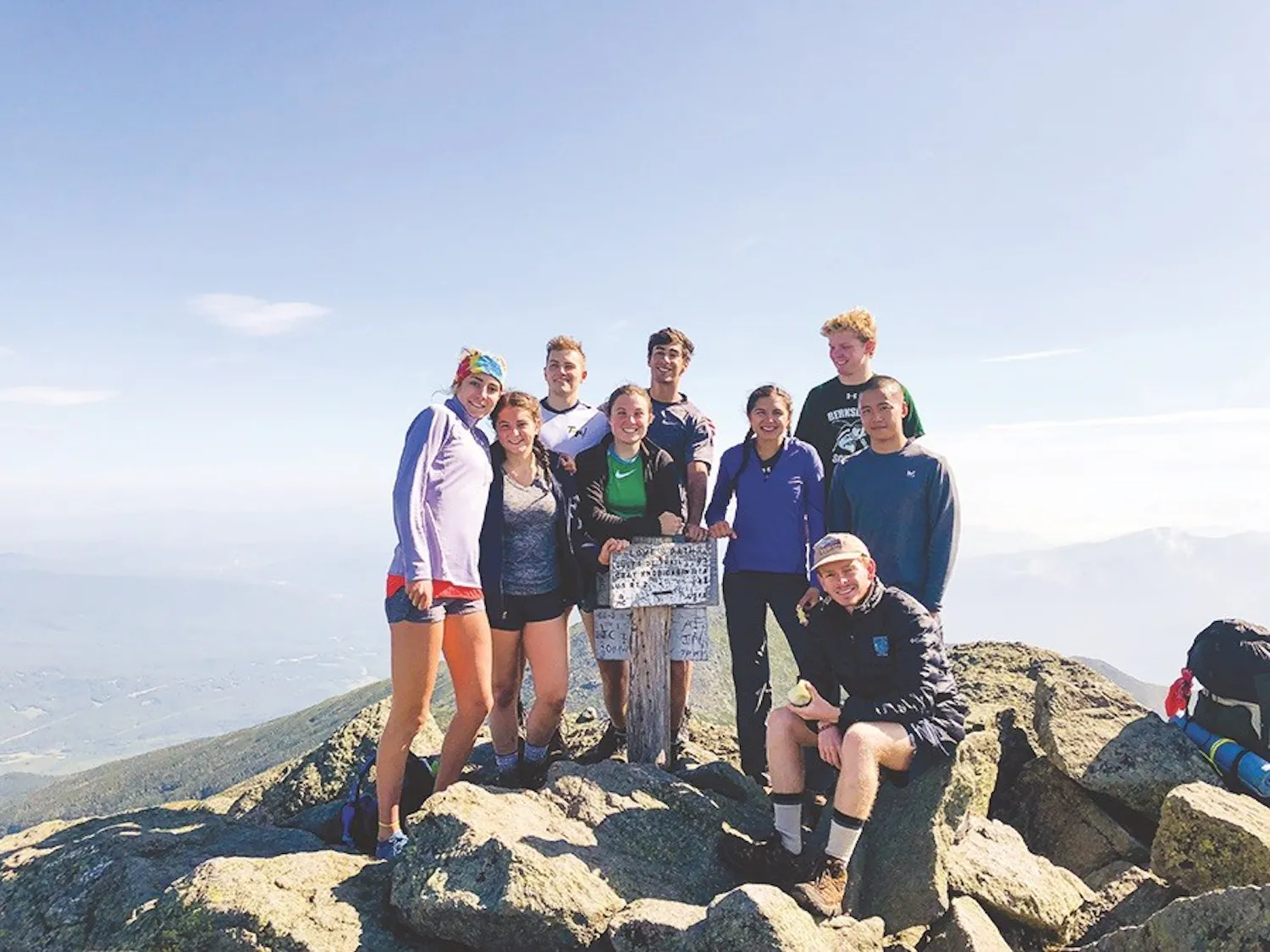
When I walked away from my parents on Robinson Hall’s lawn for Dartmouth Outing Club First-Year Trips, laden with a heavy backpack leftover from my father’s Eagle Scout days and several items of mild contraband, I knew that I wouldn’t be talking for a while.
The last word. When everything is said and done, what is left? You spent four years here. Twelve terms.
Last week, when I learned that Philip Roth had died, I searched my Notes app for the line from “American Pastoral” that I’d copied down last spring: “And since we don’t just forget things because they don’t matter but also forget things because they matter too much ... each of us remembers and forgets in a pattern whose labyrinthine windings are an identification mark no less distinctive than a fingerprint...” I was sitting on the grass outside of the River apartments on one of those first warm days of spring when being anywhere except in the sun felt like a sin, and I remember reading that line and thinking that it put into words something that I’d always known without knowing.
I ask a lot of questions. My friends frequently joke that I “grill” them with all that I’m wondering about.
Ever since I was a child, in response to practically any concern I have, my parents have always given consistent, simple advice: be yourself.
As of Week Nine my senior spring, it has finally hit me that I will soon be leaving this place for good.
Believing in a defined Dartmouth is a flaw on our campus and one almost every student sinks into.
2:40 p.m. I step into the main line of King Arthur Flour, placing myself right behind the other three customers extending outside of the entrance.
“We have some bad news for you all. This is never an easy thing for us to do.” It’s freshman fall.
Dartmouth is a school full of traditions and these traditions are what bind our community tightly together.
Time flies when you’re having fun. Or in our case, time flies when your term is packed back-to-back with midterms, meetings, lunch dates and midnight cram sessions.
ABSTRACT: The purpose of this research is to further develop the theory of the origins of relative time, which can be synthesized from absolute time.
I have a cheat sheet that helped me trace David Harbour ’97’s theatrical journey through Dartmouth and back to the stage of Spaulding Auditorium last Sunday.
Carolyn: I was disappointed to find out that I was randomly assigned to live in the River — notoriously known as one of the worst dorms because of its distant location from the center of campus.
They’ve made it. More than a decade of practice, games, tournaments and tryouts, and they have made it.