
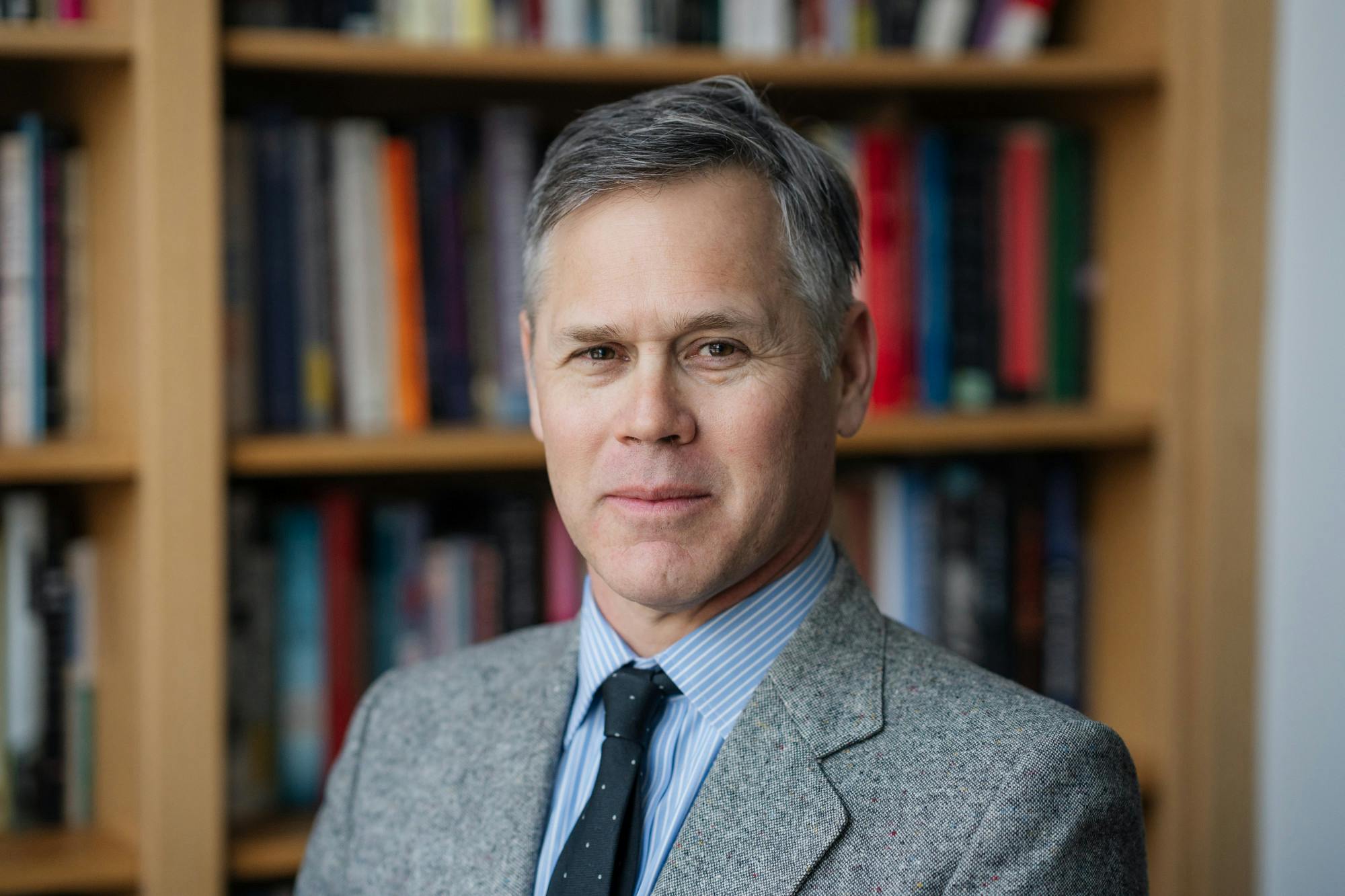
Latin American, Latino and Caribbean studies professor Matthew Garcia provided the New York Times with the tip about sexual assault allegations against Cesar Chavez, co-founder of the United Farm Workers union, that prompted a five-year long investigation which revealed that Chavez sexually abused girls as young as 12 in the 1970s.
Garcia said he learned of the allegations against Chavez from contacts he made while writing his 2012 book “From the Jaws of Victory: The Triumph and Tragedy of Cesar Chavez and the Farm Worker Movement,” the first work to publicize Chavez’s extramarital affairs with adults.
The contacts forwarded Garcia a post authored by Debra Rojas — one of the women who says Chavez sexually abused her from 1972 to 1977 — on a private Facebook group of UFW veterans. In the post, Rojas wrote, in part, “Wake up people. This man u march for every year molested me,” according to the New York Times. Garcia sent the post to reporters at the New York Times because he believed they had better investigative resources and because the Cesar Chavez Foundation had displayed “aggressive” behavior toward Garcia in the past, Garcia said.
“The Cesar Chavez Foundation hated my book,” Garcia said, referring to “From the Jaws of Victory.” “They tried to bury me. They said I lied; they did all kinds of nasty things. I don’t want to have any part of that, but I have friends at the New York Times. So I was the whistleblower.”
The Chavez Foundation and the UFW did not respond to requests for comment.
In an open letter on their website, the Chavez Foundation wrote that they are “grappling with what to do with a name and identity that carries with it so much history, but now also carries so much pain.”
“We recognize that schools, cities and institutions across the country are wrestling with questions about how to commemorate this legacy and what it means,” the foundation wrote. “Those decisions rightfully belong to those communities. We support and respect whatever paths they choose.”
On March 19, UFW announced that it had cancelled its Cesar Chavez Day activities for that month. Cesar Chavez Day has been a federal commemorative holiday celebrated on March 31 — Chavez’s birthday — since 2014.
“As a women-led organization that exists to empower communities, the allegations about abusive behavior by Cesar Chavez go against everything that we stand for,” the organization wrote in an open statement. “These disturbing allegations … are shocking, indefensible and something we are taking seriously.”
Manny Fernandez, one of the Times’ reporters on the story, said on The Times’ podcast “The Daily” that he first received the tip from Garcia when he was “just getting settled as the LA Bureau Chief.”
“The email from [Matthew] Garcia was basically saying, ‘I didn’t write about this in my book, but there are some things with Cesar Chavez and girls that you should look into,’” Fernandez said on the podcast.
Garcia said he gave “direction” to the journalists throughout their five-year investigation.
“They asked me where documents were,” Garcia said. “They’d need me to confirm something or explain some historical fact or identify some person.”
Following the publication of the Times’ investigations, institutions around the country have moved to rename holidays, schools and streets that bear his name. Dartmouth’s LALACS department is one of them.
Since 1994, the LALACS department’s Cesar Chavez Pre-to-Postdoctoral Fellowship in Latin American, Latino and Caribbean Studies has been one of the most “famous” in the field, according to Garcia.
“It’s coveted,” Garcia said. “When people get it, they have a leg up in the job market and they win the best positions in the country.”
The fellowship was created a year after Chavez’s death in 1993, according to LALACS director Desiree Garcia, who is married to Matthew Garcia. Chavez’s last public lecture took place at the College five days before his death, she said.
Matthew Garcia said the UFW never funded the fellowship, which was named for Chavez on the LALACS department’s “own volition, because he was so important.”
On March 18, Desiree Garcia called an emergency vote of the LALACS faculty to make a formal request to the Office of the Provost to change the name of the Cesar Chavez Pre-to-Postdoctoral Fellowship.
The move is “largely symbolic” and “doesn’t do the work of actually restoring justice, especially to his victims,” Desiree Garcia said.
“Latino historians have really held up Chavez as a kind of supreme figure in our history,” Matthew Garcia said. “We need to acknowledge that history in Latino studies is more than Cesar Chavez.”
Matthew Garcia said he hopes the nation-wide name changes will “allow other organizations that are doing good work” to step out from the “shadow of the UFW.”
“Heroes are dangerous because we fetishize that person and we make them godlike,” he said. “When they fail, we feel let down and we feel lost.”
Dartmouth Association of Latino Alumni president Unai Montes-Irueste ’98 said he wants the fellowship to “focus back in on the work of the movement and the work of the scholars.”
“Other fellowships in other departments don’t bear historical names,” Montes-Irueste said. “Instead of having a fellowship in an academic department named after a historical figure, we should have it be called the fellowship for the department.”
On March 29, the DALA board voted unanimously in support of renaming the fellowship.
The LALACS website now lists a “Pre-to-Postdoctoral Fellowship in the Department of Latin American, Latino and Caribbean Studies,” rather than a fellowship named after Chavez. The Guarini School of Graduate and Advanced Studies website still lists a “Cesar Chavez Predoctoral Fellowship.”
The Cesar Chavez Pre-to-Postdoctoral Fellowship is not itself being renamed, according to College spokesperson Jana Barnello.
“A new Dissertation and Postdoctoral Fellowship in Latino Studies has been created, and a new fellow will be named in the coming weeks,” Barnello said. “The Provost’s Fellowship Program will not fill the Cesar Chavez Predoctoral Fellowship position.”
Montes-Irueste questioned why the administration has “evaded” requests from alumni organizations — such as Women of Dartmouth Representatives for the Dartmouth’s Alumni Council — to rename other campus institutions.
“It can’t just be accountability about Chavez,” Montes-Irueste said. “It has to be accountability about the bigger issue here, which is sexual violence, sexual harassment and sexual coercion. I hope we will see action from the administration on renaming the building that bears Leon Black’s name.”
A spokesperson for Black wrote in an email statement to The Dartmouth that the Dechert law firm concluded that Black “paid Epstein for estate planning and tax advice and that he had no awareness of Epstein’s criminal activities.” Dechert investigated Black in an investigation on behalf of the board of Apollo Global Management, an asset management firm co-founded by Black.
“There is absolutely no truth to any of the allegations against Mr. Black,” the spokesperson wrote.
The College declined to comment on renaming of the Black Visual Arts Center. Dartmouth has no current financial relationship with Black.
Alex Klee ’29 is a reporter from Woodbridge, Conn. He plans to major in economics and minor in math. He enjoys live music, skating and climbing.


