Evolution of the Ideal Dartmouth Woman
Before Dartmouth went coeducational in the 1970s, there weren’t as many college-aged women in the Hanover area.
“Warm-cut through Blobby @now. Bring a fracket.” Unless you’re a student at Dartmouth, you probably have no idea what I just said.
This summer, a soon-to-be Dartmouth freshman texted me asking whether she should buy any articles of clothing in particular in preparation for her transition from our hometown of Lexington, Kentucky to the cold north.
Sprawled across her sofa bed with our computers perched on our stomachs, my friend Sophia and I were tackling the study guide for our biology final.
This summer, I traded my bathing suits and flip flops for business casual blazers and flats.
Any kind of life transition puts your confidence to the test. The transition to Dartmouth, where it seems like every other person has created a business or cured a disease, is especially trying.
Think about the t-shirts you own. How many did you actually buy? It’s almost impossible to resist the allure of free stuff, so swag from clubs, events, internships, Greek life and more is bound to accumulate in one’s closet.
Our campus, though nestled in the white mountains of New Hampshire, hours away from the hustle and bustle of city life, is a thriving and pulsing center.
A month ago, I would have been sorely underqualified to write about silence, the theme of this week’s issue.
Do you ever find yourself using your phone when walking to class to avoid making eye contact with the girl you met to last week, because you don’t know whether she will say ‘hi’ or not?
Ever since I was a young girl, my classmates described me as a “violeta timida” (timid violet). This meant that I was always the quiet one in every social circle, which at that time was composed of my family, school and neighbors.
One of the most emblematic and accurate descriptions of our school can be found in its motto: “Vox Clamantis in Deserto,” or “a voice crying out in the wilderness.” Yet the phrase is rarely given much attention or thought, perhaps dismissed as an archaic Latin idiom that fails to inspire students.
Have you ever walked into an environment feeling awkward because you were not familiar with the social norms?
“I raise up my voice not so I can shout,” said Malala Yousafzai, the Pakistani advocate for women’s rights who won a Nobel Prize at age 17, “but so that those without a voice can be heard.
Hierarchy. Our lives, and society, are often structured around hierarchies. Some of the hierarchies around us are benign.
A little over a year ago, I entered Dartmouth’s not-yet-freezing campus a bright-eyed and bushy tailed NARP (Non-Athletic Regular Person). I soon noticed the omnipresence of varsity gear at Dartmouth: black backpacks with telltale stitched green player numbers, Peak Performance shirts and Dartmouth green attire that punctuate the wardrobe of 913 students this year. Last winter, I found the Boxing Conditioning Club (shameless plug). As of this fall, I am one of four co-captains.
Jaime Eeg ’18 is no stranger to the term “crazy horse girl.” It’s the name that people sling at her when she talks about horses — the ones on the horse farm she was raised on, and her very own that she keeps at a barn nearby.
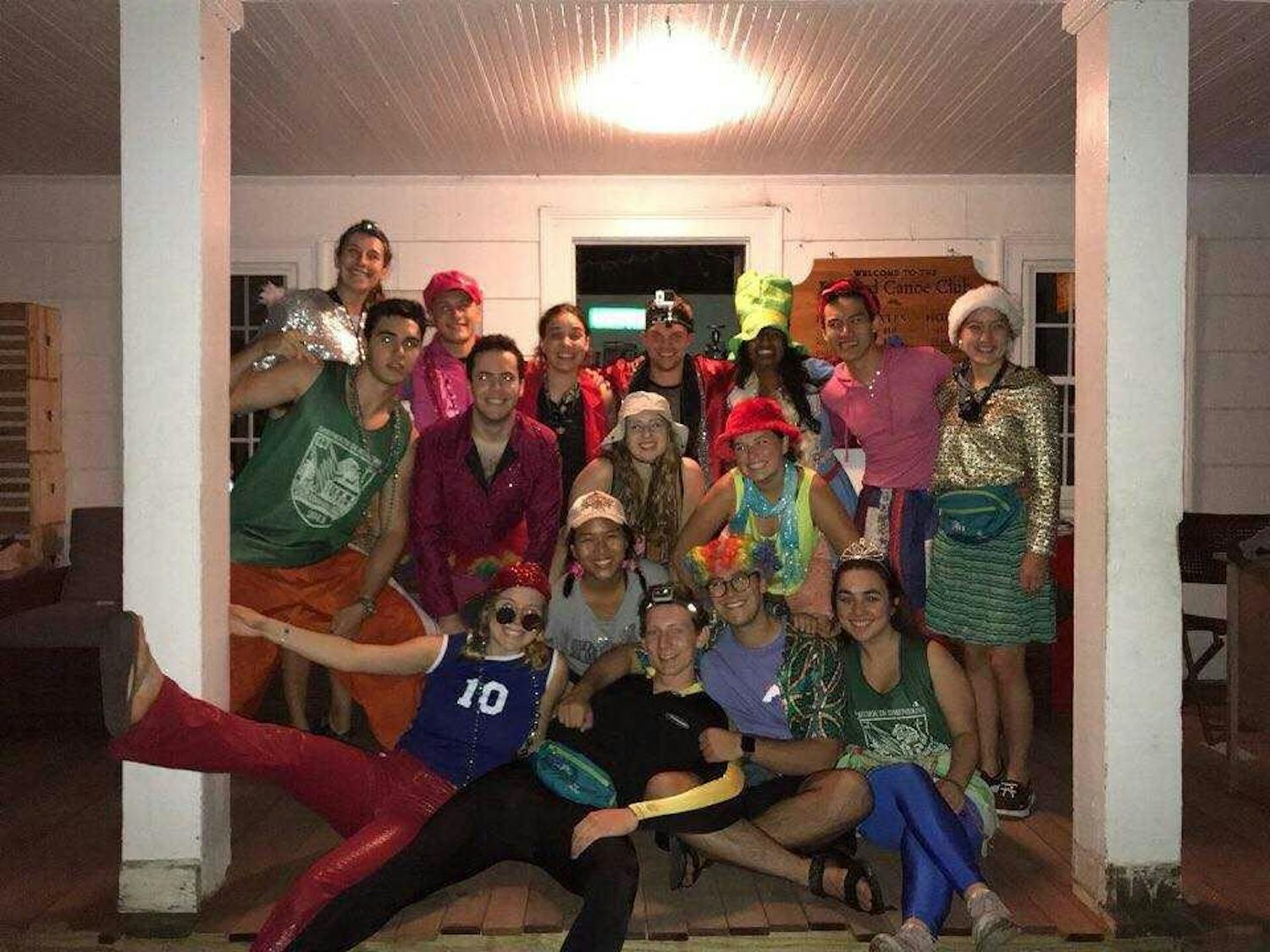
Ninety percent of Dartmouth students begin their four years bundled with a group of their soon-to-be classmates, camping in the woods, hiking amidst pleasant conversations, trying their hand at canoeing or making pizza at the Organic Farm.
Dartmouth Dining Services is known to students for holding a monopoly over dining options on campus.