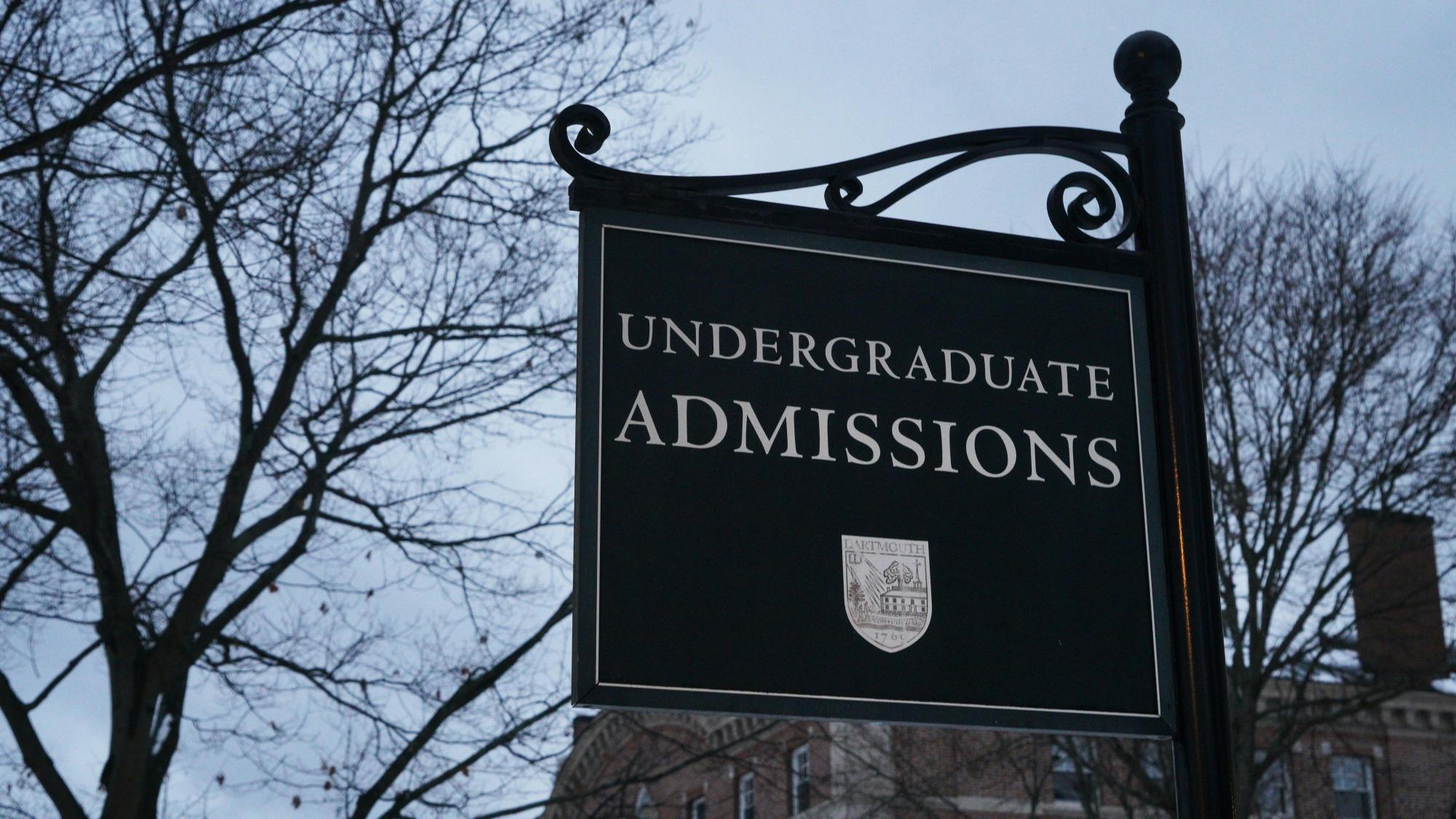
On Dec. 15, the College extended its offers of early admission to the Class of 2030. For a second year, the College declined to release information on how many students applied or were accepted until the regular decision period concludes in March.
Assistant vice president and dean of undergraduate admissions Kathryn Bezella said in a Dartmouth News article that the College is withholding admissions data because it does not want to “intimidate” regular decision applicants.
“Each time we release specifics about the application numbers while the application cycle is still underway, there might be a talented student who opts out of the regular decision process because they prematurely decide that the odds are against them,” Bezella explained in the Dartmouth News article.
Last year, 3,550 students applied to Dartmouth for early decision, comprising the College’s largest-ever early application pool.
This is part of a broader pattern of withholding admissions data. This year, the College rejected multiple requests for information about the Class of 2029’s gender or racial and ethnic backgrounds, only releasing data on the Class of 2029’s geographic and income backgrounds. For this article, the College again declined to comment on its decision not to publish data.
The Class of 2028 — the first round of applicants post-affirmative action — saw an increase in students from marginalized backgrounds, even as peer institutions, including MIT and Harvard, experienced a decline in racial diversity.
The College did publish estimates of the Class of 2030’s economic backgrounds in a Dartmouth News article. Approximately 20% of Class of 2030 members admitted via early decision are from low-income backgrounds, with more than $22 million in need-based scholarships awarded thus far, according to Dartmouth News.
The preliminary average scholarship amount is $73,000 annually, matching last year’s record-high average award, according to Dartmouth News. The average scholarship covers 78% of the cost of attendance, which rose to $95,490 this year, up from $90,813.
The Class of 2030 is the College’s second since reinstating its standardized test requirement last year. Ninety-three percent of those admitted submitted SAT or ACT scores in the top 25% of their high schools, according to Dartmouth News. Ninety-eight percent are ranked in the top 10% of their graduating class. One in three are projected to be their class valedictorian.
The College’s target for the Class of 2030 is 1,175 students overall. The Class of 2029 was 1,209-strong, after 1,702 offers of undergraduate admission.
Jackson Hyde ’28 is a senior news reporter, who writes about artificial intelligence and technology at the College. He is from Los Angeles, Calif., and is majoring in Government modified with Philosophy.