At the ninth weekly Dartmouth Student Government meeting of the spring term on May 31, senators discussed upcoming changes to meal plan prices, which will take effect for the upcoming fall term. They also voted to fund providing free laundry detergent sheets from Generation Conscious, an environmentally-focused startup based in New York, for undergraduates.
East Wheelock senator Sud Paul ’27, who serves on DSG’s dining committee, announced that the price of the 80- and 115-block and the off-campus and apartment meal plans will increase starting with the upcoming fall term. Dartmouth Dining director Jon Plodzik wrote in an email statement to The Dartmouth that 2026-27 meal plan prices will be released “soon” and that the prices Paul announced at the meeting are “not yet final.”
At the meeting, Paul said the 80- and 115-block will be $120 more expensive as Dartmouth Dining increases the cost of both plans from $2,375 to $2,495. The new plans will include a 3% increase in dining dollars: The 80-block, which currently comes with 785 DBA and 80 swipes, will have 815 DBA; the 115-block, which currently comes with 425 DBA, will have 500 DBA, according to Paul.
The apartment plan will have 50 swipes instead of 45 and will increase in cost from $1,890 to $1,950. The off-campus meal plan, which currently comes with 425 DBA, will instead have 390, and the plan will cost $930, up from $900. Swipes and DBA for the Ivy Unlimited plan will not change, but the price will increase from $2,697 to $2,832, Paul said.
“It’s a good thing to have at least [the] 80 and 115 [plans] since these are the ones that people who are upperclassmen generally switch to,” Paul said during the meeting. “The only bad [change] is [that] the off-campus [plan] is obviously seeing a decrease in DBA, which isn’t preferable.”
Student body president Sabik Jawad ’26 explained that the meal plan price adjustments are due to inflation.
“We got into this mess in the first place because we were not having regular inflation adjustments in meal plans, even though the prices [of plans] were really bad,” Jawad said.
During senate voting discussions, general senator Isla Walker ’29 proposed using the remaining $2,500 of this year’s DSG budget to fund buying Generation Conscious detergent sheets for laundry dispensers in the fall. DSG unanimously agreed to allocate $2,000 for buying detergent sheets and plans to revisit this initiative during the summer when DSG receives the new budget. The Dartmouth previously reported that the initial 22,230 eco-friendly detergent sheets would cost $3,000.
South House senator Jason Zhu ’28 instead proposed directing $1,600 of the remaining budget to DSG’s course book accessibility initiative instead, which collaborates with Still North Books and Bar to purchase course materials for students. Last term, the program purchased course textbooks for over 250 students, according to Zhu. Zhu hopes to use the funding to buy course materials for students during sophomore summer.
“We’re also looking to try another round of textbooks for the summer term since a lot of people have been talking to us about that,” Zhu said.
General senator Ana Arzoumanidis ’28 asked if books purchased through the program are being tracked differently than in previous terms, as many students — who are supposed to return the books to DSG at the end of each term as part of the program — did not do so in previous terms.
“We lost a lot of books and that was a substantial amount of money, given how much we spent on this project,” Arzoumanidis said. “I love that we’re doing this for students, but we also need to make sure that we’re efficiently using our money.”
Zhu said that this term, the senate has a “clear track record” keeping track of which students have bought books due to its collaboration with Still North Books and Bar. The program has helped to “easily” identify students who have bought books through the accessibility initiative by DSG and DSG sends emails to follow up on returning the books at the end of the term, according to Zhu.
Jawad agreed to use the president’s discretionary approval — which does not require a Senate vote — to use DSG’s remaining budget after funding Generation Conscious — $500 — to fund the course book accessibility initiative for the summer term.
North Park senator Issa Allison ’29 shared that in a recent meeting with the Office of Information, Technology and Consulting and the Client Technology Consulting subgroup — which provides technology-specific consultations — the College decided to switch from Gmail to Outlook for the Class of 2030’s and subsequent class years’ email communications due to Outlook’s “enhanced security capabilities.” The change would only impact email communications.
Allison proposed that DSG should send an email statement to students against the transition to Outlook.
“If it is a choice between two, I think [the Class of 2030] should have been Gmail,” Allison said. “[ITC] acknowledges the mistake that they had on their part for not reaching out to DSG in the first place.”
DSG unanimously agreed to send the email statement opposing the transition to Outlook for the Class of 2030.
College spokesperson Jana Barnello wrote in an email statement to The Dartmouth that the decision to transition to Outlook-only “strengthens security and ensures compliance with institutional standards, while improving integration across Dartmouth systems.” She declined to comment on ITC not reaching out to DSG prior to the decision.
During a closed session, senators discussed a draft resolution of a statement advocating for student representation on the Ad Hoc Committee on Grading Practices and Assessment — a faculty committee created in April to investigate grade inflation — according to the publicly available meeting agenda.
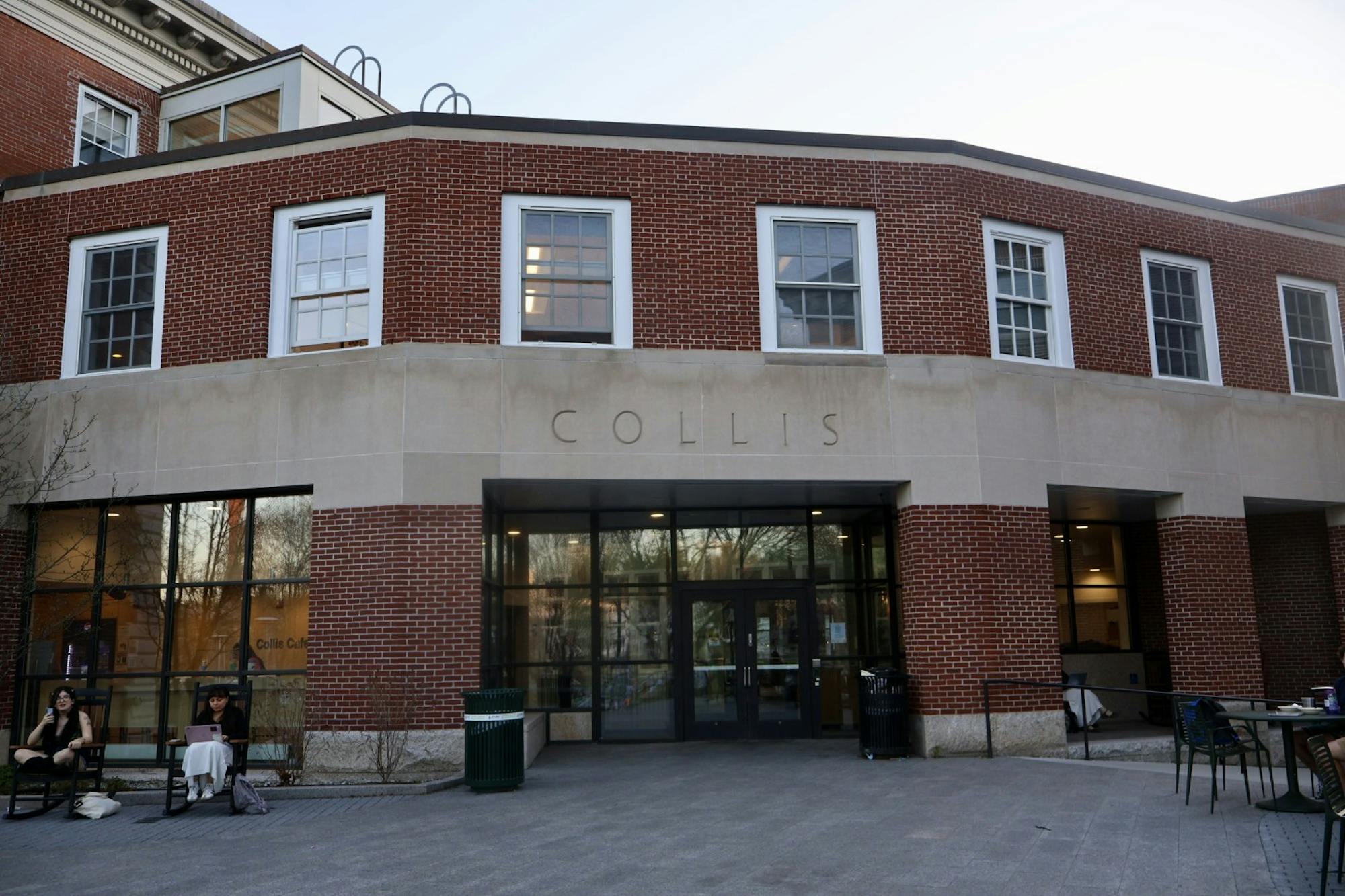
DSG Senate meetings are held weekly on Sundays at 7 p.m. in Collis 101 and are open to all students.
Kailyn Holty ’29 is a news reporter from Redwood City, Calif., and is majoring in economics and quantitative social science.