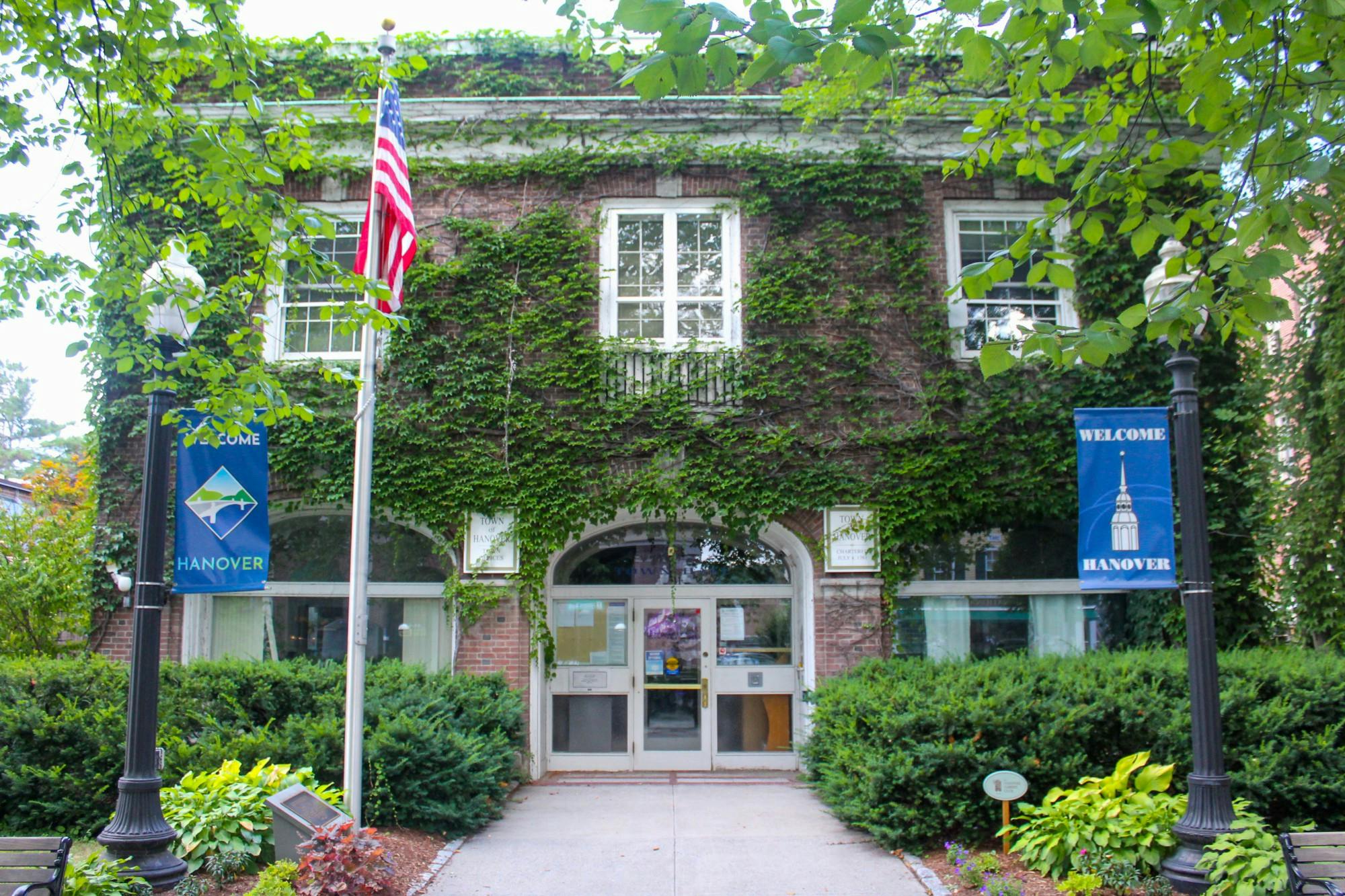
At a July 7 meeting, the Hanover Planning Board rejected a petition to revoke approval for a plan to divide an 18-acre property in Etna into three separate lots. The petition raised concerns that the approved plan would cause massive damage to local wetlands.
Hanover residents Phillip James and Celena Robles first filed the application to subdivide their property on April 15, 2025. The N.H. Department of Conservancy approved the subdivision plan on July 2, 2025. The HPB approved the subdivision plan on July 22, 2025.
The Sabky Trust — a local private property owner — owns a property which adjoins James and Robles’s Etna lot. The trust filed the petition on June 1 this year to request a revocation of the subdivision plan, citing that James and Robles “materially violated” the conditions of the HPB approval plan by not adhering to environmental protection of the Slade Brook wetlands.
In an email statement to The Dartmouth, Robles wrote that the purpose of the subdivision plan is to “build two new homes” since the family “enjoyed” the renovations they did on their first home in Etna. She wrote that homes will serve as “mid-term rentals.”
“We know the region has an unmet need for homes, so we worked with an engineer to design a driveway, stormwater and drain fields for two homesites,” Robles wrote. “The resulting density is consistent with the area’s zoning.”
In addition to the June 1 petition, Sabky Trust representative Janice Benson said in an interview with The Dartmouth that the trust is continuing an “appeals process.” Robles said that she “never imagined this simple project might go on for years.”
Benson said that the trust filed the petition against the subdivision approval because they believe the new water drainage systems may have negative effects on local wetlands based on “multiple expert evaluations.”
The current layout of the land allows for water to flow first through the James and Robles property and then through the Sabky Trust property, at which point the water goes through separate culverts which feed into the Slade Brook wetlands.
Benson said that per the current subdivision plan, water will primarily flow through only a single culvert, meaning that one wetland will have “almost all their water cut off and another wetland will be flooded.”
Robles wrote in her email that any complaints filed against the subdivision plan are “without merit.” In a follow-up statement, she added that the project “has been found to comply with applicable environmental and land use regulations.”
“This is because our family has engaged reputable engineers, multiple wetlands scientists, surveyors and designers, who have done the hard and expensive work to study the land, communicate with regulators, to understand and comply with land use and environmental rules,” she continued.
Antioch University professor and N.H. certified wetlands scientist Michael Simpson, who was hired and paid by Benson to do a scientific analysis of the effects of the subdivision plan on local wetlands, said in an interview that wetlands are an important ecosystem, which host a diverse range of “vegetative species” and have the ability to “clean water” and “reduce flashwaters.” He told The Dartmouth that he found in his assessment of the land that the subdivision plan will change the water flow from a “sheet flow” — a spread-out overland flow with no defined channels — to a “columnar flow,” which is a more vertical flow system.
Columnar flow will change the drainage in a way where water flows into a single culvert, directing water into one single wetland, instead of the “number of wetlands” which are “downhill of [Dogford] Road.” As a result, Simpson said believes that wetlands in Slade Brook will “basically no longer get water.”
Hanover Conservancy executive director Barry Matthews said that the organization holds a conservation easement — a legally binding “permanent deed restriction that limits future uses of the property” — on Moisture Meadow, a property downhill and across the street from the subdivision property. While the subdivision plan does not directly affect the Moisture Meadow project, Matthews said that there is an indirect impact from the plan creating “increased” and “more intense” runoff which would flow “onto the conservation easement area at Moisture Meadow.”
Matthews said that the conservancy wrote a letter “opposing the subdivision” to the HPB in the spring of 2025, but did not partake in the recent petition by the Sabky Trust. He said that the initial letter seemed like the most “effective” channel to voice concerns over the plan.
The conservancy will continue “making our annual monitoring visits to Moisture Meadow and just checking to see if subdivision goes ahead uphill, whether as planned or as modified,” he said. “Either way, we’ll continue the sort of diligent work that we do to make sure there are no ill effects downhill.”
Robles wrote in her email that the process has been “painful” for her family and “not easy financially.”
“In our view, this important public process, allowing the public to communicate their concerns, is being abused for no meaningful effect on our community’s important environmental protections,” she wrote.
Multiple members of the Hanover Planning Board and the New Hampshire Department of Environmental Services did not respond to several requests for comment at the time of publication.
Jared Gonzalez Arce '29 is a news reporter from California majoring in history. Out of The D, Jared is in surf club and loves music.