
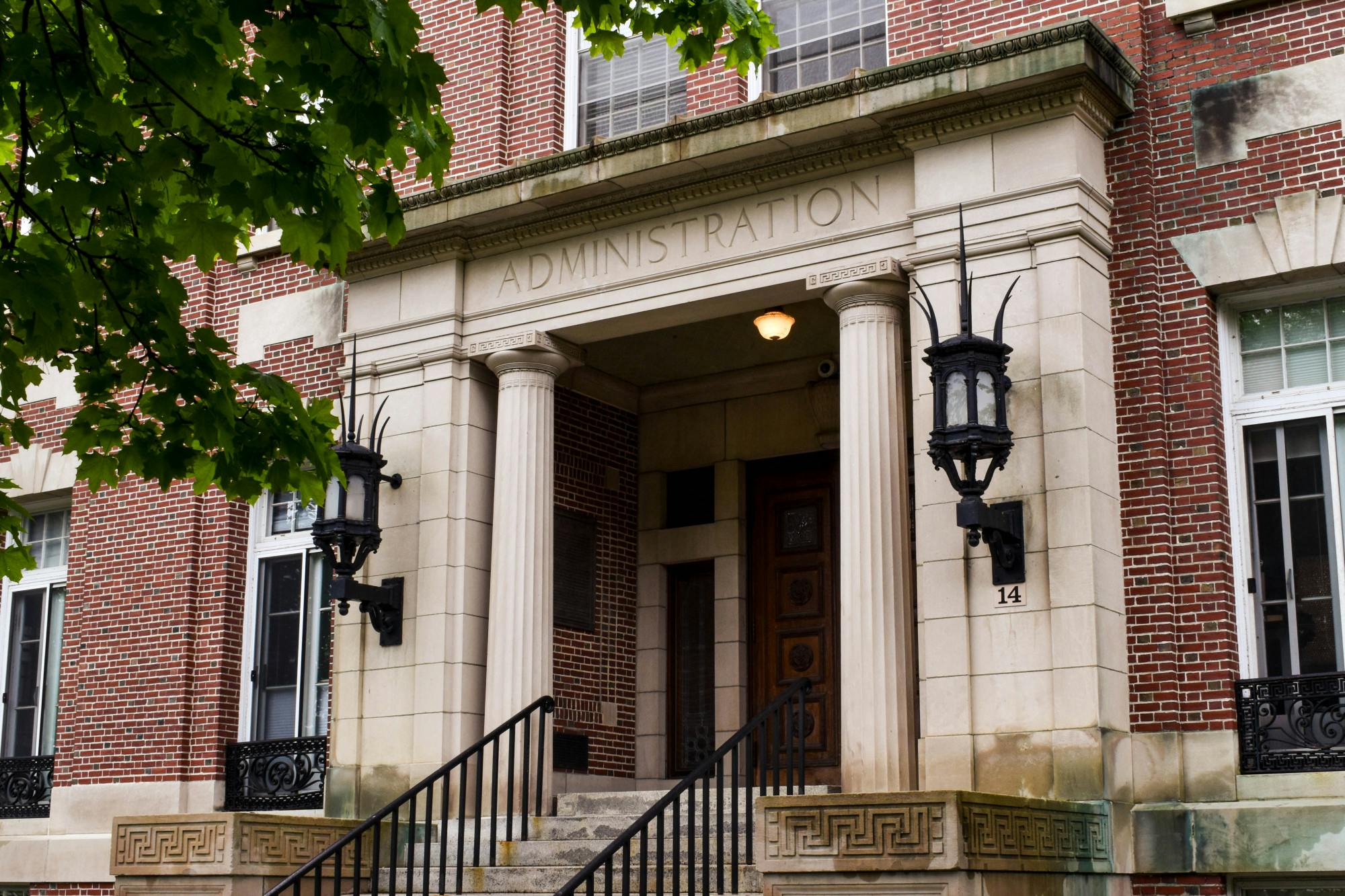
In their June 11-14 meeting, the Dartmouth Board of Trustees directed College administrators to “begin planning” for the expansion of the undergraduate student body. Expansion efforts will prioritize “necessary staff and infrastructure support” and involve a “structured, multi-year process that engages faculty governance, adheres to fiscal discipline and is informed by community input,” according to a Dartmouth News report.
In an email statement to The Dartmouth, College spokesperson Jana Barnello wrote that the College will begin a “multi-year process” this fall to “determine how to add some students and faculty and increase support for current faculty and staff.”
“The goal is to enhance Dartmouth’s unique teacher-scholar model and to ensure we are providing the best undergraduate education within a world class university,” she wrote.
Dartmouth will “remain the smallest Ivy,” Barnello added, though she declined to share a specific expansion target. The Ivy with the second-lowest current undergraduate population is Princeton with 5,826 enrolled, according to its website at time of publication.

The trustees’ proposal comes nine years after former College President Philip Hanlon ’77 formed the Task Force for Enrollment Expansion in September 2017 to determine the potential advantages and challenges of increasing the size of the College’s undergraduate population by 10% to 25%. The task force was assisted by a fellow from the American Council on Education and consisted of two deans, five professors, one special assistant to the president and one Dartmouth trustee. It concluded in April 2018 that the costs of increasing classroom capacity, dining, housing, program budgeting and student support needs would likely be proportional to any increases in tuition revenue from higher enrollment. The undergraduate student body was 4,410 in academic year 2017-2018, and 4,715 in academic year 2025-2026, marking a 6.9% increase. Total tuition, room, board and mandatory fees were $68,109 in academic year 2017-2018 and $95,490 in academic year 2025-2026, a 40.2% increase.
Some former members of Hanlon’s task force expressed uncertainty about the new proposal to expand the undergraduate student body.
Biology professor and co-chair of Hanlon’s task force Elizabeth Smith wrote in an email statement to The Dartmouth that the recommendations the task force made in 2018 still apply to the current expansion, but she did not know “to what extent” those recommendations are currently being “taken into consideration” by the College administrators and trustees planning the expansion.
“The recommendations we made in 2018 … are all still valid and included recommendations for community engagement, infrastructural renewal, identification of resources for faculty and student support and timing of enrollment growth,” she wrote.
Biology professor and member of Hanlon’s task force Mark McPeek noted the large amount of resources required to facilitate an expansion.
“We already don’t have enough dorm rooms, so you’re going to have to build dormitories right off the bat,” he said. “If you want to maintain class sizes at the same levels, then you’re gonna have to hire more faculty and you’re gonna have to build more buildings to have offices for faculty to do research and scholarship.”
McPeek said that the 2018 push for expansion came from trustees at the time who thought it could help strengthen Dartmouth’s operating budget.
“There were a couple of trustees [at the time] that thought: ‘We’ll just increase the number of students, we’ll have more tuition coming in, we’ll have a bigger budget and it’ll make things more efficient,’” he said. “But then when you add everything up that you need to support those students, that immediately takes all that away. A lot of this sounds really good until you start actually running the numbers.”
In an email statement to The Dartmouth, Spanish and comparative literature professor and co-chair of the task force Rebecca Biron wrote that she hoped that those planning the expansion would consider the task force’s recommendations and make efforts to improve the student experience at Dartmouth overall.
“I certainly hope the Trustees proceed with careful attention to improving the quality of a Dartmouth education even as they attempt to increase the quantity of students we teach,” she wrote.
Barnello wrote that Hanlon’s task force “outlined several important conditions for adding some students and faculty” which “informed the deliberations” on the new expansion inquiry.
Alex Klee ’29 is a reporter from Woodbridge, Conn. He plans to major in economics and minor in math. He enjoys live music, skating and climbing.


