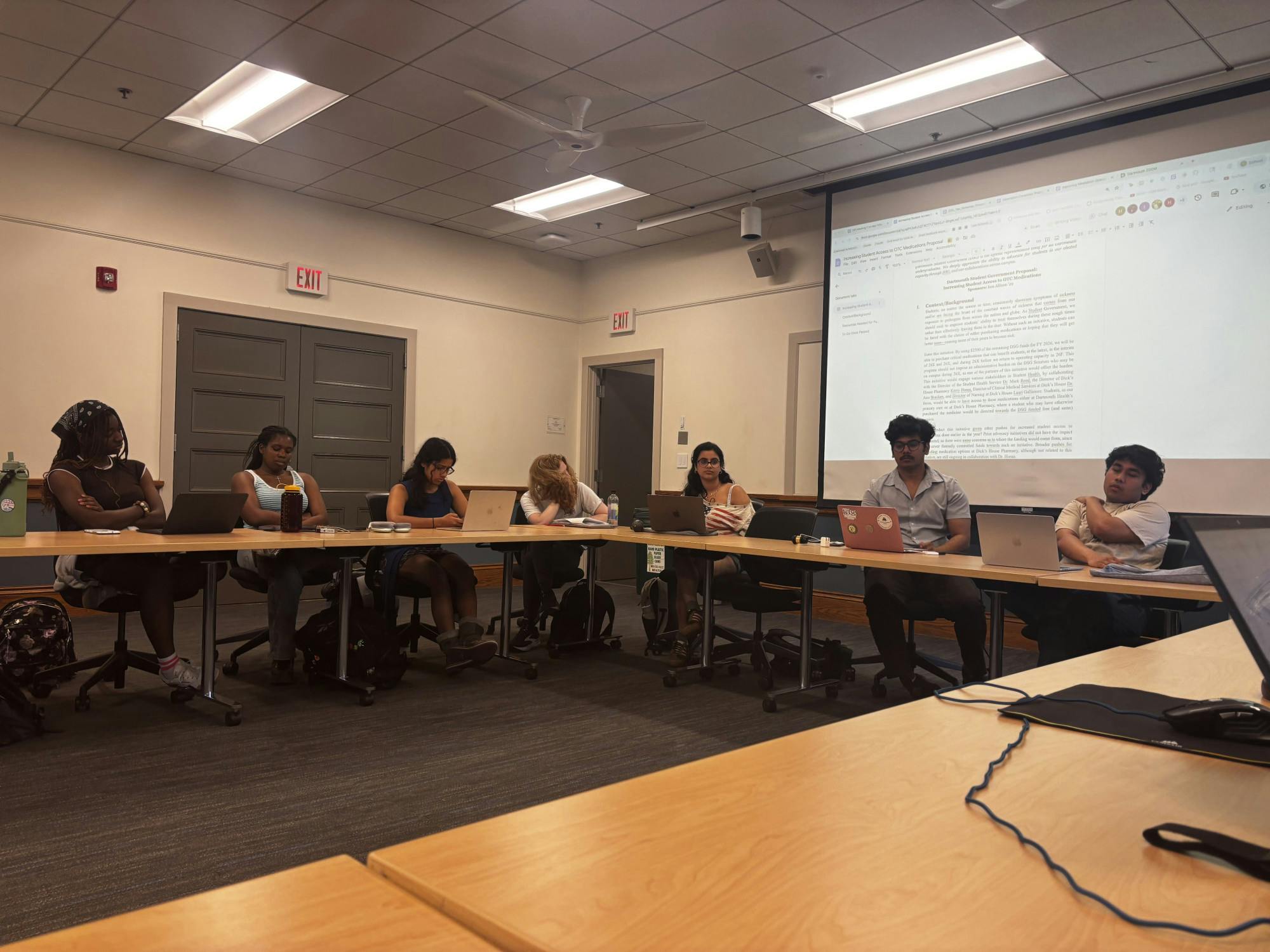
On May 17, at the seventh weekly Dartmouth Student Government meeting of the spring term, senators discussed a proposal pitched by general senator Isla Walker ’29 to fund free, environmentally-friendly laundry detergent manufactured by Generation Conscious, a New York-based startup.
Walker explained that installing laundry detergent dispensers, which would be located in the Collis Center and a “neutral zone” dorm by August 2026, would cost $1,500 per dispenser. The initial 22,230 eco-friendly detergent sheets would cost $3,000, which Walker planned to fund following the release of DSG’s new budget in July.
Walker said the project at Dartmouth will “target low-income students” for whom laundry detergent “might be a financial burden.”
Vanderbilt University already uses Generation Conscious detergent and dryer sheets in all of its residential dorms. It is funded by the Vanderbilt Green Fund, which is a student-led sustainability initiative.
General senator Ikenna Nwafor ’27 asked how sophomore summer will impact the project’s installation, since there will be fewer people on campus and less involvement from DSG.
Walker said she plans to install the detergent dispenser in August so it will be available for students by the fall term. She would oversee the installation during that time period without the need for general DSG oversight.
“I wanted to give it its best chance of success,” Walker said. “I’ll be here all of August and that means that I can be on campus and cognizant of it and have it installed before students arrive.”
DSG passed the funding proposal for $1,500 in a roll call vote with 13 senators voting yes, one voting no and two abstaining. DSG agreed to consider funding the additional $3,000 once they receive their new budget in July.
Representative Vani Miglani ’28 proposed funding the distribution of box fans for sophomores living in dorms without air conditioning this summer. This program, which DSG sponsored last summer as well, will offer 90 fans for students.
“A lot of the students don’t really have resources to purchase fans,” Miglani said. “Also because of the no-AC policy, what people do is that they have makeshift ACs in bedrooms, and then whenever Residential Life comes over to check the room, they hide around. So that’s also unsafe.”
DSG unanimously passed $2,000 to fund sophomore summer fans.
North Park senator Issa Allison ’29 presented a funding proposal to provide $2,500 to purchase over-the-counter medication for students. The program would work directly with Dick’s House pharmacy to help ensure students receive over-the-counter medication at no or reduced cost.
Allison also presented a proposal to provide $2,000 in funding to purchase a new massage chair for the Student Wellness Center to replace the current massage chairs, which has become “increasingly damaged over the years.”
“We would be able to purchase the chair to arrive by the end of spring term, and most critically during summer term, when the Student Wellness Center is in active use by students over summer to help them,” Allison said.
The senate decided to table discussions about the medication and massage chair funding proposals and reevaluate near the end of the academic year depending on DSG’s remaining budget.
DSG confirmed Noah Amidon ’27 as Election Planning and Advisory Committee chair. Amidon, who was recommended by the current EPAC chair, said in his campaign speech he would like to “increase communication” with DSG while “maintaining independence.”
Walker said that there were “a lot of issues with communication” regarding the election this year. For example, Walker explained that there were “emails responded to in an untimely manner” or were “never responded to.”
“I’ll say that this past election, how it was running cannot happen again,” Walker said. “There were a lot of issues with communication and emails that were just never responded to.”
In a statement to The Dartmouth, current EPAC chair Meghan Goyal ’26 said this year’s election saw “an unusually high volume of questions and communications.”
“We aim to respond to all candidate inquiries in a timely manner and recognize that communication is an important part of running a fair and effective election process,” Goyal said. “We respect this feedback and will take it into consideration as we evaluate how to improve communication and responsiveness in future election cycles.”
Amidon agreed that there were issues with email communication this year and said he plans to “work on it very much next year.”
DSG Senate meetings are held weekly on Sundays at 7 p.m. in Collis 101 and are open to all students.
Kailyn Holty ’29 is a news reporter from Redwood City, Calif., and is majoring in economics and quantitative social science.