
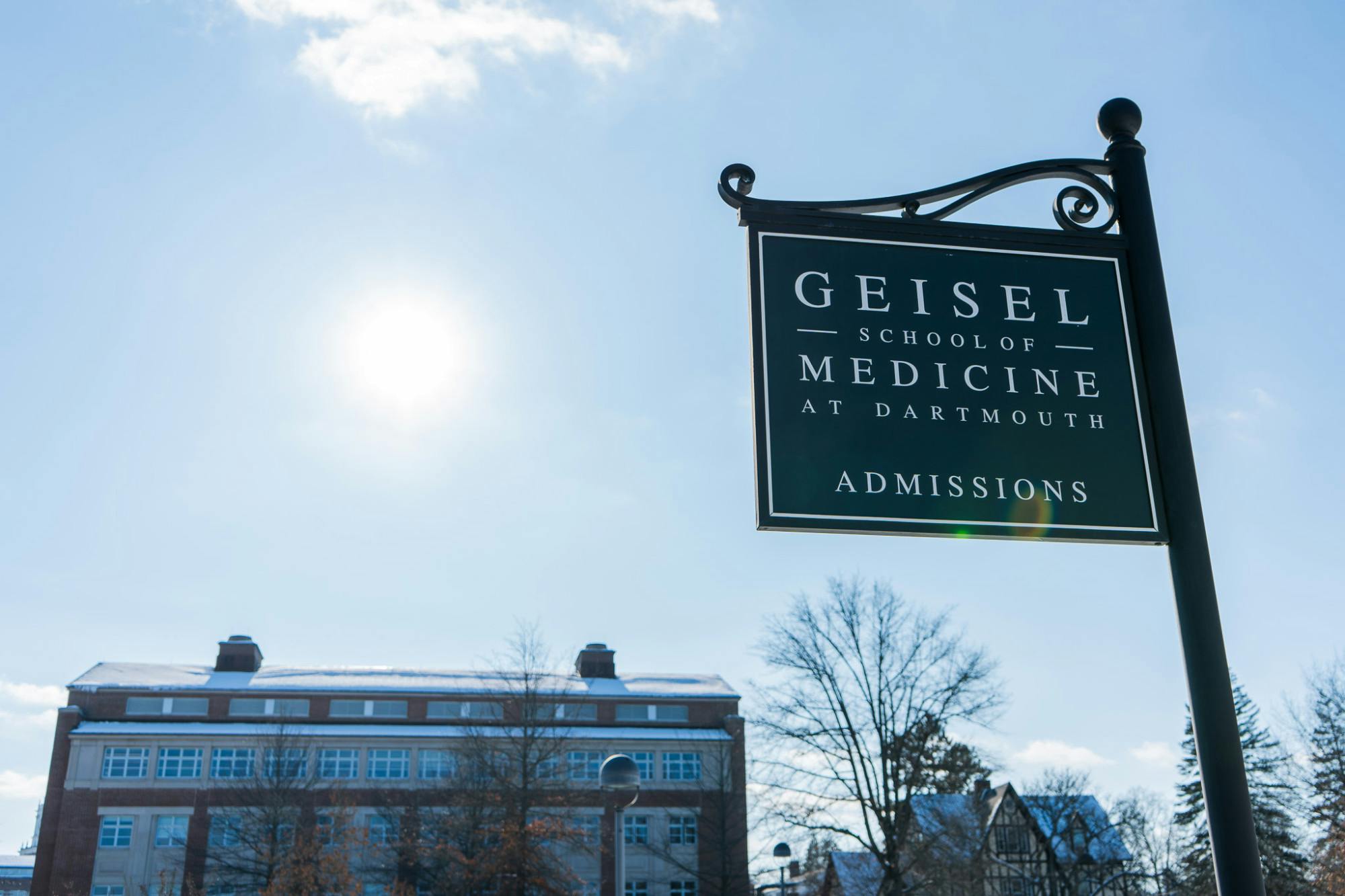
Today, the U.S. Department of Education Office for Civil Rights launched an investigation into the Geisel School of Medicine, along with four other medical schools, for “alleged racial discrimination” in admissions, according to a July 22 press release from the Department of Education.
The Office’s investigation will determine whether the medical school’s admissions policies violate Title VI of the Civil Rights Acts, which prohibits discrimination based on race. The press release did not name any specific policies about which it requested information. In 2023, the U.S. Supreme Court ruled in Students for Fair Admissions v. Harvard that universities and graduate schools cannot consider race in admissions.
College spokesperson Jana Barnello wrote in an email statement to The Dartmouth this afternoon that the College “will respond to the Department of Education’s request for information in due course, consistent with applicable law.”
“This is not a finding of wrongdoing,” she wrote. “We remain confident in Geisel’s admissions process.”
The investigation follows the Trump administration’s efforts to eliminate diversity, equity and inclusion programs in higher education. In August, President Donald Trump signed a presidential memorandum which requires schools that receive federal funding to report “enhanced” admissions data to the secretary of education, who will “take remedial action” against schools which fail to do so.
“The persistent lack of available data — paired with the rampant use of ‘diversity statements’ and other overt and hidden racial proxies — continues to raise concerns about whether race is actually used in practice,” the memorandum reads.
According to Geisel’s admissions requirements on its website, its “holistic” admissions process considers “diversity in all forms.” The medical school receives around 8,000 applications for 96 spots in each class, a 1.2% acceptance rate, the website states.
“We employ a holistic review process that places value on applicants who possess a strong academic foundation, diversity in all forms, a broad range of life experiences and traits known to promote success in the field of medicine,” the website reads.
In fall 2025, 0.5% of 566 non-international students enrolled in Geisel identified as American Indian or Native Alaskan, 23% as Asian, 8% as Black or African-American, 9.9% as Hispanic or Latino, 5.5% as two or more races and 48.9% as white, according to the Office of Institutional Research. Sixty international students were enrolled in fall 2025. The medical school has its own Office of Diversity, Inclusion and Community Engagement, which implements “sustainable programs that foster an environment where everyone feels a true sense of belonging,” according to its web page.
Since President Trump took office in 2025, hundreds of universities have removed or altered diversity statements, changed DEI hiring practices and restructured DEI offices.
In May, investigations by the U.S. Department of Justice Civil Rights Division found that the Yale School of Medicine and the David Geffen School of Medicine at University of California Los Angeles “illegally used race” in admissions and “discriminated” against white and Asian applicants. Assistant attorney general for civil rights Harmeet Dhillon ’89 said Dartmouth “do[es] not seem to be violating federal civil rights law” at a Dartmouth Political Union event on campus on May 14 — the same day Dhillon’s division announced the findings of its Yale investigation. In June, the Justice Department announced investigations into 15 additional unnamed medical schools.
Today’s inquiry is the first into the practices of any Dartmouth school. Still, the university has taken administrative steps to ensure it complies with federal law.
In April 2025, the College temporarily removed its main diversity and inclusion web page. The page was restored after the College made “a few small” changes to reflect that it “does not practice illegal DEI,” a spokesperson told The Dartmouth at the time. In September, the College declined to share racial and ethnic demographic data for the undergraduate Class of 2029, the second class to be accepted after the Supreme Court’s decision. It previously reported racial and ethnic demographics annually for each matriculating class year since the 2010s. At the end of June, Dartmouth’s Institutional Diversity and Equity office, previously a standalone senior administrative office, was moved under the Office of Campus Life following senior diversity officer Shontay Delalue’s departure. Administrators previously told The Dartmouth that the change was “structural,” and the office’s name, budget and programs would not change.
The Department of Education and Department of Justice did not respond to requests for comment. Dhillon declined to comment.
Iris WeaverBell ’28 is a reporter and editor. She is from Portland, Ore., and is majoring in economics and minoring in public policy.


