
This article is featured in the 2026 Freshman special issue.
Most members of the Class of 2030 could probably quote Robert Frost or Dr. Seuss long before they ever set foot in Hanover. What they might not realize is that both literary icons built those foundations right on Dartmouth’s campus.
Frost spent time at Dartmouth as a freshman in 1892 and returned decades later as a lecturer. Theodor Geisel, Class of 1925, adopted his famous pen name “Seuss” while writing for a campus humor magazine.
But Dartmouth’s literary life is hardly confined to the giants who came before us. Today, students still gather in Sanborn Library to read poetry, publish their work in student literary magazines and hear authors speak just off campus.
For freshmen interested in writing, or simply in reading, finding that community may just require knowing where to look.
Two writers, two Dartmouths
Frost’s time as a Dartmouth student was notably brief. He enrolled as a member of the Class of 1896 but, restless with college life, left during his first term. His relationship with the College, however, lasted much longer. The poet later returned to Dartmouth, including to lecture in the College’s Great Issues course from 1947 to 1962, which brought prominent speakers to campus to discuss contemporary issues.
Rauner Special Collections Library holds records of that later relationship, including recordings of Frost’s Dartmouth lectures, photographs of him with students and correspondence.
Memories preserved in Dartmouth’s oral history collection make those appearances feel less like institutional history and more like scenes from campus life. In one recording, Eric Barradale ’44 recalled evening gatherings where Frost sat and talked with groups of just 10 or 12 students.
That connection remains visible today. This past April, students, faculty, alumni, Upper Valley residents and local schoolchildren gathered in Sanborn Library for an annual celebration of Frost’s poetry.
English and creative writing professor Alysia Garrison, who organized this year’s event, told The Dartmouth at the time that students should be familiar with Frost because of his “deep and lasting connections to Dartmouth College” and his depictions of the surrounding rural New England landscape.
Frost’s Dartmouth story is one of leaving and returning. Geisel’s relationship with Dartmouth was different: Something recognizably Dr. Seuss began here.
Geisel arrived in Hanover from Springfield, Mass., in 1921. At Dartmouth, he gravitated toward the Dartmouth Jack-O-Lantern and became its editor-in-chief by the end of his junior year. He also periodically wrote what he later called “a few journalistic squibs” for The Dartmouth.
Geisel later credited Dartmouth as the place where he discovered the excitement of combining words and pictures, the pairing that would eventually define his career.
Even the name “Seuss” has a Dartmouth origin story. During his senior year, Geisel and several other students were caught with gin during Prohibition. College discipline forced him from his official position at the Jack-O-Lantern, but he continued contributing under different names.
In an email statement to The Dartmouth, Rauner Special Collections Library reference and instruction librarian Morgan Swan wrote that Geisel’s senior-year illustrations for the Jack-O-Lantern already displayed both his sense of humor and his developing artistic style.
“This is when he begins to use the pseudonym ‘Seuss’ to sign his work, although not exclusively,” Swan wrote.
A century later, the Jack-O-Lantern, founded in 1908, is still publishing as Dartmouth’s longest-running comedy organization.
Finding the writers who are here now
Frost and Geisel offer two different versions of Dartmouth’s literary inheritance. But for students arriving this fall, the more immediate question may be where writing happens now.
One answer is The Stonefence Review, a literary magazine established in 1980. The student-run journal of arts and letters publishes poetry, prose and visual art. While the organization previously published a physical edition each term, Stonefence moved to fully virtual publication this year, co-editor-in-chief Margot Ruland ’27 wrote in an email statement to The Dartmouth.
Ruland described Stonefence as an “entry-level microcosm” of Dartmouth’s larger literary community. At meetings, members consider anonymized submissions, read written pieces aloud and discuss what works and what could be improved.
“We get into some great debates,” Ruland wrote. “It’s always very interesting to see polarized reactions or completely different interpretations of the same work.”
The group also hosts Slate, a termly open mic that draws performers from across campus.
Stonefence co-editor-in-chief Connor Perrotta ’27 described a literary community that extends beyond the magazine itself.
“Writers at Dartmouth are uniquely invested in the writing of those around them in addition to their own,” Perrotta wrote in an email statement to The Dartmouth. “We’re really tight-knit. I could gush in detail about the short stories, poetry and longform works in progress of at least half-a-dozen friends, and they could do the same about mine.”
Perrotta also pointed to Dartmouth’s literary alumni, describing current students as “writing in the shadows of so many literary and creative alumni titans.”
“We often joke that Robert Frost is a Sanborn ghost,” Perrotta wrote.
For incoming students unsure whether they have enough experience to participate, Ruland’s advice is simple.
“You get to decide if you’re a writer!” she wrote. “Stonefence is a really low-stakes, friendly group of students and provides easy entry into this world.”
Perotta encouraged students to submit their work but emphasized that there are other ways to participate in Stonefence.
“In fact, most of the actual work of the magazine involves discussing other submitted pieces,” he wrote. “If you show up to a meeting, I promise your insights and intuitions will be valuable.”
For some Dartmouth writers, Stonefence has served as a first step toward a much longer literary life. Poetry lecturer Rena Mosteirin ’05 told The Dartmouth last fall that the first two poems she ever published appeared in Stonefence when she was a student. Twenty years later, Mosteirin, now a published poet, read from her collection “Disaster Tourism” at Still North Books & Bar before students and members of the Upper Valley community.
But student publications are only one part of Dartmouth’s contemporary literary community. The Literary Arts Bridge opened in spring 2025 “in response to a rising interest in creative writing” and “to connect the creative literary arts across campus,” program manager Laura Jean Gilloux wrote in an email statement to The Dartmouth.
About half of Dartmouth seniors who major in English concentrate in creative writing, while “a broad range of students engage in creative writing as a cocurricular activity,” Gilloux wrote.
“Our physical location in the arts district of downtown Hanover provides a welcoming gathering and study space for all writers,” Gilloux wrote.
In its first year, the Bridge hosted or partnered on an estimated 125 events, including regular meetings of student groups such as the Dartmouth Creative Writing Club, Dartmouth Writers Society and Third Space Collective, according to Gilloux.
“The appetite is strong!” Gilloux wrote. “It’s evident that students and community members are hungry for a space dedicated to creative writing and interested in using it beyond official program offerings.”
The Bridge also tries to fill a space between writing something and figuring out what to do with it. Its Lit Submit Parties bring in creative writing faculty to teach students how to submit work to literary magazines, contests and publishers.
“The business of being a writer isn’t necessarily taught in the classroom, but it’s important,” Gilloux wrote.
Publishing Talks, meanwhile, bring visiting writers to discuss their own paths to publication — including the rejection that often comes with them.
“The main takeaway was, you don’t stop writing just because someone doesn’t want to publish your book,” Gilloux wrote of the Bridge’s first Publishing Talk. “You write another book.”
For members of the Class of 2030, the Bridge plans more Publishing Talks, Lit Submit Parties — where professors that are published writers guide students through the process of submitting their writing to magazines and contests — visiting-writer conversations, writing groups and readings this year, as well as a fall literary mixer with student writing groups.
No particular major, or even certainty about being a writer, is required. Gilloux described the Bridge as a gathering and study space for writers across Dartmouth. Alumni who visit often tell her they wish the Bridge had existed when they were Dartmouth students, she added.
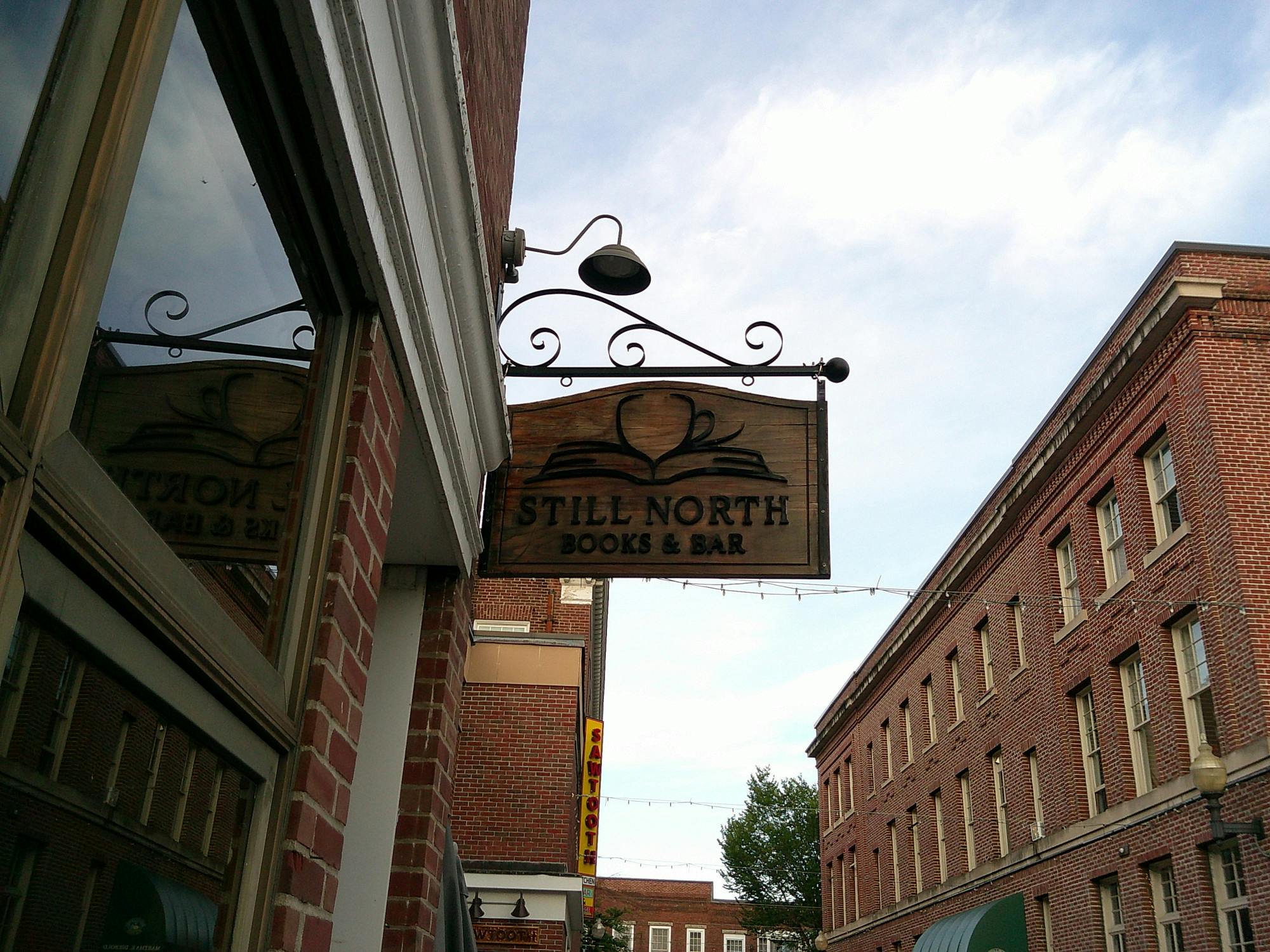
The literary community spills beyond campus, too. Just across the Green, independent bookstore and cafe Still North hosts readings and author events that bring Dartmouth writers and readers together with the broader Upper Valley community, including Mosteirin’s reading of “Disaster Tourism” last fall.
Perhaps that is what makes “still north in their soul,” a line from the College’s alma mater, an apt description of Dartmouth’s literary community. Its past is easy to find in Frost’s poems, Geisel’s drawings and the shelves of Rauner; the story is still being written.
A freshman can walk into a Stonefence meeting with a poem no one else has read, stop by the Literary Arts Bridge to write or hear an author speak and cross South Main Street for a reading at Still North. The writers who came before are part of Dartmouth’s literary tradition. The writers arriving this fall will be, too.
Connor Perrotta ’27 formerly wrote for the news section of The Dartmouth. He was not involved in the writing or editing of this article.
Isabel Menna ‘29 is a reporter from Leavenworth, Wash., is majoring in economics and is a member of the Dartmouth Ski Patrol.
