On Aug. 12, the Student and Exchange Visitor Program, a division of U.S. Immigration and Customs Enforcement, sent a memorandum to officials at SEVP-certified schools — colleges approved to enroll international students — reminding them of their responsibilities when authorizing curricular practical training and informing them of increased scrutiny of CPT approvals. SEVP wrote that it had seen a rise in CPT authorizations that are not “an integral part of an established curriculum.”
“Only authorize CPT if its absence would make the attainment of a degree an impossibility and if the work associated with CPT is required for all students pursuing that degree,” SEVP wrote.
This memorandum follows President Donald Trump’s crackdown on international students studying in the U.S. Since his second term began in January 2025, the Trump administration has revoked more than 6,000 student visas. In Trump’s Compact for Higher Education, which was offered to and rejected by Dartmouth and eight other universities last fall, he mandated that schools cap international enrollment at 15%, among other demands.
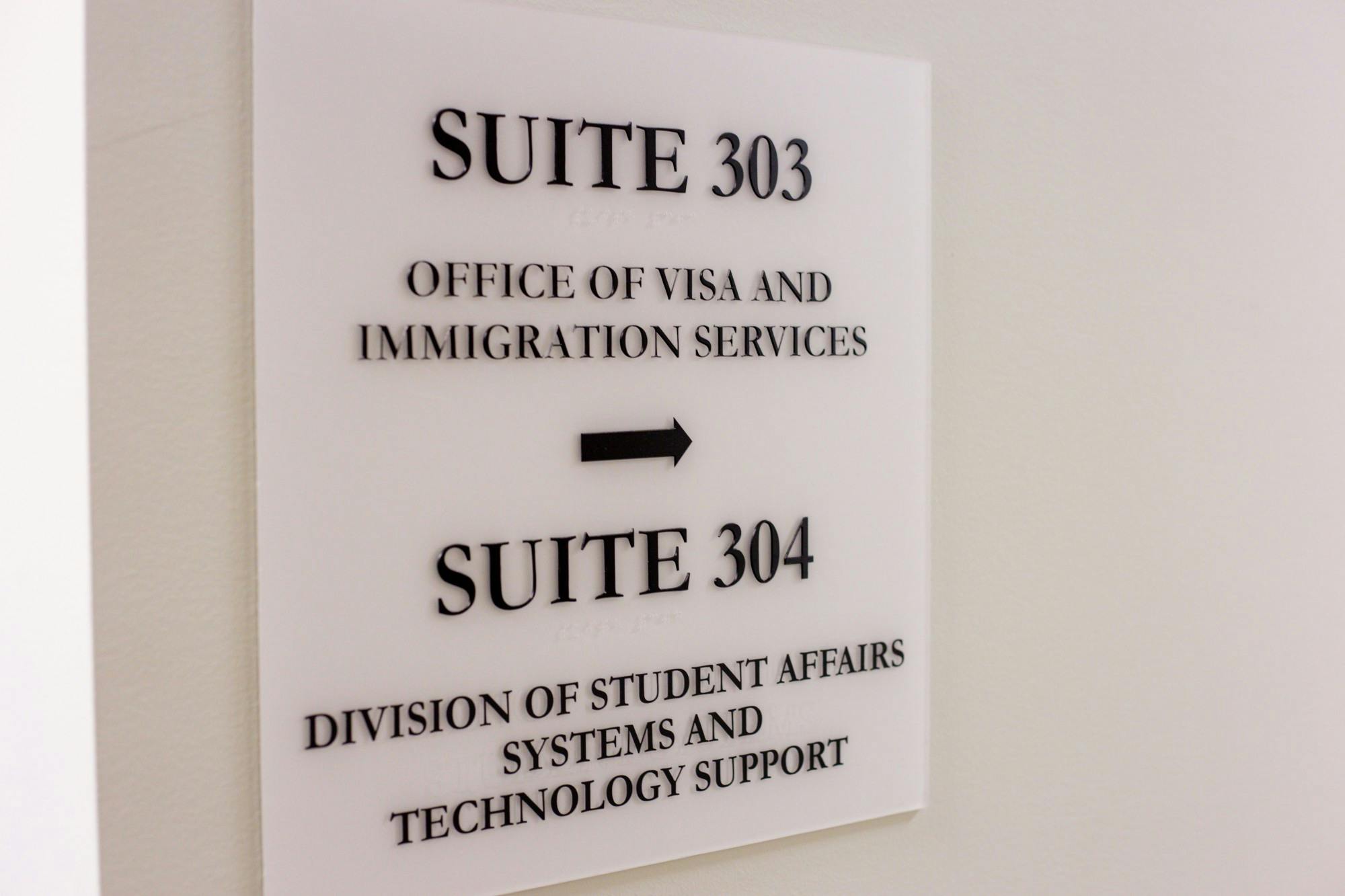
CPT enables international students to work in temporary paid or unpaid positions while in the U.S., as long as the work is aligned with their academic studies. According to the Office of Visa and Immigration Services’ website, undergraduate students with a declared major can enroll in a Divisional Internship course, a pass/fail class that carries 0.1 credits, to gain CPT authorization. There are no Dartmouth undergraduate programs that require work experience for graduation.
By restricting CPT to academic programs that require all students to participate in an internship or co-op experience, international students at Dartmouth could be prevented from pursuing work in the U.S. during an off-term.
In an email statement to The Dartmouth, College spokesperson Jana Barnello wrote that the Office of Visa and Immigration Services is “aware” of the memorandum from SEVP and is “seeking clarification on what appear to be new eligibility requirements.”
“At this time, there are no planned changes to the CPT process at Dartmouth,” she wrote.
Barnello wrote that OVIS will share further updates directly with international students and provide updates on its website once it receives clarification.
An international student, who was granted anonymity to speak candidly about their experience, said that while needing to be sponsored by an employer is already a “hurdle” to finding a job as an international student, the U.S. government has added “another hurdle” by limiting access to CPT.
“It’s already hard to find a job, and now you have to convince the government to let us do that job,” the student said.
They added that without CPT, they would have to use part of their Optional Practical Training — which enables international students to work in the U.S. for up to one to three years during or after their degree, depending on their field of study — to complete an off-term internship, which will take time off of their post-graduation OPT eligibility.
“No one really knows what exactly is happening because they [rule changes] are in the future,” they said. “It’s really unclear what’s happening.”
The student said that while OVIS has hosted Q&A’s, town halls and has information published on their website, international students still struggle without peer mentors who have experienced similar uncertainty in the past.
“There’s no students to ask for advice about it because we’re going to be the students who will be going into this for the first time,” they said.
SEVP and Immigration and Customs Enforcement did not respond to requests for comment.
Alex Klee ’29 is a reporter from Woodbridge, Conn. He plans to major in economics and minor in math. He enjoys live music, skating and climbing.