
It’s a few minutes before ten on a sunny Sunday morning, but we are underground and the sun has no jurisdiction. I unstack cheap plastic cups and start to build them into what some call a “tree.” It isn’t. I adjust each cup carefully, barely touching them. I pour in the pale beer. It’s warm. There is nothing left to do, so I flip my paddle nervously in my hands. Welcome to Masters.
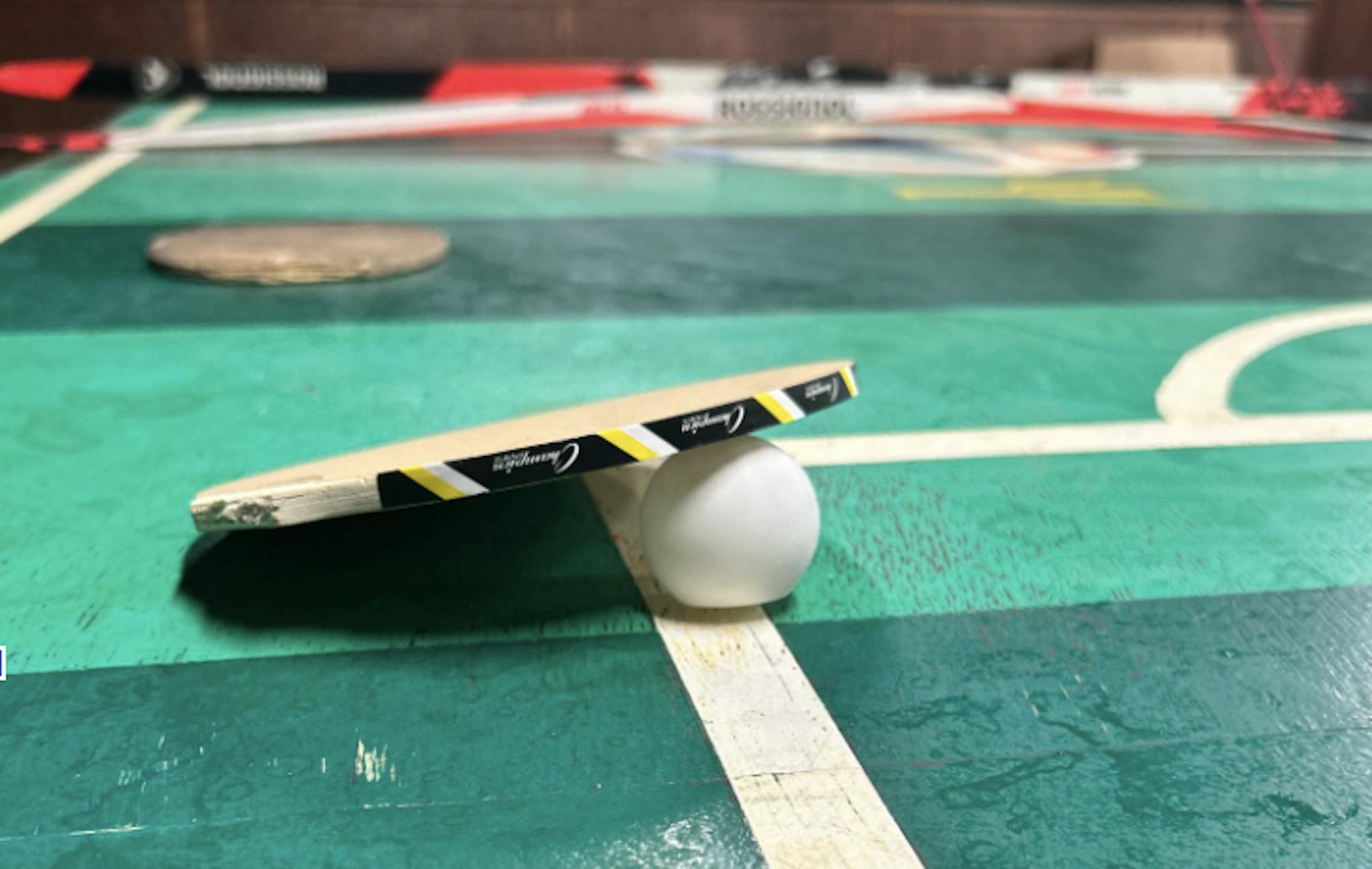
Pong is silly. A cut-to-order plank of plywood balances on industrial trash cans. A divorced ski or hiking pole sits at the center of the table as a “net.” Competitors carry sandpaper paddles — never rubber — with the wooden handles stomped off. It’s played only indoors, where the basement floors stay sticky with spilled beer. It’s a rudimentary game — a middle-schooler’s mélange of table tennis and Keystone Light. But for one weekend in August, campus treats pong with the intensity of a competitive sport.
It’s Masters. With a capital M, like the tournament in Augusta. A name so solemn it’s almost funny. And, like its namesake, which refers to its fans as “patrons,” Dartmouth’s tournament takes itself seriously. Houses determine their teams weeks before the tournament. Once decided, these teams actually practice. They learn serves that spin and skip off the plywood in bizarre directions. They spend free time debating where to stand at each stage of the game. They scrimmage other teams. And for the patrons of this sport, Masters weekend carries a significance like homecoming or Green Key. For two days in August, pong takes over campus life. Greek houses don uniforms to support their teams or skip the uniforms and paint letters directly on their chests. Crowds follow players to their games, supportive signs — often without supportive messages — and megaphones in hand.
The question that turns in my head is why? How do we as a campus take such a silly game and treat it like a sport? And what does our reverence for this sport say about us?
The trash can supports your weight as you lean over it. Your face wears the color of the beer in your cups. Suddenly, you fold over the trashcan, your fingers in your throat as you try, without luck, to rid the contents of your stomach. A second try, and you find success. Cheers await as you straighten your posture and wipe your mouth. Your hand grabs your paddle from the table as you ready yourself to drink more.
To progress through the tournament, one is expected to “boot.” Even the most passionate lovers of light beer can’t stomach so much over such a short time. This tradition is the undercurrent to your focused practice. No matter who you are or the hours you put in, you’ll have to drink and you’ll have to boot. Pong is too serious to be a “game,” but this ritual removes pong from the realm of sport. What sport could impose such a burden on the player? There’s no strategy involved so why drink, and why so heavily?
Like the Augusta Masters, Dartmouth pong is defined by its traditions. Drinking is one of these traditions, but these rituals extend beyond Keystone Light. Tradition tells you to fist bump after a hit cup. You shake hands after a game. You ask for “lines” in a loud basement, then talk to someone new as you wait. Perhaps this person is from a different house, a different year. Perhaps they’re visiting and aren’t from Dartmouth. These traditions are what make pong, and Masters, unique.
So Masters lies somewhere in between the middle-schooler’s game, the athlete’s grand competition and the weekend of sacred ritual; it’s because of this fact that we take such a silly game so seriously. Unlike grades, recruiting or graduate school, the stakes are entirely our own in the basement. And we choose to play with intensity. Perhaps this reveals something in the character of the Dartmouth student body, or perhaps we just want to drink. Either way, pick up your paddle.


