
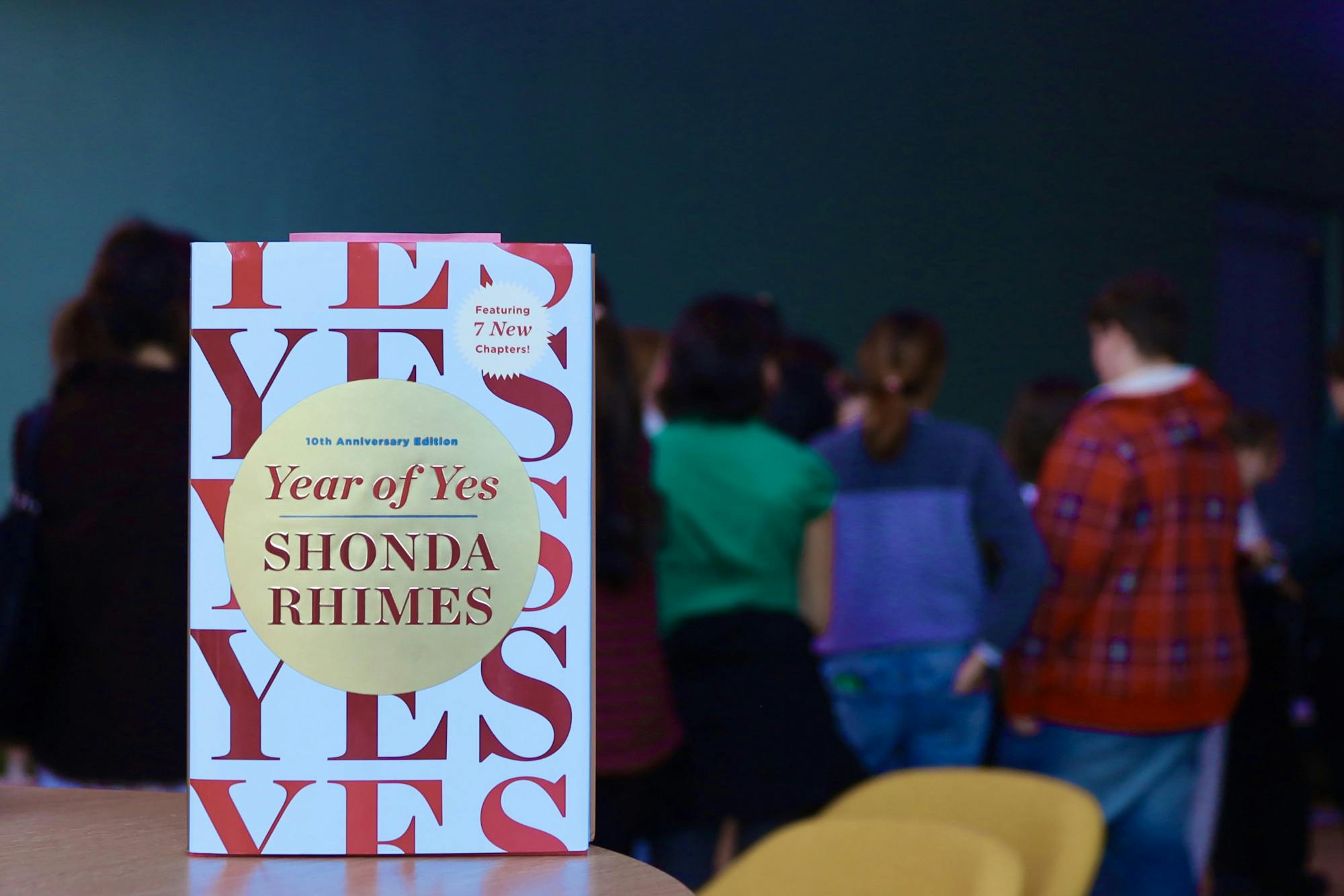
To kickstart the reopening weekend of the Hopkins Center of the Arts, Emmy-winning writer and producer Shonda Rhimes ’91 returned to Dartmouth on Oct. 16 to discuss her bestselling memoir “Year of Yes.” At the event, which was followed by a book signing, Rhimes spoke with film and media studies professor Roopika Risam at the Top of the Hop as part of the memoir’s tenth-anniversary tour.
The conversation explored Rhimes’ creative journey as well as her experiences as a Dartmouth student. She discussed the importance of recognizing when to say “yes” — and just as importantly, when to say “no.”
In an interview with The Dartmouth, Rhimes called Dartmouth “home to me now.”
“It feels great coming back here,” she said.
During the book talk, Rhimes described Dartmouth as her “happy place” that helped her gain “confidence as a writer.”
“[I] felt like I could firmly say, coming out of the school, ‘I have talent,’” she said. “That was important, because that’s what keeps you going when nobody wants to hire you.”
Rhimes also spoke openly about the risks she took, the setbacks she faced and the creative courage that fueled her while writing “Year of Yes.”
“The worst thing that can happen is that you fail — and there are 50 other things that can happen that are better than that. So why not risk going for the 50 other things?” she said.
Yet Rhimes said it is also important to reflect before saying “yes” to opportunities and that sometimes it is important to say “no.”
“There are the yeses that complete you and the yeses that deplete you, and it’s really important to figure out which you’re saying yes to,” Rhimes said. “Are you saying yes to make your life better or are you saying yes to please somebody else?”
“A lot of times the best thing you can do for yourself is to know when to say no,” Rhimes added.
Rhimes also emphasized the importance of self-validation, encouraging audience members to accept praise and to own their accomplishments rather than to feel guilty about success. This message resonated with students in the audience.
“Especially as a woman of color, being able to recognize that you deserve those compliments and not having to minimize your accomplishments, I think that’s really important,” Jiya Mutyala ’29 said.
Seth Amofa ’25 said Rhimes’ reminder echoed his own efforts to embrace confidence.
“Nowadays, our generation tends to want to be more shy whenever we get thanked for anything we’re good at,” Amofa said. “Something I’ve been practicing is writing down the things I’m good at and being proud of it.”
For Abigail Hawkins ’28, Rhimes’ career was a source of inspiration.
“I read ['Year of Yes'] a while ago, and a lot of what she had to say resonated with me as an aspiring screenwriter,” Abigail Hawkins ’28 said. “Hearing her talk about her work confirms everything that’s already in the book and brings more meaning to it.”
Director of programming initiatives for the Hop Johanna Evans said that choosing a creative powerhouse like Rhimes to open the historic weekend was a “no-brainer.” It took over a “year and a half” to plan the weekend, according to Evans.
“Within an opportunity to really highlight the role of the arts at Dartmouth, asking Shonda to help convey that message and share some of her journey to inspire other students was a no-brainer for us,” Evans said. “As a trustee of the college, she is very much invested in the current students and the experience they’re having here.”
Rhimes’ return to Dartmouth also came on the heels of a historic $15 million gift she made earlier this year to fund a new undergraduate residence hall, Shonda Rhimes Hall, on West Wheelock Street. Set to open in 2028, it will be the first Dartmouth building named after a woman and Black person.
In response to a question asked during the event, Rhimes reflected how this milestone for the College is personally meaningful for her.
“Dartmouth is not a place that was made in my image — it wasn’t even made for any woman,” Rhimes said. “I feel like when you do something like this and put your name on a building, what you are saying to other people who look like you is, ‘This place is for you.’”
Besides its celebration of The Hop’s reopening, Evans emphasized the event’s success in fostering engagement between students, faculty and alumni that also strengthens the Dartmouth community.
The book talk “really showed the benefit of not just quietly doing these [events] as slots became available, but really organizing a larger event that multiple alums could come and talk to each other and interact,” she said.


