In the past year, 13 New Hampshire police agencies, including Grafton County Sheriff’s Office, are cooperating with Immigration and Customs Enforcement, according to the American Civil Liberties Union of New Hampshire.
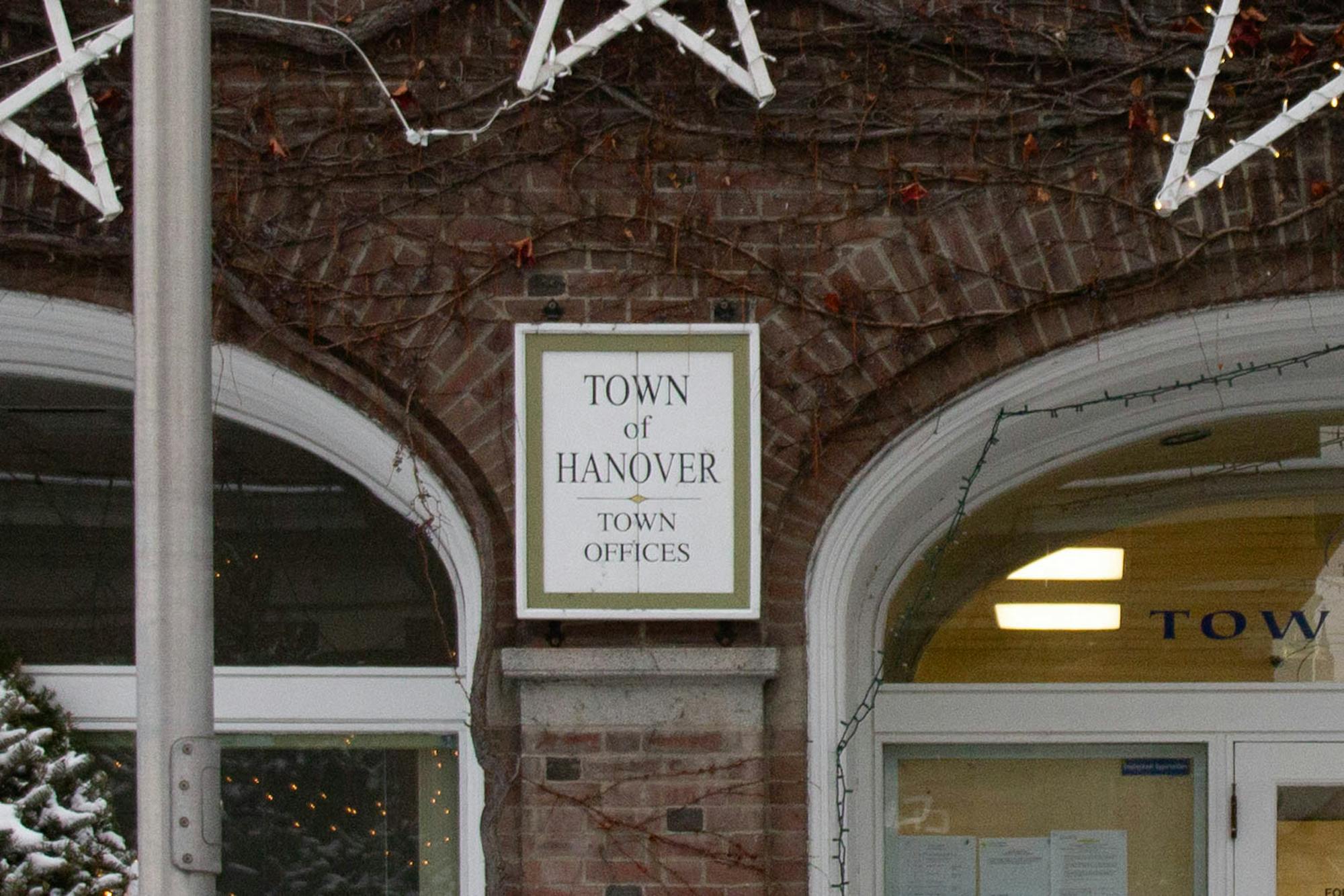
Several counties in New Hampshire — including Grafton County — have signed 287(g) agreements with ICE, which allow federal immigration authorities to delegate authority to local police officers when interacting with undocumented immigrants. In December, Hanover adopted a policing ordinance expanding the town’s cooperation with ICE to comply with a state ban on sanctuary cities.
In an interview with The Dartmouth, Grafton County sheriff Jillian Myers said county police would not participate in ICE raids. She said that the county’s 287(g) agreement with ICE facilitates the transport of undocumented immigrants with criminal charges.
“Our main reason for joining [the 287(g) agreement] was so that if one of our local agencies does come across someone on criminal charges and comes to find out they might have an [ICE] detainer, we are available to help with that transport rather than having to stand by for hours on end, waiting for someone else to come up and pick them up,” Myers said.
Myers said the agreement has not yet resulted in any arrests or detentions.
“The agencies [in New Hampshire] that have signed on with [the 287(g)] agreement have done it for the right reasons,” Myers said. “Not to go out and do raids or any of that stuff.”
She added that she felt that New Hampshire local police agencies are “pretty professional and respectful” in their interactions with undocumented immigrants.
Dartmouth Democrats president Quinn Allred ’26 criticized state politicians for allowing New Hampshire agencies to cooperate with ICE.
“The people that we voted for to represent us have brought [ICE] back home to us,” Allred said.
State senator Dan Innis, R-07, said local police helping ICE “always seems to go well.”
“There are murderers, rapists, people who abuse children [and] women who have come across the border and are living in many of our cities,” Innis said. “I don’t think it’s unreasonable to want to get them out of here.”
In addition to Grafton County, ICE has expanded its operations in southern New Hampshire. The Rockingham County Sheriff’s Office has already “engaged in immigration arrests” under their 287(g) agreement, according to the ACLU of New Hampshire.
In December, the Washington Post reported on leaked Department of Homeland Security plans to establish 16 ICE processing sites across the country. The plans included converting an industrial site in Merrimack, N.H., into a center that could hold up to 1,500 detainees. The plans have not been confirmed by DHS.
In a Jan. 23 letter to DHS secretary Kristi Noem, Merrimack town council chairman Finlay Rothhaus said the town council is “against the establishment of an ICE processing center.”
N.H. State Rep. Rosemarie Rung, D-Merrimack, said the proposal showed a “lack of respect for the local community.”
ICE is “an unlawful organization, and they prove it every day, and we have to stop normalizing [their] illegal activity,” Rung said.
Rung added that Merrimack has not received “an official confirmation” from the Department of Homeland Security regarding the possible facility, calling the initiative “opaque.”
“They don’t even have the decency to inform us, ask us or have a conversation about the potential impacts to our community,” Rung said. “It also reveals to me the dishonesty of the Trump administration, who [are] continually claiming they are transparent.”
Fran Miller — who co-leads the community activism group Building a Local Economy — said there is “a lot” the Merrimack community can do to oppose the possible ICE plans.
“People are … calling the landlords of these kinds of facilities and telling them that they shouldn’t be renting to ICE,” Miller said.
Miller added that she felt that “what ICE is doing is murderous.”
“I do think that we should protest ICE,” Miller said. “It is on us to do everything that we can … to demonstrate that we support immigrants.”
Dartmouth Conservatives president Jack Coleman ’26 said protesters “should be focusing more on Congress” than on ICE.
“ICE agents are working, they’re following the law, they’re people just like you and me who have families,” Coleman said. “I’d say to folks who are out protesting ICE … it’s kind of a misguided target.”
Allred agreed that issues related to ICE were “enabled by the legislators” in Congress.
“Lobby your representatives,” Allred said. “We would not be in this situation if [Congress had] not increased funds for immigration enforcement.”
Max Hubbard '29 is a reporter from Boston, Mass., and is majoring in government and minoring in French. In his free time, he enjoys listening to music, running and watching movies.
Olivia Sapper ’29 is a reporter from Darien, Conn., and is majoring in Government.