
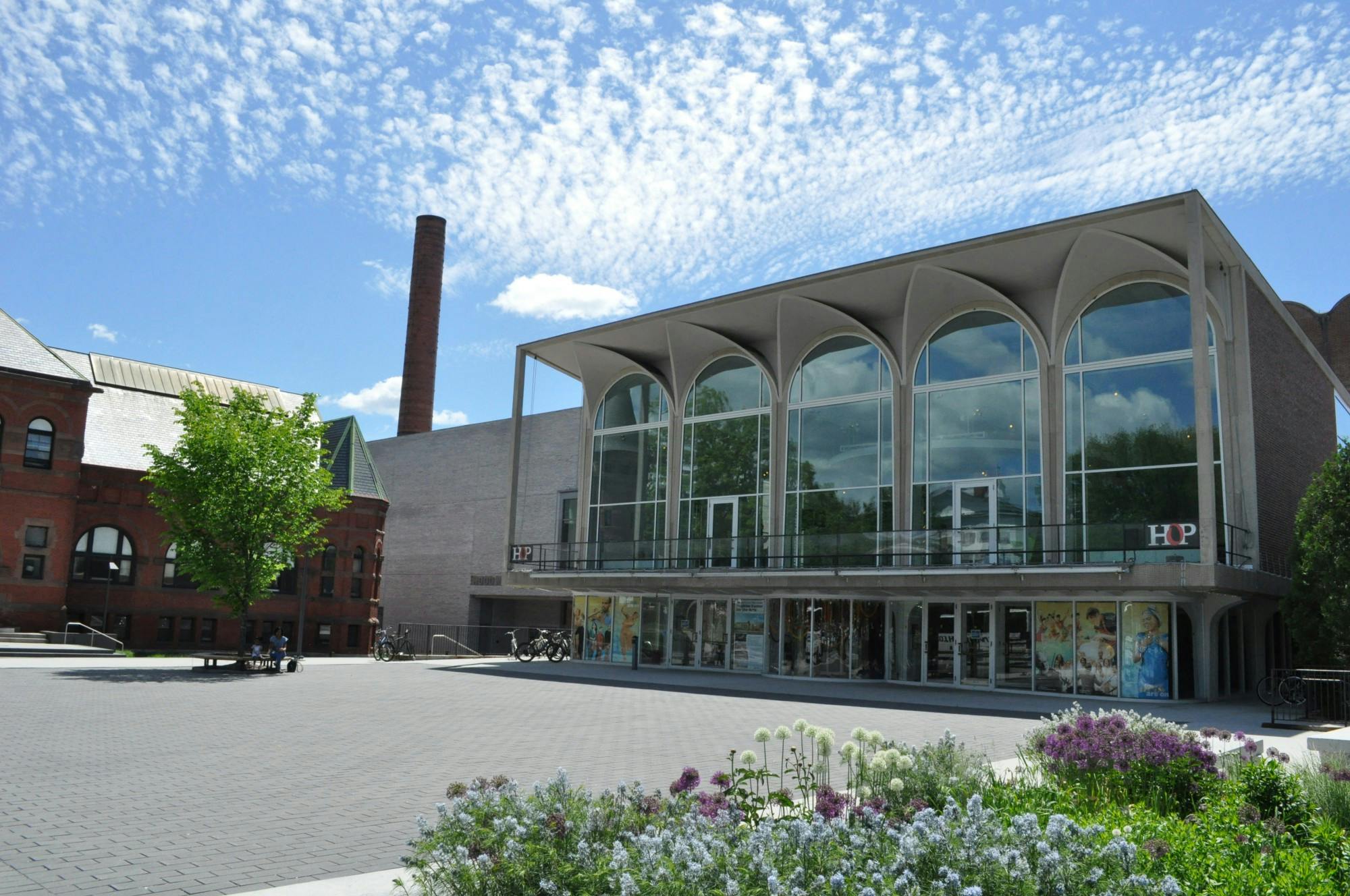
On July 28, Polish filmmaker Anna Zamecka visited Dartmouth College for a special screening of her film “Communion” at Loew Auditorium followed by a talkback. Known for blending documentary and fiction in her work, Zamecka achieved remarkable international success with her first feature film, “Communion,” which premiered at the Locarno Film Festival in 2016.
Following a dysfunctional Polish family navigating instability, the film centers 14-year-old Ola, her younger brother Nikodem, their father and their long-absent mother who suddenly returns home with a newborn baby. As Ola takes on the responsibility of preparing Nikodem, who is autistic, for his first communion, she also tries to create a sense of normalcy in a household marked by absence and tension. Zamecka closely observes the dynamics between each family member by capturing daily routines, emotional shifts and the quiet negotiations that define their interactions. The result is a sensitive, precise portrait of a family trying to stay connected in the face of uncertainty. She spoke with The Dartmouth before the open screening of “Communion” to discuss her directorial process.
What was the biggest challenge you encountered while making “Communion?”
AZ: The biggest challenge was the emotional weight behind the story. Although the film was scripted, it was still someone’s real life and inspired by real events and people. And in real life, there are highs and lows — especially lows — that can be difficult to carry.
Ola was a teenager, and her mother was absent from her life — so in a way, I became a kind of parental figure for her. I witnessed some of the key moments in her life: her first love, her first period. It’s such a complicated age, full of emotional shifts, and that often affected the set. I constantly had to ask myself, ‘What matters more right now? The scene, or how she’s feeling?’
After the film was finished, I worried about how the participants would react. I didn’t want to hurt anyone, especially knowing the film would exist forever. When you’re that close to someone with a camera, there’s always a risk of causing harm. That was the hardest part.
What is something you want people to take home after this movie?
AZ: At its core, this is a story about love. And while I’m not sure that that was my conscious intention while making the film, I think the most meaningful outcome would be if, after watching it, people went home and hugged their children, their parents or their loved ones — simply appreciating them and thanking them for being there.
What was something you found enjoyable during the process?
AZ: I think that working with Nikodem was the most enjoyable part of the process — the way he would talk about things, the way he sees things, the way that he is so sharp in his observations. But first of all, I was so thankful for who he is, and I don’t think that this movie would be the same without him.
What is something you would like people to ask in interviews that they don’t ask?
A: What matters more to me than what people ask in interviews is what the viewer asks themselves after the film: what it makes them feel, what it makes them think about and what stays with them afterward.
This interview has been edited for clarity and length.


