
“Call it a combination of keen attention and ‘a profound indifference’ (to borrow Camus’s words) or a combination of intense emotion and an equally intense apathy. The fact is, there is no word for this state I’ve found myself in, in which lucidity and opacity are one and the same.”
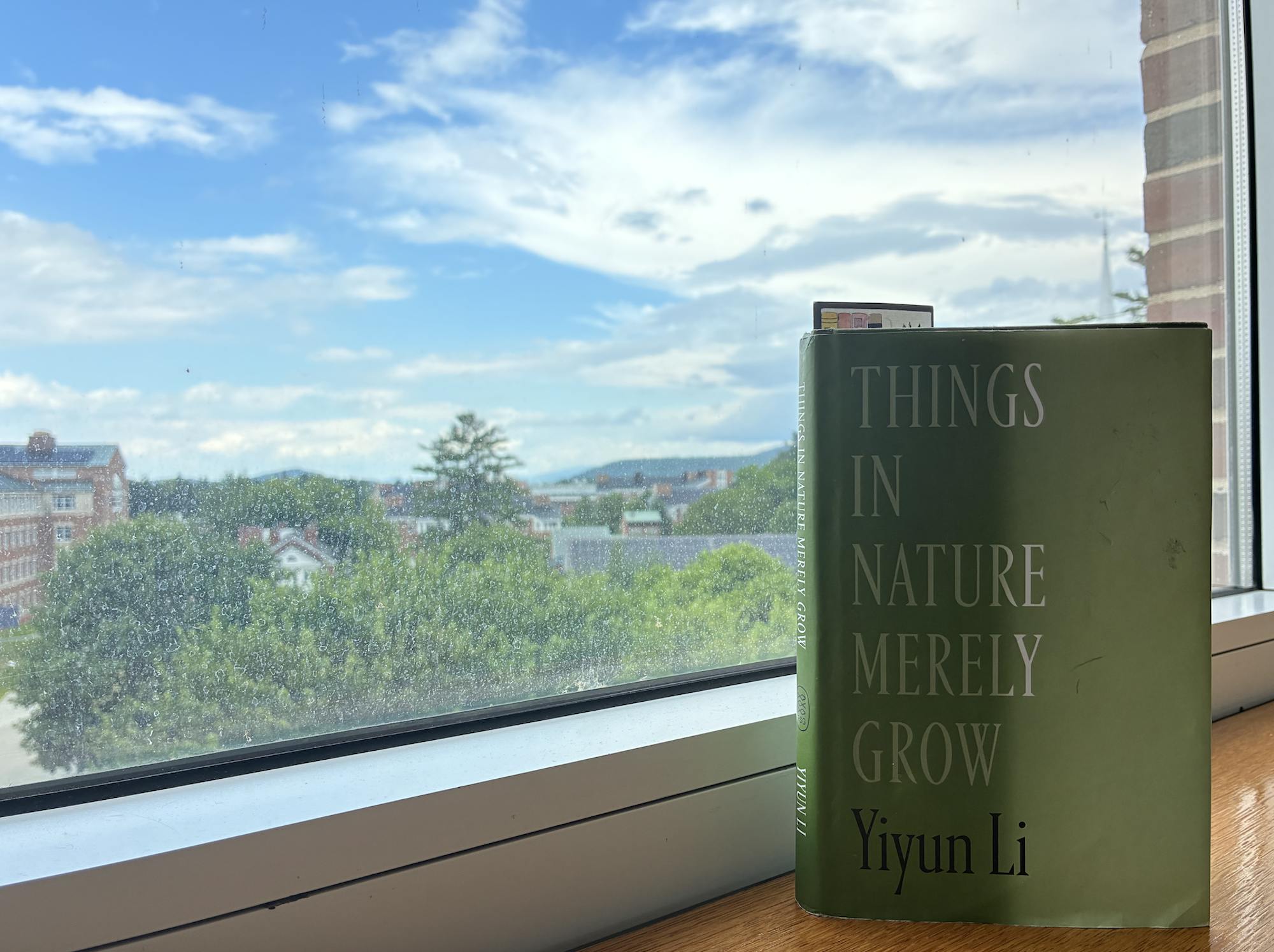
I’ve been reading “Things in Nature Merely Grow” by Yiyun Li. The memoir, written by a professor of creative writing at Princeton, is a tragic account of grief after losing both children to suicide.
It’s made up of a series of short chapters in which Li describes daily life since losing James and Vincent and recalls their childhoods. This book, published on May 20, comes after previous memoir “Wednesday’s Child” from 2023 and focuses on the loss of her second child, James.
Throughout, Li translates her emotion through her academic work. Almost every section is tied to her relationship with literature. Li maps her grief onto Shakespeare, explains her review of “The Elements” by Euclid a few weeks after James died. She writes about re-reading “Anna Karenina” and how it felt to recall Vronsky’s suicide attempt.
This intellectual peregrination undergirds one thesis: a radical rejection of the way we are told to understand loss. For Li, this sadness is not a thing she will ever conquer or depart from.
It is her new habitat.
She writes, “I have only this abyss, which is my life. And an inevitable part of existing in this abyss is exhaustion, which the second time I learned to accept without protest.”
She rebukes people who tell her that the loss of her two sons is something she will leave.
“People always say, you’re going to overcome this,” she told the New York Times in May. “No, I’m not.”
The eponymous chapter builds on her thesis through her relationship with gardening. She mentions a friend who sent her a picture of flowers to remind her of “Earth’s regenerative power.” Clichés like this “corrode the mind,” she responds. Her flowers are only “placeholders.”
“My garden is not a metaphor for hope or regeneration, the flowers are never tasked to be the heralds for brightness and optimism. Things in nature merely grow. There is no suicidal or angry rose, there is no depressed or rebellious lily. Plants have but one goal: to live. In order to live they grow when they can, and go into dormancy if needed. They live until they die — and either they die as destined by nature or are cut down by other elements in nature,” she writes.
The book is beautifully written. Each sentence feels crafted with a scalpel — which is why, here, I feel compelled to quote long paragraphs of text.
To me, what has been most difficult to make sense of in the book is how her thesis relates to James and Vincent’s intelligence. Li spends a significant portion of the book depicting the rich intellectual lives of her children. She describes Vincent, at five, reading a biography of Vincent van Gogh to James, James’s fastidious reading of Camus, young brilliance at the dining room table:
“James was a child who, in the second grade then, would be halfway through a meal and, putting down his forks, ponderously say, ‘Apparently the Higgs boson …’ or, ‘Apparently the predatory tunicates…’ Higgs boson? Predatory tunicates? All three of us marveled, not understanding how those topics entered family life at an hour when the world seemed mundane enough to be made of forks and spoons and chopsticks,” she writes.
These passages are not just nostalgic. She seems to give logic to their suicides: “Yes, I loved them, and I still love them, but more important than loving is understanding and respecting my children, which includes, more than anything else, understanding and respecting their choices to end their lives.” By respecting their decisions, she seems to make them rational. She seems to suggest that this inner life is what caused them to kill themselves.
This departs from any other book about suicide I’ve read. She references “The Myth of Sisyphus” continuously — it was a favorite of James’s. But, at the end of the book, doesn’t Camus conclude with that shibboleth about imagining Sisyphus happy? Even he argues against suicide. It was moving, to me, to see how far her radical acceptance takes her: to the end of accepting their suicides as an act of intellect.
But that profound indifference is what she holds on to in the “now and now and now and now.” The present becomes indivisible: “In this abyss that I call my life, facts, with their logic, meaning and weight, are what I hold on to. It’s not much, this holding on, and yet it’s the best I can do.”
Charlotte Hampton was the editor-in-chief for the 182nd Directorate of The Dartmouth. She hails from New York City and is studying government and philosophy at the College.


