
A wide range of people will likely despise the new film “Eddington,” for myriad reasons. Perhaps some will be offended by the film’s lampooning of self-righteous antiracist activists. Others might feel targeted by the depiction of its deranged far-right conspiracy theorist characters. Many others will be put off by the film’s tonal twists and turns — particularly in the absurdist, hyperviolent third act. Then there are the great many people who might be reluctant to revisit 2020 in a film at all, regardless of the context. But for those who are open-minded and able to laugh at themselves, “Eddington” is a thrilling and hilarious satire that will amuse, provoke and shock in equal measure.
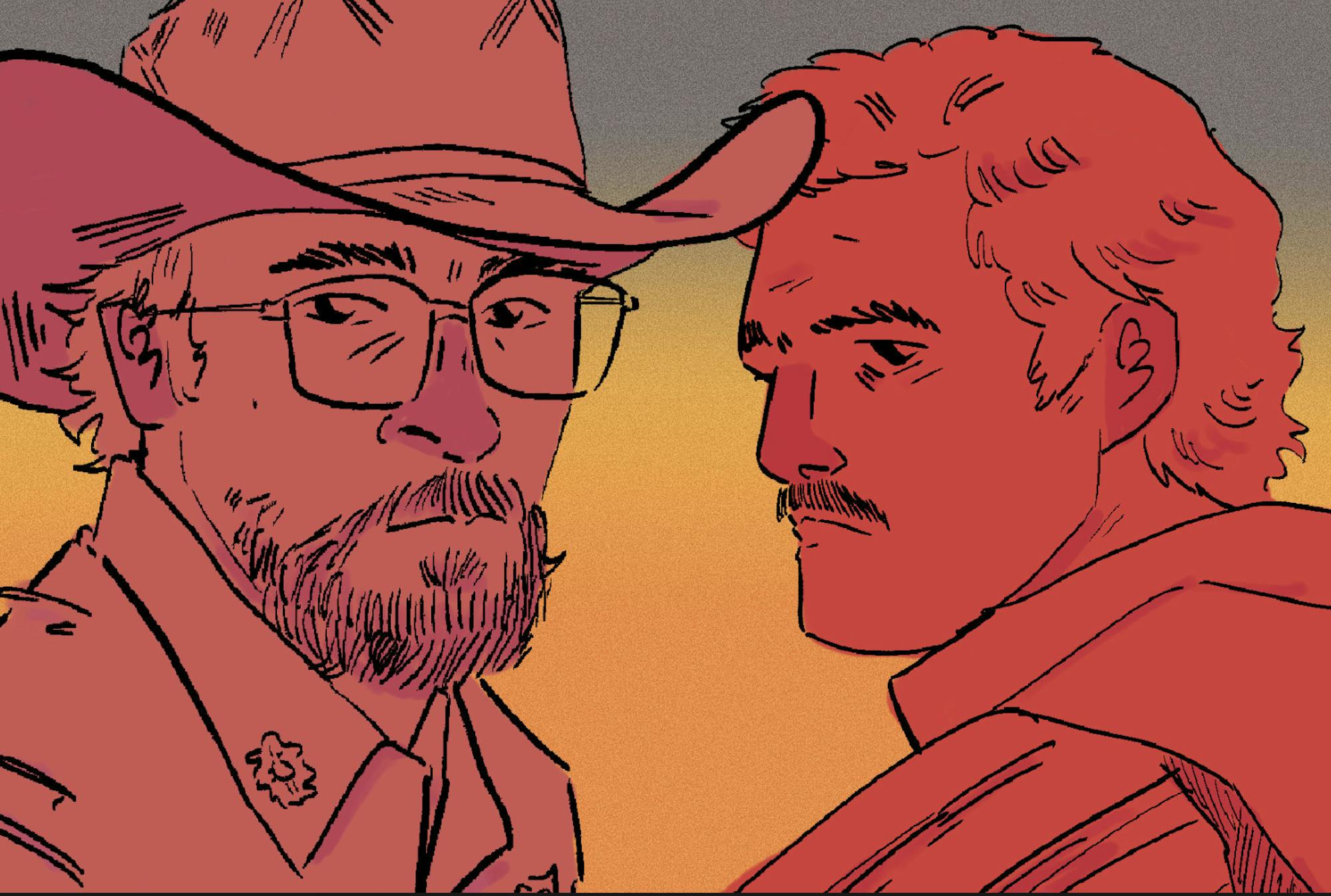
The film follows rising tensions in the fictional town of Eddington, New Mexico, as Sheriff Joe Cross (Joaquin Phoenix), frustrated by lockdowns and mask mandates, decides to run a mayoral campaign against liberal incumbent Ted Garcia (Pedro Pascal). Their feud unearths dark secrets involving Cross’s conspiracist wife, Louise (Emma Stone) and spurs unrest among the town’s populace. Once news breaks of George Floyd’s death at the hands of Minneapolis police officers, Eddington seems ready to explode. Meanwhile, mysterious tech company SolidGoldMagickarp conspires with Garcia to build a data center near the town despite concerns that it will deplete limited resources.
It would be remiss of me to spoil the plot any further, but suffice to say the film goes in some unexpected and downright unhinged directions. At several points, it seems to shift gears and change genres from political comedy to conspiracy thriller to surrealist neo-Western action. This tonal oscillation might challenge audience expectations (a couple scenes will elicit gasps), but it is only fitting for a movie about a year as nightmarishly strange as 2020.
“Eddington” feels exceptionally modern in a way that few films nowadays do. It is a true “period piece” about a moment in recent history, capturing the collective psychic shock that seemed to reverberate around the world during the early months of the pandemic. Conversations between characters about the ethics of masking or the distinction between protesting and rioting will feel all-too-familiar.
There’s also an aptly uncomfortable emphasis on technology and the way we engage with it. Louise secretly posts on conspiracy internet forums, while Cross spends his evenings doomscrolling on social media. Though not a novel observation, “Eddington” depressingly suggests that having access to unlimited communication and information has done nothing but isolate us.
Still, being depressing does not preclude the film from being very funny. In a great sight gag, Cross decks out his truck with dozens of campaign signs and (misspelled) slogans like “YOUR BEING MANIPULATED.” Well-intentioned teenaged characters engage in phony antiracist activism, posting black squares on their Instagrams and lecturing their parents about “white abolitionism.” In one particularly striking moment, a group of protesting white kids scream at a Black police officer and accuse him of racism. With its satirization of recent political discourse, the movie sometimes feels like a live-action “South Park” episode, in the best possible way.
Much has been made of “Eddington’s” politics, with some critics arguing that it is irresponsible or offensive to poke fun at issues like Black Lives Matter protests. Some viewers might argue that the film takes an inconsistent centrist position by presenting “both sides” as equally bad. In reality, the film makes it very clear which side is worse: while one is naive and perhaps disingenuous, the other is hateful and downright murderous. That’s not to say that “Eddington” serves as a political thesis with a clear argument to make. Rather, the film is far more interested in examining how and why people latch on to political movements or ideas in order to deal with their own deep-rooted emotional issues.
There is a sentiment that it might be “too soon” for a film about COVID — either because it is insensitive or just uninteresting to watch. Frankly, this argument is absurd. Consider, for instance, that “Apocalypse Now” came out just four years after the end of the Vietnam War. Charlie Chaplin’s “The Great Dictator” satirized Hitler while World War II was underway. It’s essential that new filmmakers feel emboldened to tackle recent, sensitive issues head-on. We might not enjoy thinking about something as depressing as the pandemic, but the reality is that it happened, and it affected all of us. “Eddington” seems at times like it’s daring you not to like it, pushing just about every controversial button it can. But if you’re willing to go along for the ride, you'll find plenty to laugh about, cringe at, and be genuinely exhilarated by.


