Title IX office adds two new coordinators
The Title IX office doubled in size in July with the hiring of two new coordinators: Sophia Brelvi as deputy Title IX coordinator for training and Gary Sund as Title IX deputy coordinator for response.
As students and faculty members embark on a new school year at the College, Dartmouth Dining Services is rolling out reforms at the Courtyard Café and Novack Café.
Dartmouth’s endowment grew by 7.5 percent over the last fiscal year, bringing its total value to a new high of $5.7 billion, the College announced on Tuesday.
Phi Delta Alpha fraternity was suspended during the summer term after serving hard alcohol punch to an underage student, according to a report from the Organizational Adjudication Committee.
Under a new state menstrual health law passed in July, public middle and high schools in New Hampshire will now be required to provide free disposable menstrual pads and tampons in female and gender-neutral bathrooms.
Students will only be able to access College residences within their own House community effective this weekend, associate dean of residential life and director of residential education Mike Wooten confirmed to The Dartmouth.
The parties in the sexual misconduct class action against Dartmouth made public the terms of their proposed settlement yesterday, with the College maintaining its position that it did not commit wrongdoing and expressly denying that it broke any law or statute. In a filing yesterday in the U.S. District Court of New Hampshire, the nine representative plaintiffs and the College spelled out the terms of their proposed settlement
Federal immigration officers operated a checkpoint on I-89 outside of Lebanon on Thursday, surprising residents, attracting strong criticism from immigrant rights groups and campus organizations and prompting an official rebuke from the College.
In August and September, members of the College’s incoming class arrive on campus for First-Year Trips, a five-day outdoor program run by students before orientation week. Trips, officially run by the Dartmouth Outing Club, involves over 90 percent of the incoming class and includes over 300 student volunteers. It has roots that can be traced to humble beginnings over 90 years ago. In the near-century that has passed, the program has undergone numerous changes to shape it into its current form.
Dartmouth has recently attempted to overcome preconceptions about its social environment, especially after College President Phil Hanlon took office. At Dartmouth, students may not rush a Greek house until their sophomore year, and they may not enter Greek houses during the first six weeks of their freshman year.
Just weeks after the New York Times first reported allegations of sexual misconduct and abuse by Hollywood film producer Harvey Weinstein, sparking the worldwide #MeToo movement, the Dartmouth community first learned of allegations against three professors in the psychological and brain sciences department.
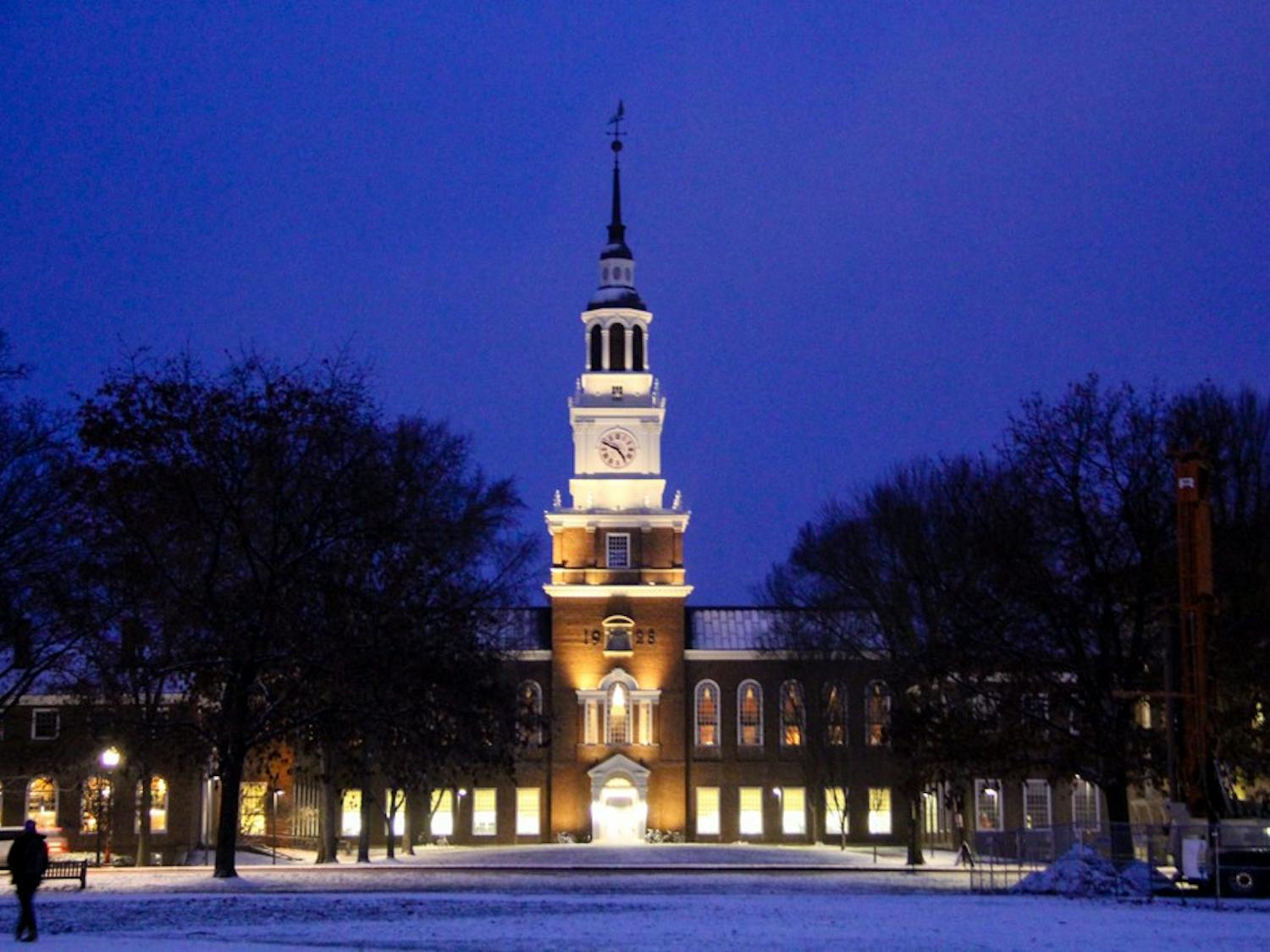
Most students can remember the first time they stepped foot on Dartmouth’s campus. Perhaps they were struck by the red brick and white columns of the dorms, or the impressive outline of Baker tower puncturing the blue sky. Or maybe it was the stately white of Dartmouth Hall, framed on either side by Thornton and Wentworth Halls. Many of these first impressions of Dartmouth involve the College’s architecture, which has come together as the result of decades of College history.
Academia has historically been a white and male sphere. According to the National Center for Education, in 2016, 53 percent of full time professors were white males, while another 27 percent were white females. Despite an increasingly diverse student body, Dartmouth’s own campus reflects these national trends.
As we look forward to the 2019-2020 school year, new changes — from new meal plans to a new feature of the GET Funds app that would allow students to place food orders ahead of time — will affect students’ interactions with food on campus.
In June, sociology professor and South House professor Kathryn Lively was named Dean of the College. She previously served as interim dean since July 2018, when former Dean of the College Rebecca Biron returned to teaching. As dean, Lively will oversee undergraduate academic life, the Student Affairs division and the six house communities. Her term began on July 1. In the following interview with The Dartmouth, Lively discusses her goals related to the house system, Greek life and more topics important to students.
Hanover has committed to becoming 100 percent dependent on renewably generated electricity by 2030, and renewably generated transportation and heating fuel by 2050. One important factor in moving forward with the town’s sustainability goals was the support of the College, which Griffin said is the largest energy and fuel user in the town. Griffin said that former and current faculty, as well as members of Dartmouth’s sustainability office, work with the town to pursue mutual goals.
Dartmouth has a reputation as an institution that excels at both research and undergraduate teaching. Incoming students are likely familiar with this notion, having read it in admission pamphlets or heard it during campus information sessions. Like its students, many of the College’s faculty chose to pursue a career at Dartmouth because of this dual excellence. But this double goal — quality teaching as well as quality research — isn’t achieved without challenges.
The Dartmouth sat down with to Luke Cuomo ’20 and Ariela Kovary ’20, Student Assembly president and vice president, respectively, to discuss why they chose to run, their advice to incoming freshmen and the issues they are interested in addressing once in office, including making Student Assembly work more visible on campus and integrating the house system governments and the Student Assembly senators.
Dartmouth has long been known for its small-town charm and picturesque New England campus. As the smallest university in the Ivy League, the College appeals to students who appreciate its quaint setting coupled with the academic rigor common among its peer institutions. But of all the charming towns scattered in the Northeast, why was Dartmouth founded in Hanover, and how does the College’s relationship with the town stand today?
At Dartmouth, classes are taught by faculty members with varying titles, from “instructor” to “assistant professor” to “professor” — and everything in between. Though the specifics of each position are often unknown to students, these different titles generally refer to stages in an important process: faculty tenure.