
This article is featured in the 2026 Freshman Special Issue.
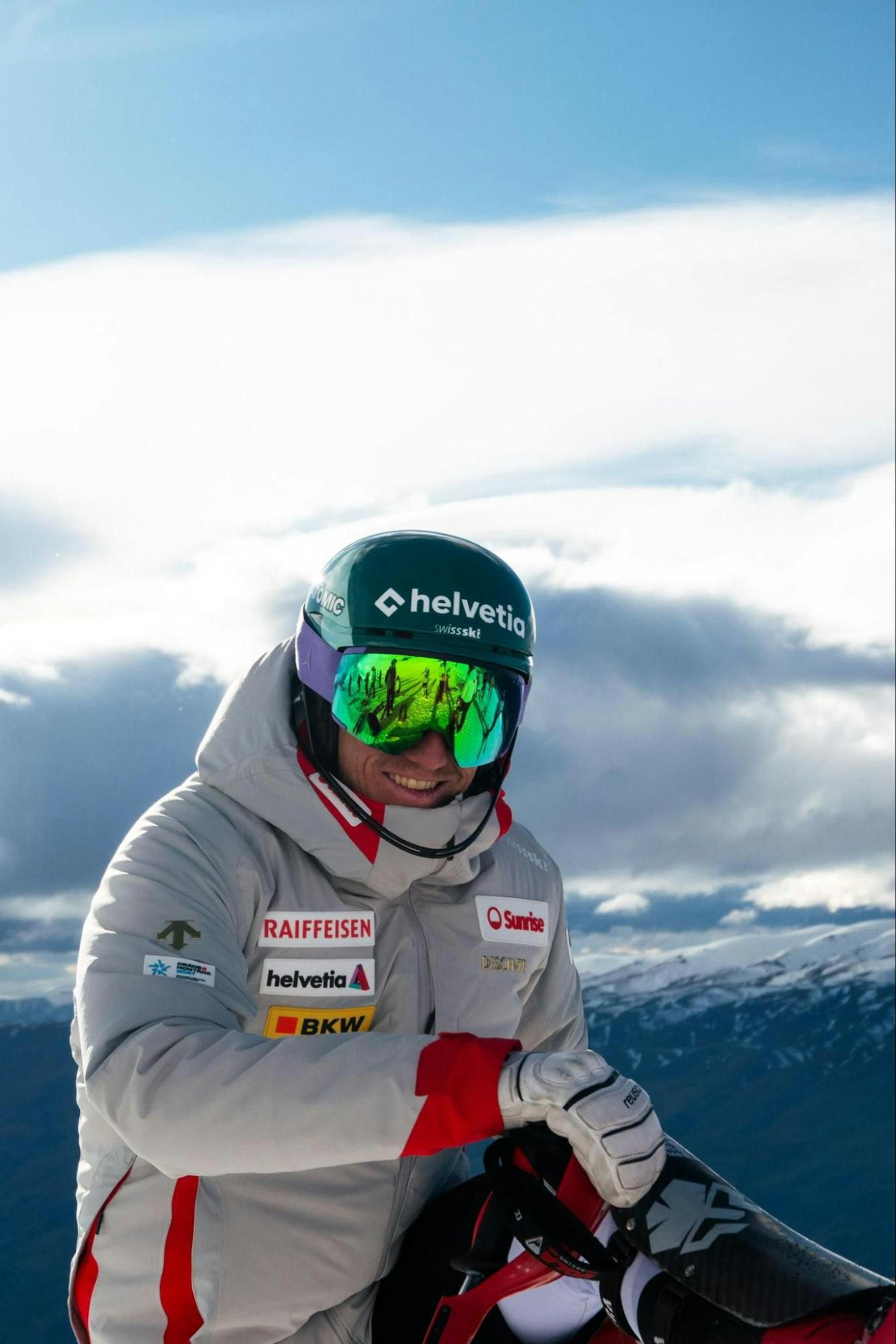
After graduating from Dartmouth, alpine skier Tanguy Nef ’20 has gone on to become a world-class professional slalom skier. In February, Nef won a gold medal for Switzerland in the men’s team combined alpine skiing at the 2026 Winter Olympics in Bormio, Italy. Nef previously won silver for Switzerland in the men’s team combined at the Fédération Internationale de Ski Alpine Ski World Championships 2025 in Saalbach-Hinterglemm, Austria.
Originally from Switzerland, Nef studied computer science modified with economics at the College. Nef sat down with The Dartmouth to discuss his skiing career, achievements and Dartmouth experience.
Congratulations on your recent medal at the 2026 Winter Olympics! What did your victory mean to you?
TN: In the weeks leading up to the Olympics, which was my first time, there was always a lot of built-up tension and inspiration. I was very proud to represent Switzerland. With my form, I knew I had a good shot at collecting one or two medals across my two events — men’s team combined and men’s slalom. Team combined is a new Olympic event, with teams of one downhill skier and one slalom specialist; I was the slalom specialist. My mentality going into the race was trying to remove all the anticipation and expectation from my youth — saying, “Oh my God, I’m living my dream” — and focusing on skiing. That’s how I think I did it. We won that race as a team, and that was quite incredible.
How long have you been skiing for? What initially got you into skiing?
TN: I’m turning 30 this year, and I started skiing when I was two. I’m the third of four children, and I wanted to copy my siblings, who were already skiing, and get the same jacket from the local ski team as they had. I always had a lot of fun skiing with my family.
What drew you to Dartmouth?
TN: Overall, Dartmouth is a little bit unusual for a European skier. My parents lived in the U.S. for a bit, and my sister was born here, so we always knew it was an option. There are competitive high schools for skiing in the U.S., and my dad planted a seed in my head, but I was absolutely not ready for it.
When I was 17 or 18, I broke my leg and had to figure out something else to do; the main path had been high school, then qualifying for the Swiss team and becoming a professional athlete. I got in touch with the coach at Dartmouth, who definitely saw potential in me, but coming back from an injury, I wasn’t the most attractive European athlete, so I wasn’t recruited right away. I spent that summer studying for the SATs, and after a couple of races in December, I was recruited.
I had no clue that Dartmouth was historically a very active place for alpine skiers and Olympic skiers on the 12-year D-plan. Discovering that skiing heritage once I was here was a pleasant surprise.
Tell me more about your time at Dartmouth. What did you study, and what did your D-plan look like?
TN: Being on a student visa, I couldn’t be as flexible with my D-plan as other athletes. I was ready to do four years full-time at Dartmouth, but after two years, the Swiss team invited me to compete at the FIS Alpine Ski World Cup. Following my junior summer on campus, I took six months off, reapplied for visa status, and then COVID-19 hit.
Initially, I debated between studying economics and studying computer science. Economics classes didn’t really click for me, but I kept studying macroeconomics and majored in computer science modified with economics. Besides that, I was training with the team and was kind of on autopilot. In the winter, I traveled for Dartmouth competitions, but I also competed in the World Cup in Europe, which was quite intense.
Looking toward the future, what do you plan on doing next? What are some goals you hope to achieve?
TN: When you’re a professional athlete, you always want more. I feel that I can achieve more, and that might not always be the case, but I’ll chase that possibility. The best overall slalom skier wins a big trophy, and that would definitely be a goal. The Alpes 2030 Winter Olympics is definitely on my radar, and I’m very excited to hopefully be competitive then and chase medals. After that, I might do something else. I don’t know if that’ll be related to Dartmouth, my computer science degree or the U.S. at all; it’s still very open. I would love to use that degree to discover something else and get into the professional world outside of skiing, but it’s a bit early to say.
This interview has been edited for clarity and length.
Sahil Gandhi ’29 is a reporter from Staten Island, N.Y., and is majoring in environmental studies and government modified with philosophy and economics. He loves word searches and falling down internet and Wikipedia rabbit holes.


