
This article is featured in the 2026 Commencement special issue.
As the year comes to a close, graduating members of Dartmouth clubs, Greek organizations and sports teams distribute “bequests”: sentimental items, from treasured pieces of flair to mementos of accomplishments long forgotten, passed down from student to student.
Some bequests are older than students themselves. The Aires a capella group music director Eli Fox ’27 said the group’s oldest bequest is a jacket that belonged to Aires alum Ort Hicks ’49, who graduated three years after The Aires were founded in 1946. The jacket belongs to Fox’s “trou,” the name for the collection of clothing an Aires member wears while performing.
Fox said the most “meaningful” item he has been bequeathed is a branded Cheerios jacket which he believes dates back to 2010.
“Receiving that was a very big deal to me because the senior who passed it on was someone I really cared about and respected,” he said.
Besides the novelty of bequests, Fox said he believes that passing down flair is “very efficient” for graduating seniors because it helps them shed things they no longer need and have “meaningful” moments with friends they leave behind.
“Where am I going to wear some of the crazy stuff I wear on stage after graduation?” he said.“... But bequests also work in a more meaningful way where it’s a way of showing care to the people around you. It shows tangible care because you’re giving them a piece of yourself. It also instills this sense of tradition and longevity.”
In addition to articles of clothing, the Aires also bequeath performance roles in songs in the group’s “traditional” repertoire, which they call “intangibles.” Members perform these pieces at shows on campus and on the Aires’ tours.
“There’s this one song that we sing just for ourselves, and the end part of the song is specific to a person’s position in the group,” Fox explained. “Knowing that this song has been going for years past and now it’s your turn to close it off is very nice.”
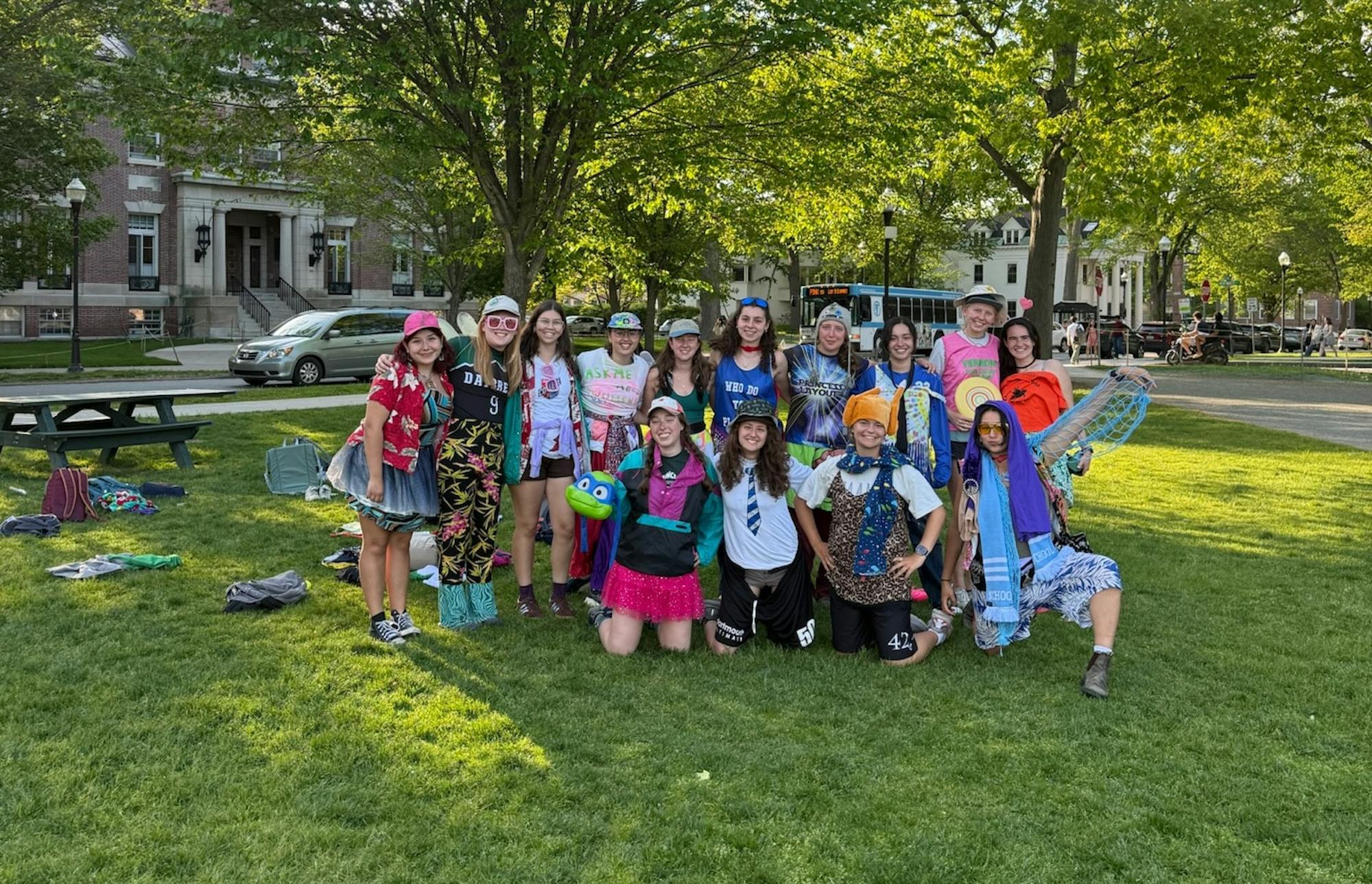
The women’s ultimate frisbee team, Daybreak, also passes down both items of clothing and intangible traditions such as the task of hosting a piñata party during the annual Green Key concert weekend.
Daybreak captain Chiara Kimelia ’28 said her oldest bequeathed item is a jersey from one of the first national college frisbee championships in 2001. Another championship-related bequest belongs to her friend, who was given the disc from the game in which Daybreak qualified for the ultimate frisbee national championship in 2017, which they went on to win.
“All of the signatures of the girls who were on the team [in 2017] are in the disc, and my friend will pass it down when she’s a senior,” Kimelia said.
Kimelia said bequests are a way to “feel connected to the people who came before you.”
“Being part of a club here, you start caring about the institutional knowledge and the legacy of the team,” she said. “Preserving these objects within the team is like an archive of who came before you.”
Ava Razavi ’27 said her most “special” bequest was a visor that once belonged to Mindy Kaling ’01. She received it from a member of the Class of 2025 with whom she served on First-Year Trips 2024 directorate and she “really loved.”
“She gave it to me, describing it as an item for people who really love the Lodj,” Razavi said. The “Lodj” refers to the Moosilauke Ravine Lodge, one of two locations where first-year students stay overnight at the end of the first-year trips.
Razavi said her collection of bequests from her time at Dartmouth, including those from her sorority lineage at Sigma Delta and the Ledyard Canoe Club, are now stored in a “box of stuff” under her bed.
“The whole ceremony of [bequests] is really fun for upperclassmen, and it’s a way to find closure,” she said. “There’s something about the fact that you have something that you had so much fun with, which was given to you by someone that you loved and cared for, and then you get to give it to someone else that you love and care for.”
Subtleties acapella group president Payton Schetter ’27 said some of the items bequeathed within the group are more recent because people “make up their own definitions [of bequests] and give meaning to their [own] pieces of clothing.”
Per tradition, the Subtleties gather and sit on the Green for a special meeting each spring where “all of the seniors bring their bags with all their flair and bequests they’re passing down.”
“It goes senior by senior, and we do it piece by piece,” she said. “Every article you get, you put it on, and you end up covered in flair and with pieces that don’t make sense.”
Similarly, Dartmouth Outing Club subclub Cabin and Trail leader Adam Sobel ’27 said the seniors in the group take turns bequeathing items and either tell the story of how they received the item or, if they are starting a new bequest, why the item “would be funny for someone to have.”
Sobel said it is “strange” to see the current seniors in the Class of 2026 passing down out bequests that once belonged to members of the Classes of 2023 and 2024 he knew. However, he thinks it’s “nice” to remember friends who have graduated in this way.
“Seeing items being passed down to people that remind them of past members who used to make CnT an important and special place made me see a connection there,” he said. “The space is changing a little, but it’s keeping a lot of the positive aspects that the ’24s had when I first joined.”
Isabela Pierry ’29 is a reporter from New York and is majoring in comparative literature and government.


