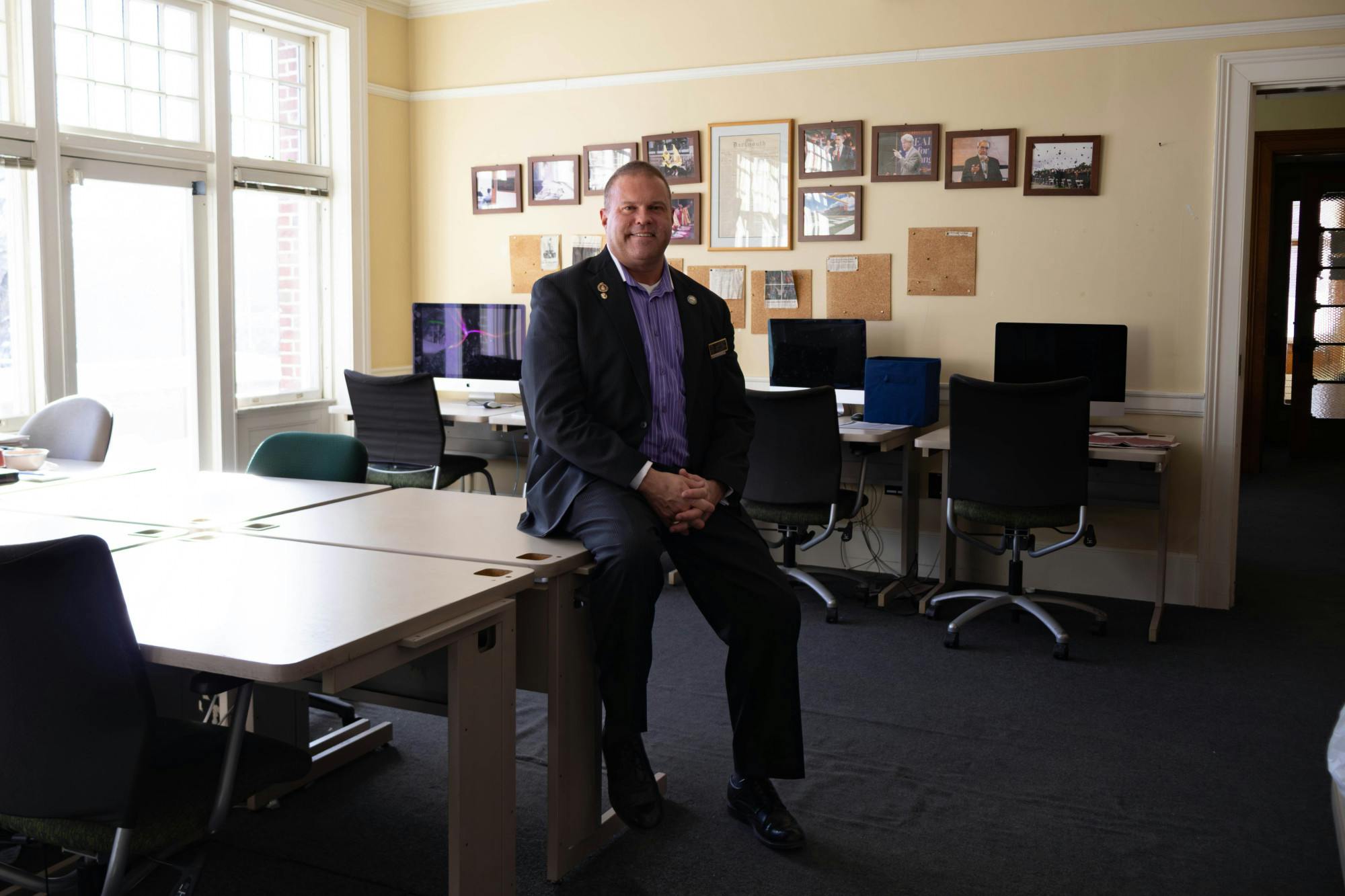
As part of The Dartmouth’s coverage of the upcoming 2026 midterm and gubernatorial elections, the paper is publishing an interview series, “A Sit-Down with The Dartmouth,” featuring in-depth conversations with major national and gubernatorial candidates in New Hampshire.
In this installment, The Dartmouth interviewed State Rep. Brian Cole, R-Manchester, a candidate for the U.S. House of Representatives in New Hampshire’s 1st Congressional District. The seat became open after U.S. Rep. Chris Pappas, D-N.H., announced his run for U.S. Senate in April 2025. Cole, a two-term state representative who serves as vice chair of the New Hampshire House Housing Committee and sits on Ways and Means Committee, has centered his campaign on fiscal restraint, energy expansion and border security.
In an interview conducted at the offices of The Dartmouth, Cole discussed his decision to run and his priorities on energy and federal spending. He also explained how he distinguishes himself in a competitive Republican primary that includes former auditor and banking professional Melissa Bailey, Portsmouth businessman Anthony DiLorenzo and Novel Iron Works CEO Hollie Noveletsky.
You are running for Congress in New Hampshire’s 1st District, an open seat that has drawn a competitive Republican primary. Why is this the right moment for you to seek federal office?
BC: It’s something I’ve wanted to do for a long time. I knew at some point Chris Pappas would move on from the seat, and now that he’s running for Senate, it’s open.
I’m from Manchester. The last two members of Congress from this district came out of Manchester. I think that’s an advantage. I’ve served two terms in the State House and done good work there, and I believe I can do more for New Hampshire in Congress.
What lessons from your time in the New Hampshire House would you bring to Washington?
BC: In my first term, the House was extremely close. If you didn’t work across the aisle, nothing moved. I learned how to build consensus.
Now I serve as vice chair of housing and sit on ways and means. A lot of legislation flows through those committees. It’s a firehose at first, but that experience prepares you to hit the ground running.

You have emphasized energy policy in your campaign. What changes would you pursue at the federal level?
BC: Energy connects directly to affordability. If you lower energy prices, everything else becomes more affordable. Seabrook Station produces about 1,200 megawatts of power. Small modular reactors produce roughly 300 megawatts each. If you added three or four at Seabrook, you could nearly double output. The infrastructure is already there.
We should allow New Hampshire to produce more of its own power and sell it to neighboring states instead of importing energy. We also need to examine the structure of the ISO-New England grid. I don’t think it’s working in New Hampshire residents’ best interest.
Nuclear energy is clean, reliable and efficient. That’s why I support expanding it.
How do you approach federal deficit reduction while protecting priorities like defense or border security?
BC: You have to balance the budget. New Hampshire balances its budget every two years. During the Clinton administration, when Newt Gingrich was speaker [of the House of Representatives], the federal government achieved balanced budgets. That discipline needs to come back. Spending has to be approached carefully. You can’t continue running massive deficits indefinitely.

Would you support cuts to federal programs to reduce spending? How do Social Security and Medicare factor in?
BC: Social Security and Medicare must be protected. I would not support cutting those programs. They are critical for our elderly population. But do we have to evaluate spending elsewhere and make responsible decisions? Yes.
Immigration and border security are central themes in this race. What specific actions would you support?
BC: I support Immigration Customs Enforcement enforcing the law. New Hampshire has about 58 miles of border with Canada. When I visited Pittsburg, N.H., there was one Border Patrol agent covering that entire stretch that day. It’s largely open terrain.
We need more resources and better technology, including aerial surveillance. At the same time, if someone has a valid visa or work permit, they should be allowed to work. I would support expanding work visas in industries where we have labor shortages.

What federal policies would you support to improve healthcare affordability, particularly in rural areas?
BC: New Hampshire qualified for a federal program that will bring approximately $204 million to hospitals this year. That funding will support local facilities and urgent care centers.
Programs like that stabilize rural healthcare systems. That funding is earmarked and will last for several years, which provides important predictability.
New Hampshire voters often value independence from national party politics. How would you approach party leadership?
BC: I’m going to be myself. I’m not on the far right, and I’m not on the left. I consider myself pretty much down the middle. If President Trump or party leadership supported something that wasn’t good for New Hampshire, I wouldn’t back it.
This interview has been edited for clarity and length.
Isabel Menna ‘29 is a reporter from Leavenworth, Wash., is majoring in economics and is a member of the Dartmouth Ski Patrol.