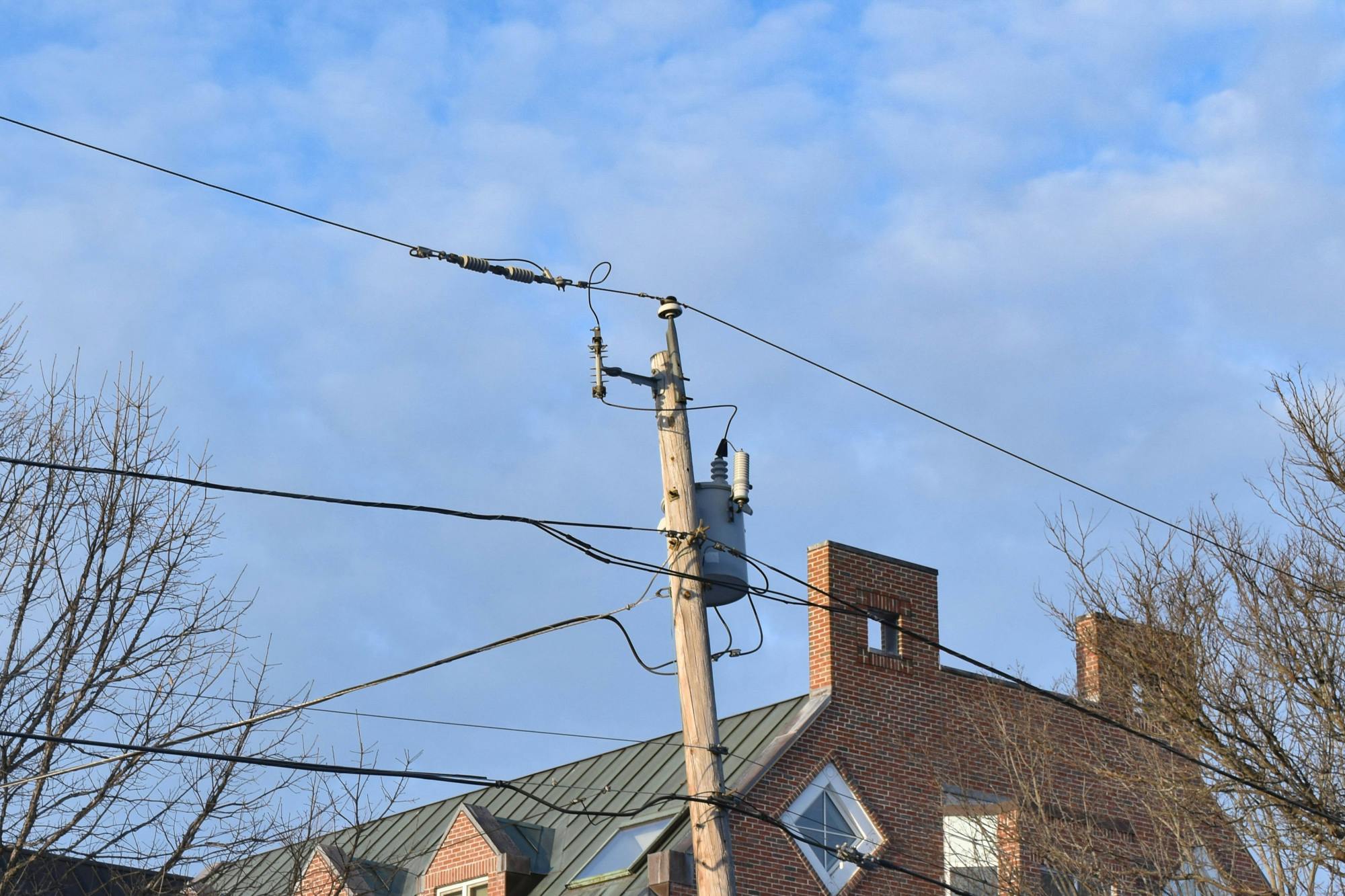
Last month, the New Hampshire Executive Council approved a study to examine the feasibility of New Hampshire exiting the New England regional energy grid, according to a meeting agenda published on the Secretary of State’s website. The study — which will be conducted by consulting firm London Economics International — will cost the state $230,046.
ISO-New England — an independent, non-profit organization — has overseen New England’s energy grid operations, energy market administration and power system planning since 1997, according to its website.
The study was formalized in House Bill 690 and signed into law by New Hampshire governor Kelly Ayotte in July 2025. According to the bill, the study will last a full calendar year and is intended to explore options to “insulate ratepayers from costs associated with New England’s environmental policy.”
In an email statement to The Dartmouth, ISO-NE senior communications specialist Mary Cate Colapietro noted that New Hampshire’s withdrawal would be “unprecedented.”
“New England’s operating procedures, wholesale markets and planning processes were developed as part of an integrated, six-state regional framework and were not set up with carve-out provisions,” she said.
State Rep. Michael Vose, R-Rockingham — who serves as chair of the science, technology and energy committee in the New Hampshire House of Representatives — said in an interview with The Dartmouth that he voted in favor of House Bill 690 and sees the study as a “broad vehicle” to prevent energy policies in nearby states from affecting utility rates in New Hampshire.
The study will show what “New Hampshire can do in the future to protect itself from higher costs … that our citizens essentially did not vote for and in many cases do not support,” Vose said.
Engineering professor Junbo Zhao said while he “understand[s] there are concerns” about the impacts of energy policies in other New England states on New Hampshire rates, he said the benefits of leaving ISO-NE are questionable. As an example of the concerns, Zhao noted that Massachusetts and Connecticut have invested in offshore wind and solar, while New Hampshire does not.
“[The department of energy is] curious to see whether that type of investment would affect any rate in New Hampshire, because New Hampshire may feel it’s unfair,” he said.
Still, Zhao said he was “very surprised” by the study.
“I don’t see clear benefits for New Hampshire to be isolating itself,” Zhao said. “Electric grid reliability and resiliency will be degraded because [New Hampshire will] not have connected systems, and neighboring states may not be able to help.”
Zhao noted that leaving ISO-NE could leave New Hampshire prone to an outage like the one Texas faced in 2021 following a historic winter storm.
“Texas has minimal interconnection with other parts of the grid,” Zhao said. “This really caused a lot of issues when they needed power… and people died during that event.”
New Hampshire executive councilor Karen Liot Hill ’00 said she thinks the study is “essentially a waste of money.”
“I have been told by numerous constituents, including real experts in this area, that [withdrawing from ISO-NE] would be incredibly costly for New Hampshire,” Hill said. “The costs far exceed any kind of benefit that might be found from leaving.”
Hill said, however, that she was “withholding judgement” on leaving ISO-NE until the study’s results are published.
“Based on what I’ve heard so far, I think it’s highly unlikely that the results of this study are going to suggest that leaving ISO-NE is appropriate,” Hill said. “But I think it’s important to let the data speak for itself.”
Alex Klee ’29 is a reporter from Woodbridge, Conn. He plans to major in economics and minor in math. He enjoys live music, skating and climbing.
Sahil Gandhi ’29 is a reporter from Staten Island, N.Y., and is majoring in environmental studies and government modified with philosophy and economics. He loves word searches and falling down internet and Wikipedia rabbit holes.