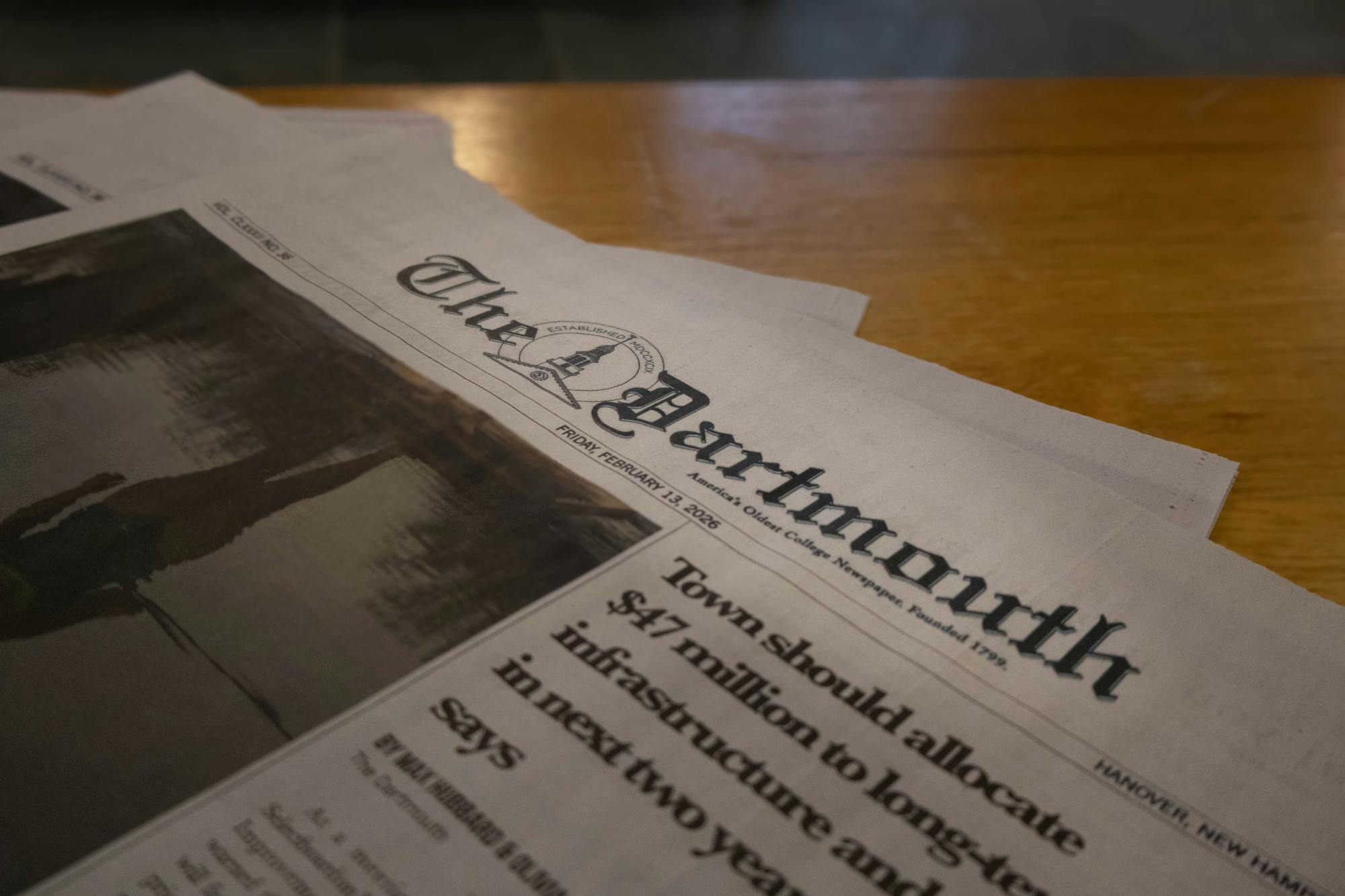
Starting this year, a new endowment called the 1799 Fund will support The Dartmouth’s operations. The Dartmouth’s assets — along with future alumni donations — will be transferred to a supporting 501(c)3 organization, which will be fully separate from the newspaper’s current business accounts.
The Dartmouth Board of Proprietors member and 1799 Fund president Ross Waller ’89 said he hopes the new fund will allow The Dartmouth to “operate in a way that’s financially unconstrained.”
“Whatever good idea they have, they can pursue,” he said. “They can take risks. They can make sure they stay independent.”
Scott Anthony ’96 — who is also a dual-member of the Board of Proprietors and the 1799 Fund board — said in an interview the new fund will make it easier for alumni to donate to the paper by making it clear where the money is going.
“It is very clear that if you want to have a thriving college media organization, it cannot survive on traditional means of revenue — advertising, subscriptions and so on,” Anthony said. “You need to have some other form of financial support, and the 1799 Fund makes it a lot easier for alumni to donate, and therefore support a thriving media organization at Dartmouth — which Dartmouth needs and deserves.”
Prior to the establishment of the 1799 fund, the paper’s publisher and Board of Proprietors decided how much to pull from The Dartmouth’s savings to fund yearly expenses, The Dartmouth’s current publisher Quentin Proud ’26 said. Now, the 1799 Fund, named after The Dartmouth’s founding year, will distribute a percentage of the endowment to the newspaper every year.
“The new system … takes a lot of the burden off of The Dartmouth itself, and also the publisher, because the money is being managed and stored by a separate entity, so there’s no risk of fraud,” Proud said.
This comes after The Dartmouth’s former office manager Nicole Chambers embezzled more than $223,000 from 2017 to 2021. Waller said that the embezzlement was a “super compelling” reason to have externally managed finances.
Waller said that he has been working on setting up the endowment since 2021, when he approached then-publisher Olivia Gomez ’22 about creating an external endowment for a “more reliable revenue stream.” Gomez discovered the embezzlement shortly after.
The 1799 Fund will be required to distribute a minimum amount of either 85% of the annual net income or 3.5% of the value of the fund. The 1799 Board can decide to increase the percentage based on what the publisher wants to spend, Waller said.
Waller said that the separate endowment — and the continuity of its board — will provide the paper with more stability and prevent fraud.
“It’s just a very hard thing about running a college newspaper — that different people are in charge every year, and there are a million things to keep track of,” Waller said.
On Feb. 17, The Dartmouth’s Board of Proprietors filed a motion to enter judgement to the Grafton County probate court for the transfer of $1 million from The Dartmouth’s account to the 1799 Fund. Waller said the 1799 Fund’s 501(c)3 application, which the Board of Proprietors submitted in May 2025, is pending and could take the Internal Revenue Service up to 18 months to approve.
To protect The Dartmouth from creditors if the paper is sued, the majority membership make-up of the 1799 Fund’s board cannot be the same as the Board of Proprietors, according to Waller. Two out of five 1799 Fund board members are appointed by the Board of Proprietors and select three other alumni of The Dartmouth.
Anthony said that he hopes the additional revenue will enable The Dartmouth to increase the frequency it publishes print newspapers. In February, The Dartmouth announced that it will publish Mirror Magazine in print every other Wednesday.
“I hope for more stories and more formats that enable more people to know what’s going on,” Anthony said.
Iris WeaverBell ’28 is a reporter and editor. She is from Portland, Ore., and is majoring in economics and minoring in public policy.