
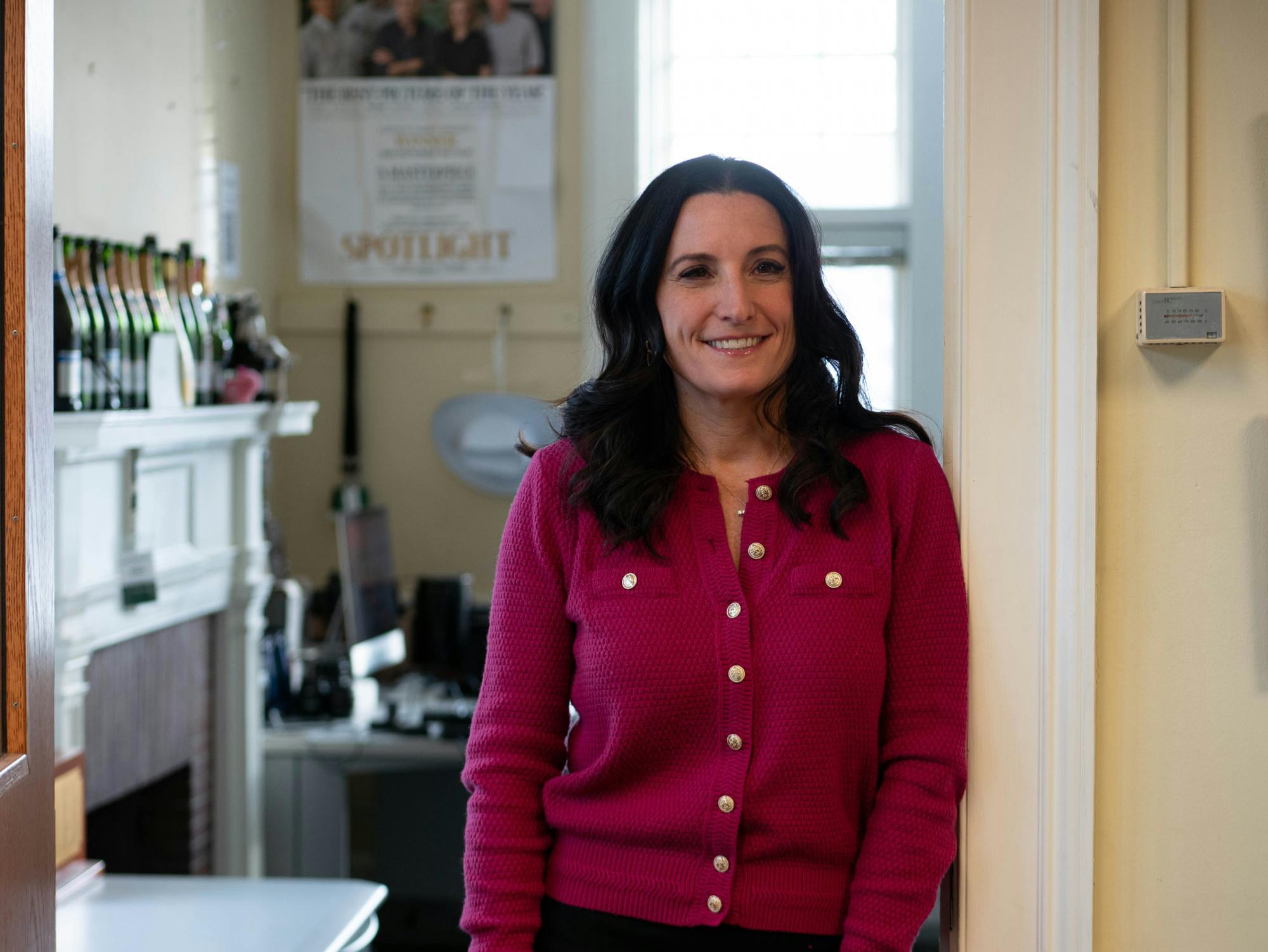
As part of The Dartmouth’s coverage of the upcoming 2026 midterm and gubernatorial elections, the paper is publishing an interview series, “A Sit-Down with The Dartmouth,” featuring in-depth conversations with major national and statewide candidates in New Hampshire.
In this installment, The Dartmouth interviewed Melissa Bailey, a Republican candidate for New Hampshire’s 1st Congressional District. Bailey, a former auditor and banking professional, has framed her campaign around fiscal restraint and affordability for families. Bailey’s campaign comes after U.S. Rep. Chris Pappas, D-N.H., who currently holds the seat, announced that he would be running for U.S. Senate in 2026. Other Republican candidates include State Rep. Brian Cole, R-Hillsborough, Portsmouth businessman Anthony DiLorenzo and Novel Iron Works CEO Hollie Noveletsky.
In an interview conducted at The Dartmouth’s newsroom, Bailey discussed her motivation for running for Congress, her policy priorities and how she would represent a politically diverse district.
You are running for Congress in New Hampshire’s 1st District, where an open seat has drawn a crowded field. Why is this the right moment to seek federal office, and what is the single most urgent problem facing the district?
MB: This is the right moment because New Hampshire families are still feeling the effects of the crippling inflation from the Biden years. I come from a background in accounting and finance, so I don’t see affordability as a slogan. It’s a fiscal problem. The federal government is too big. Here in the Live Free or Die state, freedom includes financial freedom, and Washington, D.C. needs to get its hands out of people’s wallets.
President Donald Trump has presided over record federal deficits. How do you reconcile that record with your argument that his economic approach reflects fiscal discipline?
MB: I think of it like a very large ship that’s been steered in the wrong direction for a long time. You can’t move it back on course all at once. Inflation has stabilized, real wages are rising and we’re starting to see growth. In the first quarter, people are seeing tax relief they weren’t expecting, like no tax on tips or overtime. In New Hampshire, seniors are also benefiting from relief on Social Security taxes. The groundwork is being laid, but it takes time before people feel it fully.
How does your background as a parent and financial professional shape the priorities you would pursue in Congress?
MB: We need more parents in Washington, D.C. Being a mom, a financial professional and a political outsider shapes everything I do. As a parent, I’m focused on strengthening families, protecting parental rights and giving moms and dads more control over their children’s education and future. Families, not bureaucrats, know what’s best for their kids.

Isabel "Izzy" Menna, a freshman reporter from Washington, interviewed Melissa Bailey, a wife, mother and Republican candidate for Congress.
What actions would you prioritize in your first year in Congress?
MB: My freshman year would be about learning, but there are bills I would support. I’m interested in parental rights legislation and continuing to push education dollars back to the states so families have more choice.
How would you balance the competing interests of urban centers, rural communities and the Seacoast region within the 1st District?
MB: What makes New Hampshire special is its diversity — cities, rural towns and the Seacoast. What’s consistent everywhere is affordability. People want to afford to live here and stay here. As a federal candidate, my focus would be on higher-level policies that give families more control over their own economies.
What role should the federal government play in New Hampshire’s energy future?
MB: Getting out of the way. Energy costs are one of the biggest drivers of affordability. When supply is restricted, families pay higher prices for everything. The federal government should remove roadblocks that prevent us from building and connecting energy infrastructure. We need reliable, affordable energy with responsible environmental protections, and those don’t have to conflict. Innovation happens when the federal government steps aside and allows private companies to develop efficient solutions.
Immigration and security are central to your campaign. How do you balance enforcement with workforce needs?
MB: After millions crossed illegally under the Biden administration, we’re dealing with the consequences — public safety, housing, schools and health care. We need to codify President Trump’s border policies into law to restore order and accountability. American workers need to come first, including college graduates. There may be a role for limited, tightly controlled seasonal visas, like J-1 programs that support tourism. But broad programs like H-1B visas have been abused and need to be paused or reexamined.
How would you approach Medicare and Medicaid while ensuring access to care, especially in rural areas?
MB: Health care and affordability are major concerns here. New Hampshire recently secured $204 million in rural health care transformation funding, the largest award in New England, which goes directly to hospitals and providers to expand services and lower costs. We should never cut Medicare or Medicaid for seniors, low-income families or people with disabilities. But we do need stronger controls to prevent waste and fraud and keep these programs solvent long-term.
Do you support federal education dollars following students through school choice programs?
MB: Yes, we don’t accept monopolies in business and we shouldn’t in education. This issue is personal to me. I’ve homeschooled my children, and they now attend public school and are thriving. Families using education freedom accounts include special-needs students and children who are struggling in traditional classrooms. Strong schools won’t lose students. Accountability raises standards across the system.
What does bipartisan compromise look like to you?
MB: It starts with recognizing that people often share the same end goals but disagree on how to get there. I’m willing to work with anyone who wants to lower health care costs, fight the drug crisis, support veterans and improve infrastructure. The lines I won’t cross involve the Constitution, parental rights, border security and economic freedom.
Finally, what should voters understand about how you make decisions?
MB: My decisions come back to the Constitution and freedom. I’m a Christian, and that shapes my values. I believe our rights come from God, not government, and my goal is to ensure the federal government protects those rights rather than taking them away.
This interview has been edited for clarity and length.

Isabel Menna ‘29 is a reporter from Leavenworth, Wash., is majoring in economics and is a member of the Dartmouth Ski Patrol.


