
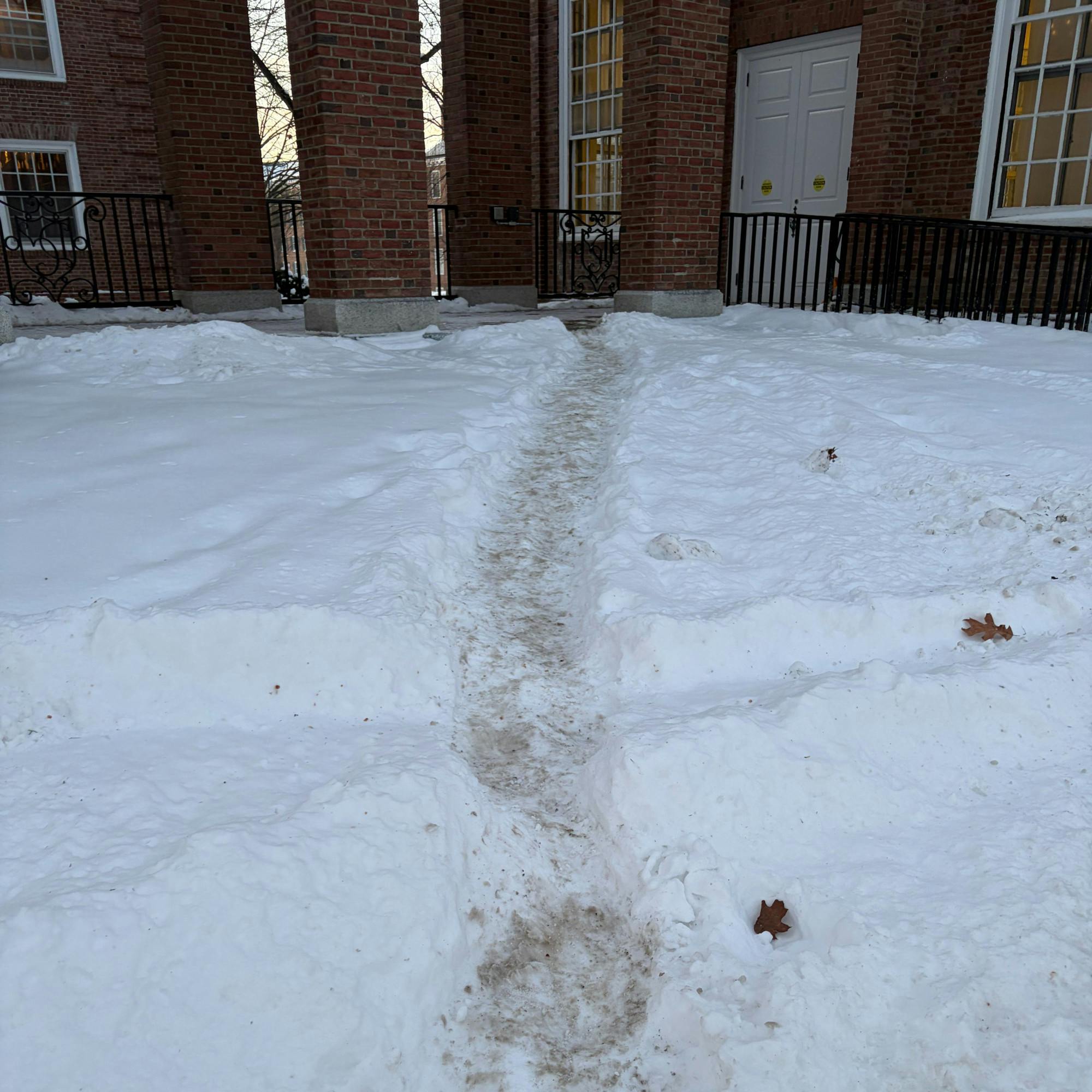
After weeks of the coldest, snowiest, winteriest winter we have had in a while, I am no longer surprised when I open my blinds in the morning and see more snow on the ground than the night before. There is something magical and peaceful about the untouched, pillowy blanket of snow on the flat part of the roof outside my window and the sidewalk below. However, the wintery mix significantly decreases my odds of making the trek to the gym before class.
When I say trek, I mean five minute walk. But this winter’s conditions make every minute outside feel like 10. On the days when I manage to get myself up and out the door for a quick morning workout, I bundle up in sweatpants over my running shorts, a sweatshirt over my tank top, and my winter jacket over all of that. My running shoes and winter boots sit side by side on the shoe rack by the front door, but my groggy morning brain always chooses the former for efficiency’s sake.
I grasp the doorknob and brace myself for the gust of cold wind that hits my face as soon as I open the door. I step outside and start walking as fast as I can without wiping out on black ice: down the rickety wooden steps of my apartment building, diagonally across the street toward Buddy Teevens Stadium, left on Crosby Street and right behind the Onion. As I approach Alumni Gym, I am faced with a choice: I could continue on the shoveled, salted sidewalk, or I could take a shortcut through the foot of snow to arrive at the front door a few seconds sooner. I could take the desire path.
My decision depends on a few factors: How packed down is the snow? Am I in the mood to get my sneakers wet? Am I alert enough to keep my balance on the uneven, slippery surface? Did I snooze my alarm too many times, or do I have the extra few seconds to spare?
More often than not, I take the desire path. We’re taught that the shortest distance between two points is a straight line, after all.
According to a quick Google search, a desire path is “an unofficial track formed when people walk the shortest or easiest way between two places in preference to a constructed but longer or less convenient path.” There are hundreds, maybe even thousands, of them all over campus, from the gym to the Green to Kemeny Courtyard. Each snowfall conceals the current array of desire paths and lays a fresh canvas for the creation of new ones.
When I first started thinking about where I wanted to go to college, I thought I wanted a city school. I couldn’t imagine spending four years tucked away in some remote New England town with no Uber or Chipotle. I quickly changed my mind, though, when I saw the zoomed-out images of Dartmouth nestled within the expanse of vibrant fall foliage. I could easily envision myself walking along the clear-cut gravel paths on the Green that stand out so starkly from the bird’s-eye-view of campus presented during admissions events.
From the student point of view, I quickly came to realize that Dartmouth students rarely take the path carved out for them — if one even exists. Instead, they take it upon themselves to forge new paths: more innovative, efficient, unique ways to get from point A to point B, or some point X that has yet to be defined. As I came to see, through the veil of my imposter syndrome, the infinite selection of paths available for me to take to my next destination in life, I was overwhelmed. I was suddenly a small fish in a huge pond. For my whole life up until this point, I had known exactly what came next for me and what I had to do to get there. I was used to taking the path that I could see ahead of me. Desire paths were uncharted territory.
Over the past four years, I have experimented with creating my own desire paths through the uncertain future ahead of me. However, my choice to take them still relies on some criteria. I tend to retreat from paths that lack at least some pre-existing footsteps; I find comfort in the ability to follow someone else’s example. When I do make the first tracks, it is only when I feel confident that I won’t slip and fall along the way.
When I choose the desire path through the snow on my way to the gym in the morning, one could say that I am technically cutting the corner created by the right angle of the sidewalk. Along with the definition of a straight line, we are taught that cutting corners is cheating — literally, in laps around the gym in P.E. class, and figuratively, when it comes to using SparkNotes instead of reading the assigned chapter in English class. However, we are also taught that nothing easy is worth doing. My feet might stay dry by continuing on the sidewalk on the way to the gym, but I save a few seconds by trekking through the ankle-deep snow. In taking desire paths — whether through the snow or an uncertain future — I have learned that while the path may be more treacherous, the end result is far more meaningful than any sidewalk’s destination.


