
This article is featured in the 2025 Freshman Special Issue.
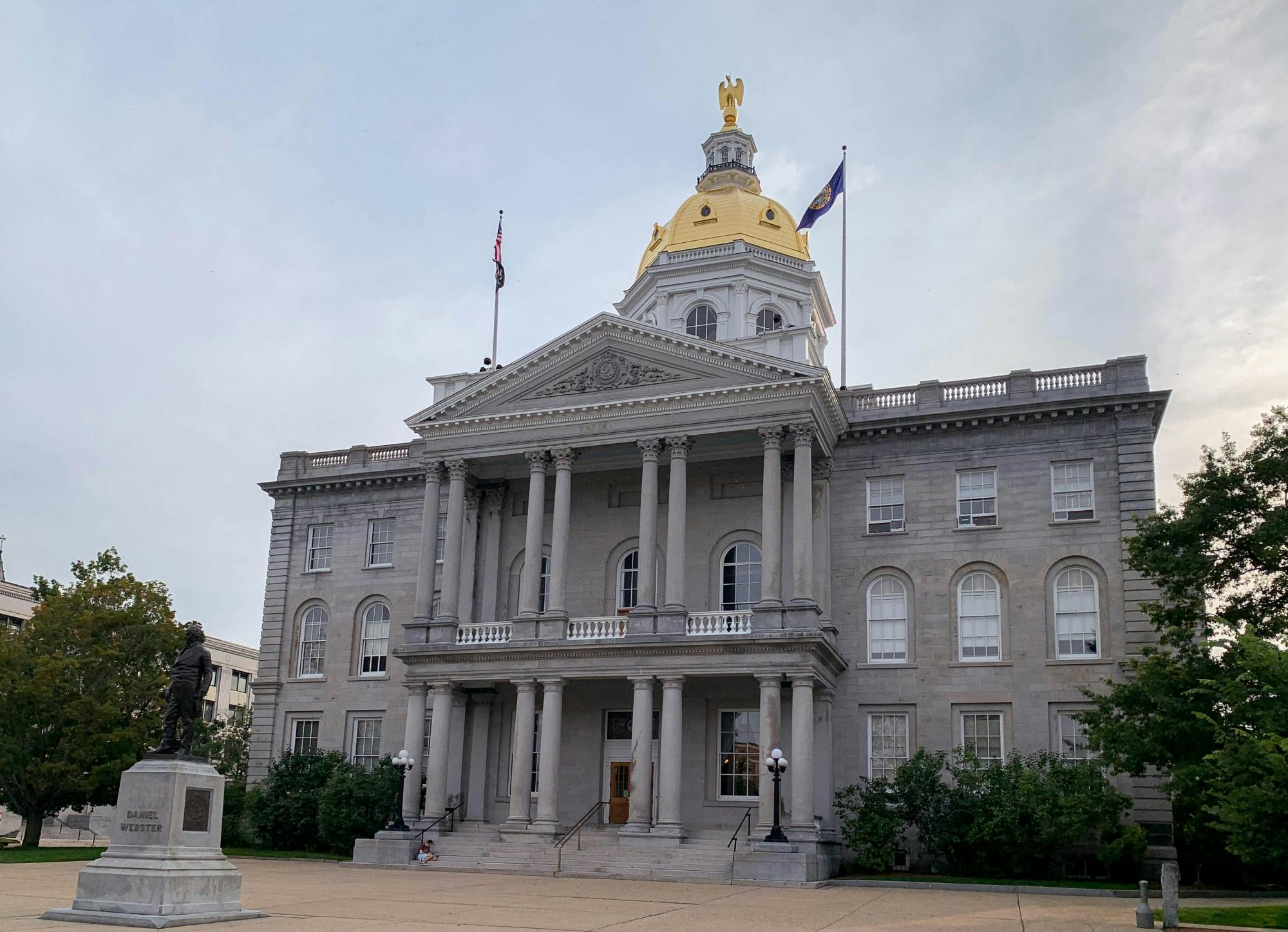
Lawmakers across New Hampshire’s political spectrum say polarization in Concord has intensified in recent years, as bipartisan dealmaking has given way to party-line votes on high-profile issues. Since Republicans won a supermajority in the Senate and expanded their House majority in 2024, the Legislature has passed measures creating universal school vouchers, banning gender-affirming care for minors, advancing strict immigration enforcement bills and restricting transgender participation in sports.
Executive Councilor Karen Liot Hill ’00, D-2, said the change reflects Gov. Kelly Ayotte’s embrace of what she called a “MAGA agenda” in her inaugural address, which laid out priorities she described as “straight from the Project 2025 playbook,” including expanding school vouchers.
The school vouchers program, which Senate Bill 295 broadened to cover all families regardless of income this year, allows public money to be used for private and religious schooling.
“That was something they passed, she signed into law, and it’s going to cost taxpayers in New Hampshire a billion dollars over the next decade that we don’t have,” Liot Hill said.
State Rep. Mary Hakken-Phillips, D-Hanover, said that some members of the new Republican majority were not willing to “reconsider” their viewpoints.
“Before, you could explain the harm of a bill [to Republicans],” Hakken-Phillips said. “Now, with issues like LGBTQ+ rights, there’s not that space anymore, [since] they believe their bills are morally correct.”
LGBTQ+ rights have been at the center of some controversy in the state capitol. Last summer, for example, then Republican Gov. Chris Sunnunu signed two anti-trans bills into law, restricting access to transition surgery and limiting trans participation in sports.
State Sen. Dan Innis, R-Bradford, who is running for U.S. Senate in 2026, acknowledged that the Senate Republicans “got a little more conservative” after winning a supermajority in 2024, but the Senate stays “respectful” because it’s “only 24 people.”
“We have to work together and we do,” he said. “The House is different. The House has more cantankerous personalities, and there are more of them, so it’s easier to hide.”
Innis also alleged “bias against Republicans” in the media and among Democrats.
“I hear it over and over: ‘Republicans are evil,’” Innis said. “That’s not true … I’m gay, and Republicans accept me. We disagree on issues, but I’ve never felt like I didn’t belong in my caucus.”
Deputy Speaker of the House Steven Smith, R-Sullivan, said that while most State House business remains bipartisan, the tenor of debate has shifted because of “hyperpartisan outlets like MSNBC and Fox [News].”
“Eighty percent of what we do is nonpartisan,” Smith said. “But you only hear about the 15-20% that get people riled up. Cable TV and the internet ruined a lot of relationships.”
Smith argued that national news cycles drive partisanship, noting that immigration debates in Concord in particular often mirror congressional fights.
“I wonder if representatives would … file bills that have anything to do with illegal aliens if they weren’t dialed into national politics,” Smith said.
Liot Hill attributed the shift to President Donald Trump “unleash[ing] extremism” in the Republican party.
“The most conservative Republicans want to take away people’s rights, and the most liberal Democrats want to give people services, like health care,” Liot Hill said.
The state’s political climate drew national attention in August when 20 members of the Maine-based neo-Nazi group Blood Tribe rallied outside the Concord Statehouse with swastika flags and signs that said “Minorities should disappear.”
Republican Gov. Kelly Ayotte condemned the demonstration, calling the group’s ideology “repugnant and disgusting.”
Some GOP legislators did not comment on the event. State Rep. Joe Alexander, R-Hillsborough, posted on X “This is communities free speech and I will support it.”
“That other Republicans were unable to condemn them shows how extreme the party has gotten,” said Samay Sahu ’27, who is from New Hampshire.
For Democrats, silence from GOP lawmakers was more troubling than the march itself.
“By not condemning it, you leave room for it to fester and become part of an acceptance,” Hakken-Phillips said.
Debates about structure and representation have added to the tension. Last week, Ayotte said the legislature would not redraw New Hampshire’s two congressional districts ahead of 2026, despite Republican pushes in other states to do so.
Government professor emeritus Linda Fowler praised the move as “courageous for sticking to the constitution.”
Still, Alejandro Menendez ’27, who voted for Ayotte, said he is “torn” about redistricting.
“Two safe Democratic seats isn’t the most representative of New Hampshire,” he said. “We could ensure fair representation if we made one district lean Republican.”
Despite the divisions, Smith said there is still camaraderie within 20-person House committees.
“You spend every day in committee with the same 19 people,” he said. “How can you hate them? They’re just people who believe what they believe.”
Some Democrats claim that The Free State Project, a New Hampshire-based libertarian movement, has further contributed to polarization. About 30 State House Republicans are affiliated with the group, including Majority Leader Jason Osborne.
Smith said Free Staters are “kind of a bogeyman.”
“They are generally thought of as a bad thing, so Democrats like to accuse everyone of being one,” Smith said.
Liot Hill recalled seeing members of the group “really causing trouble for towns” at select board meetings, including in Croydon, N.H., where Free Staters proposed dramatic cuts to the state’s education budget. She connected the movement to broader trends in New Hampshire.
“The Free State Project’s anti-government ideology combined with this MAGA extremist rhetoric… is really contributing to some of the very extreme language, the extreme tactics and the extreme legislation that we’ve seen passed by the Republicans,” Liot Hill said.
Iris WeaverBell ’28 is a reporter and editor. She is from Portland, Ore., and is majoring in economics and minoring in public policy.


