
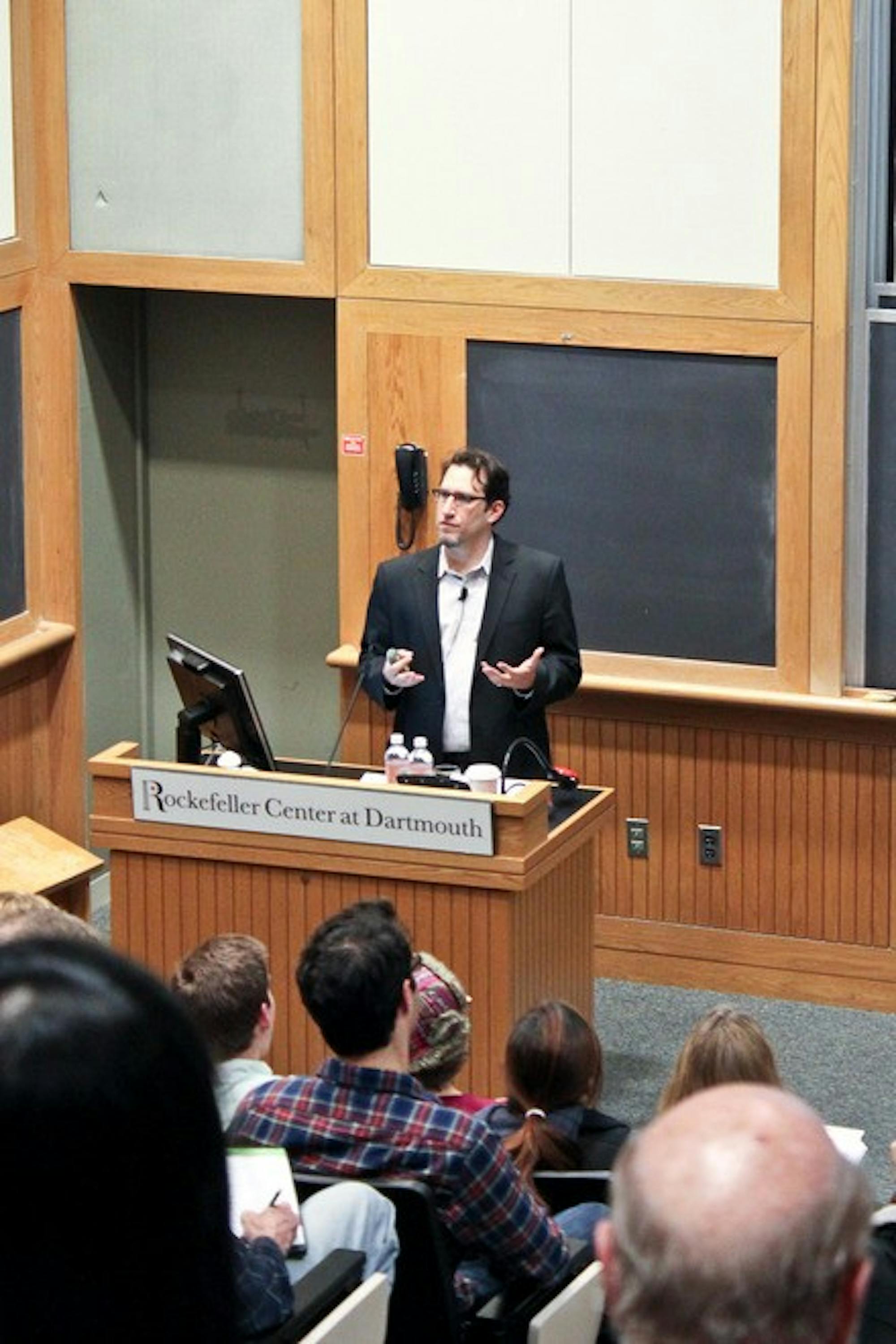
In the current era, human life spans are increasing, interstate wars are generally disappearing and conflict fatalities are decreasing compared to wars of the past, Cohen said.
These trends reflect an increase in international peacekeeping institutions and a shift in social norms surrounding violence and war. War is no longer necessary to solve interstate conflict, and the costs of waging war are becoming more significant.
"For most countries, the benefits of war simply do not outweigh the economic, infrastructural and social costs," he said.
As electoral democracies grow from 41 percent to 60 percent of all countries in the past 23 years defense spending worldwide has seen an opposite shift, according to Cohen. The U.S. is an exception to that trend, with a budget that peaked at $686 billion in 2011, surpassing the defense spending of all other countries in the world.
"The United States faces no great power rival no country willing or able to take on our military and we have far and away the largest standing army," Cohen said.
Terrorism, nuclear proliferation, enemy states and other threats to U.S. national security are non-threats inflated by politicians, according to Cohen. On average, only 29 Americans have died each year from terror-related activities since the Sept. 11 attacks, while approximately 30,000 Americans die from gunfire each year. More Americans are killed from being stuck by lighting than by terrorist attacks, he said.
High U.S. military spending enables many international allies to rely on American military support rather than pay for their own defense. The U.S. should reallocate its military budget to diplomacy, international development and climate change, Cohen said.
"You can't nuke the sun," he said. "Having a giant military budget won't help solve that problem."
Cohen concluded by emphasizing that the U.S. government misunderstands the state of the current world.
"The world is safer, freer, healthier and more prosperous than at any point in its long history," Cohen said. "We should be using this knowledge to structure U.S. foreign policy-making."
Government professor Jennifer Lind agreed that the U.S. is funding foreign military projects, but said that conflict would arise if America stopped subsidizing the militaries of other countries.
"If America pulled its military support from its Asian allies, I believe many of them would take independent steps to defend themselves, including the creation of nuclear weapons," Lind said. "The question is, are we comfortable with this?"
Sharjeel Syed '16 said he agreed with Cohen's arguments, but added that terrorist activities and economic uncertainty outside the U.S. should be considered as well.
"This creates volatile countries which are not opposed to war," Syed said.
Cohen responded by suggesting that volatile countries such as Iran do not have modern militaries or a major impact on the functioning of international politics.
Cohen was formerly a senior fellow at the New America Foundation and the American Security Project. He was also a weekly columnist for Foreign Policy and a blogger for the New York Daily News. Cohen currently writes for The Guardian and teaches at the School of International and Public Affairs at Columbia University.
The lecture was co-sponsored by the Dickey Center for International Understanding.


