
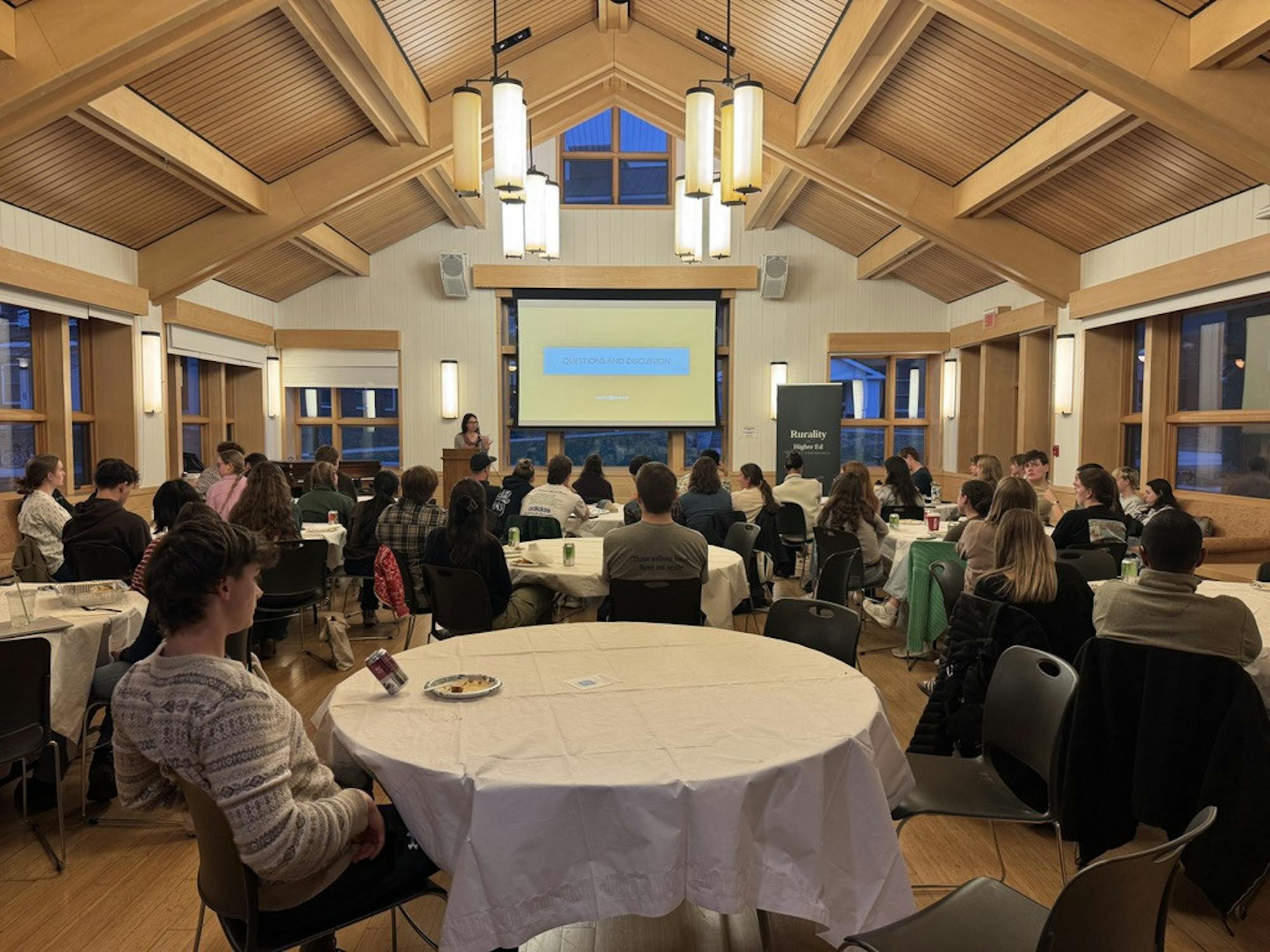
On April 4, the Dartmouth Organization of Rural Students hosted the Rurality in Higher Education conference, featuring a keynote address by Bates College education professor Mara Tieken ’01, author of “Educated Out: How Rural Students Navigate Elite Colleges and What it Costs Them.” The conference also featured an education policy panel, breakout workshops and exploration of the Upper Valley.
Approximately 40 students from Brown University, Colby College and Dartmouth gathered in Occom Commons to hear Tieken discuss her research and experience teaching students from rural backgrounds. Her research focused on nine students who attended “Hilltop College,” an alias for an elite, private liberal arts college.
Dartmouth Organization of Rural Students president Anika Larson ’26 said in an interview with The Dartmouth that several DORS founding members attended the first Rurality in Higher Ed conference at Brown University in 2023. After returning, they decided to start DORS to “advance issues of rurality in higher education” at Dartmouth.
“That means coming together as a community about the challenges that rural students oftentimes face when they come to campus — providing support for students when they do come to campus, and generally hanging out, having a good day and eating food together,” Larson said.
She added that she faced challenges when adjusting to the College as a rural student.
“When I came to Dartmouth, I didn’t know that boarding school was a real place,” Larson said. “I genuinely thought it was a joke.”
Tieken began her keynote speech at the beginning of her career as a third-grade teacher in rural Tennessee, showing a photo of her first class of students to the audience.
“They were totally brilliant,” she said.
While working her first faculty job nine years later at Bates College, Tieken wondered why most of those students decided not to go to college after receiving their graduation announcements.
Having worked for a year at Bates — an elite liberal arts college that Tieken described at the event as a “rarified environment” — she said her question shifted to what happens when rural students get into and attend elite colleges and universities.
She described their initial transition into college and how, at first, these students love the enrichment activities, roommates, friends and classes.
“By springtime, I start getting some signals that things aren’t going as good as they seem,” she said. “The culture of wealth and drinking is also new to them, and for some, really off-putting.”
Tieken said that one student she interviewed for her research told her that college parties “smell like desperation and beer.”
She concluded her keynote speech by noting that these rural students “did everything right, at least according to all the college advocates, and still they’re left with debt.” This, she said, led to “disillusionment” for both herself and the students.
“Most of the students are unsatisfied,” Tieken said. “They don’t have those good jobs — the ones that will allow them to pay off their loans, pay their bills and be in a big city. They are feeling lonely, disconnected from peers and family.”
Brown University sophomore Joseph Ash, who attended the event along with a cohort of other students from Brown, said in an interview that he was “excited” that Dartmouth hosted the conference after it had been held at Brown the past two years.
“It originally started as just the Ivy League schools,” Ash said. “Now we’ve expanded it to all universities that have rural students on their campuses. We’re able to engage with other rural students to kind of see issues and share issues.”
Tieken praised DORS for advocating for the issues of rural students.
“These affinity groups are really important for helping rural students find resources on campus,” she said. “These organizations are often best when they’re student-run.”


