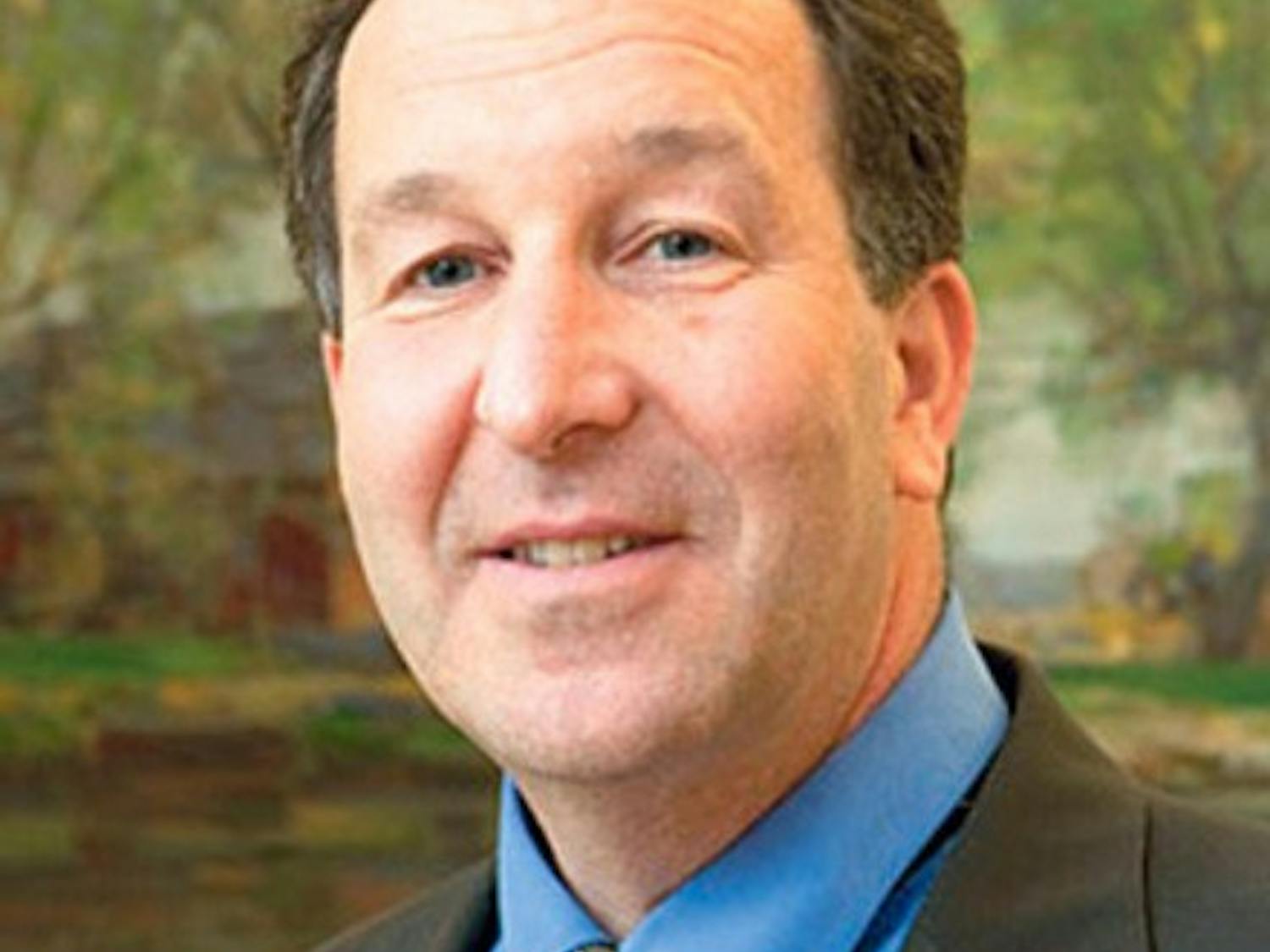
Korean press covers Kim's selection
17: Dartmouth's Next President
Correction appended As medical centers and watch dogs increasingly focus on conflicts of interest in academic medicine, Dartmouth Medical School and its affiliates are working to promote the disclosure of connections between professors and the medical industry. More than 200 students and faculty members at Harvard Medical School have mobilized to fight the influence of industry in the classroom, The New York Times reported on March 2, "embarrassed" by the "F" rating the school received from the American Medical Student Association, an organization that tracks how well institutions oversee the influence of the pharmaceutical industry on their campuses. DMS also received an "F" rating because it has not responded to the organization's request for policy information, according to the AMSA web site.
Steve Dettelbach '88, a defense attorney and former federal prosecutor, was recommended by Sen. Sherrod Brown, D-Ohio, to be the U.S.
The number of jobs available to graduating students is expected to fall by 22 percent in the upcoming year, according to a new survey by the National Association of Colleges and Employers.
Courtesy of puc.ucsf.edu The College will expand its offerings in Swahili this spring with the addition of Swahili II, according to Lisa Wallace, business finance manager for the John Sloan Dickey Center for International Understanding.
IAN BLUMENTHAL / The Dartmouth The growth of economies in the developing world depends on increasing countries' access to new technology, Thayer School of Engineering professor Elsa Garmire said in a lecture in Spanos Auditorium on Friday.
The 11 to 20 percent of American youth who own clothes or other merchandise advertising alcohol are more likely to begin drinking earlier than their peers, according to a recently published study by pediatricians at Dartmouth-Hitchcock Medical Center. The study surveyed 6,522 youth between ages 10 and 14 in 2003, according to lead author DHMC pediatrician Auden McClure. The team then conducted three follow-up surveys every eight months, in which participants answered questions about changes in their drinking habits and ownership of alcohol-branded merchandise. Although the study does not prove that there is a causal link between owning merchandise that promotes alcoholic products and underage drinking, it suggests that pediatricians should caution parents and educators about the potential risks of such products, McClure said. The study "provides strong evidence that alcohol-branded merchandise distribution among adolescents plays a role in their drinking behavior and provides a basis for policies to restrict the scope of such alcohol-marketing practices," the authors wrote in their conclusion to the study. Currently, the alcohol industry's policies regulating companies' marketing to youth lag behind those of the cigarette industry, co-author Dartmouth Medical School professor Susanne Tanski, also a DHMC pediatrician, said. After major tobacco companies voluntarily signed the Master Settlement Agreement, which established marketing restrictions to be enforced by an independent agency, the prevalence of tobacco-related merchandise and its use by youth decreased drastically, Tanski explained. Marketing restrictions on alcohol products and promotional merchandise, though, are self-enforced, and are largely unsuccessful, Tanski said. Approximately 3 million teens own alcohol-branded merchandise, despite a Beer Industry Code provision that "no beer identification, including logos, trademarks, or names, should be used or licensed for use on clothing, toys, games or game equipment, or other materials intended for use primarily by persons below the legal drinking age," according to a DHMC press release. The study's authors pointed to this statistic as evidence that self-regulation was ineffective. "It seems to me that it would be very helpful if the alcohol industry had more stringent guidelines," Tanski said.
The Mascoma Corporation, a leading biofuel technology company founded by two Thayer School of Engineering professors, is now producing cellulosic ethanol from sustainable biomass -- a renewable energy source that may one day help power vehicles and reduce the country's dependence on oil -- at its newly constructed pilot facility in Rome, N.Y.
College President James Wright and President-elect Jim Yong Kim responded to Tuesday's controversial General Good Morning Message in a joint e-mail to the Dartmouth community on Thursday.
The United States can transform its Medicare deficit into a surplus and expand coverage to the uninsured by pushing regions with high health care costs to adopt the policies of regions with lower costs, according to a study conducted by a team of Dartmouth Medical School researchers at The Dartmouth Institute for Health Policy and Clinical Practice.
As a practitioner of Tibetan medicine in Mustang, Nepal, Tenzin Bista incorporates his beliefs as a Buddhist monk into his daily work with patients and preserves traditional cultural practices, Bista told audience members gathered in Haldeman Center on Thursday night.
New Hampshire's unemployment rate reached a 15-year high in January, climbing to 5.1 percent, according to state officials.
Yale University announced on Tuesday that its tuition, room and board will increase by 3.3 percent to $47,500 for the 2009-2010 academic year, according to Bloomberg.
Courtesy of Sam Blader When Treasury Secretary Timothy Geithner '83 confronts the Chinese government about currency manipulation, and newly appointed Sen.
The Hanover Institute, a non-profit organization that is suspected of funding the current alumni lawsuit against the College, will not take a position on proposed legislation that seeks to reform the alumni election process, according to a press release by John MacGovern '80, president of the institute.
17: Dartmouth's Next President
A group of 26 Dartmouth students attended the 14th Annual Black Solidarity Conference last weekend at Yale University.