
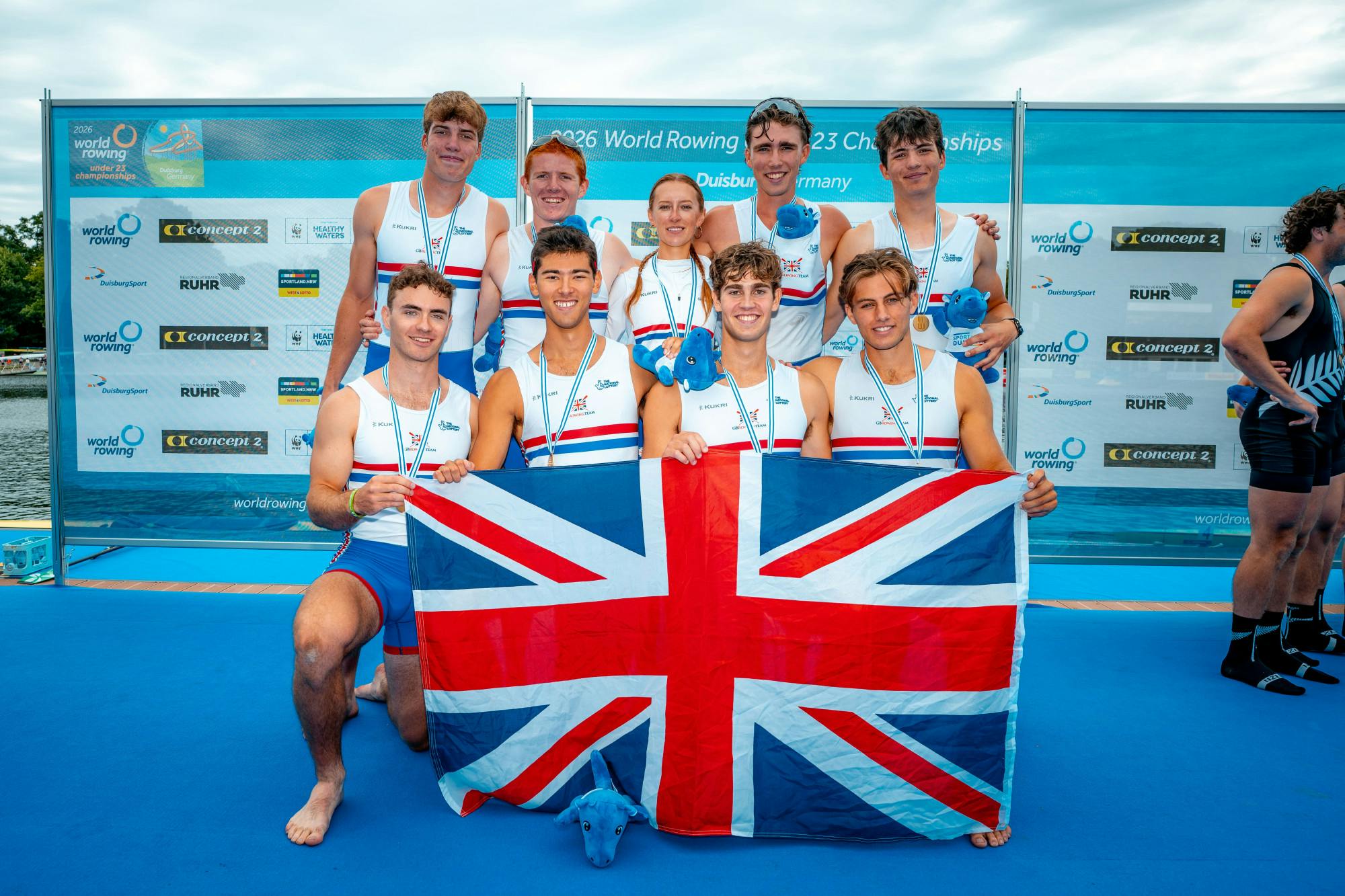
On July 26, heavyweight rower Matthew Johnston ’27 captured gold with Team Great Britain in the Men’s Eight final at the World Rowing Under 23 Championships in Duisburg, Germany. The victory marked the seventh under 23 championship in a row that Great Britain has won gold in Men’s Eight.
Johnston previously won silver at the 2022 World Rowing Under 19 Championships in Varese, Italy. The Dartmouth sat down with Johnston to discuss his rowing background, the national team selection process and student athletics.
How and when did you get your start in rowing?
MJ: I started rowing in 2017 when I had just turned 13. A local rowing club was advertising, and I tried out with some friends because it was summer and rugby and soccer weren’t in season. I kept up with rowing throughout the years, and it eventually took up more and more of my life. I stopped doing other sports to specialize in rowing, and have never looked back since.
This is the second time you’ve represented Great Britain at the World Rowing Championships. Can you describe the process of getting selected for the Under 23 team?
MJ: Throughout the year, British athletes attending U.S. universities submit rowing machine times to be eligible to keep trialing. If you hit all the cutoff times, you’re invited to an intensive four-week training and selection camp held in the U.K. in the spring. Every day, you’re rowing three times and wake up at 6:30 a.m., if not earlier, without real days off. At the end of the process, you race at the Henley Royal Regatta. If you do well, you move on to final crew selection, a very intense three-day period during which they form final boats.
How does rowing for Great Britain differ from rowing for Dartmouth?
MJ: Dartmouth’s rowing program is a four-year program, so it develops rowers in terms of your physiology. There will be times when you’re pushed beyond your limits, and you’ve got to deal with that to grow as an athlete. For the six weeks at the camp and then the World Rowing Championships, they’re not necessarily trying to push you outside your comfort zone. They’re just trying to hone your skills as much as possible within that time frame so you put your best foot forward at the World Rowing Championships.
As a student-athlete, how do you balance your athletic commitments and academic responsibilities?
MJ: It’s a very tough balance, and I’ve definitely gotten better at it through my time at Dartmouth. Rowing itself takes time, but that’s only 50% of it. If you’re in an intense training block, you’ll be eating upwards of 5,000 calories and sleeping 10 hours a day. That’s always very tough because if you don’t hit those checkpoints, you won’t be able to perform at rowing, and that trickles into other areas of your academics. Being proactive with your time management is key.
What does rowing mean to you?
MJ: I get a lot of purpose from rowing. At the end of the day, a lot of the guys on the team — and definitely including myself — are obsessed with rowing. It influences every decision we make in our lives. Rowing certainly takes up a lot of our social life as well. We live, train and eat with our team.
There have been many points where decisions don’t go my way — I’ve been injured or sick, or rowing hasn’t been going well — when I think I should pack it up and not care as much about it, and I’ve had to learn from that to develop as an athlete. It’s certainly pushed me very close to a few breaking points, but realizing how much rowing has done for me and how many doors it’s opened has kept me very loyal to it.
This past competition was the last year you were eligible to compete in the World Rowing U-23 Championships. What’s next?
MJ: I’ll be co-captain of the Dartmouth Men’s Heavyweight Rowing team my senior year, so driving team culture is something I’m excited to get into. We have quite a few guys returning from the boat this year that just placed fifth at the national championships, so we’re trying to capitalize on the really strong squad we have. A real strength of our team is the culture. We have a really strong pool of guys who want to get better at rowing, whether you’re in the first boat or the fifth boat.
This interview has been edited for clarity and length.
Sahil Gandhi ’29 is a reporter from Staten Island, N.Y., and is majoring in environmental studies and government modified with philosophy and economics. He loves word searches and falling down internet and Wikipedia rabbit holes.


