
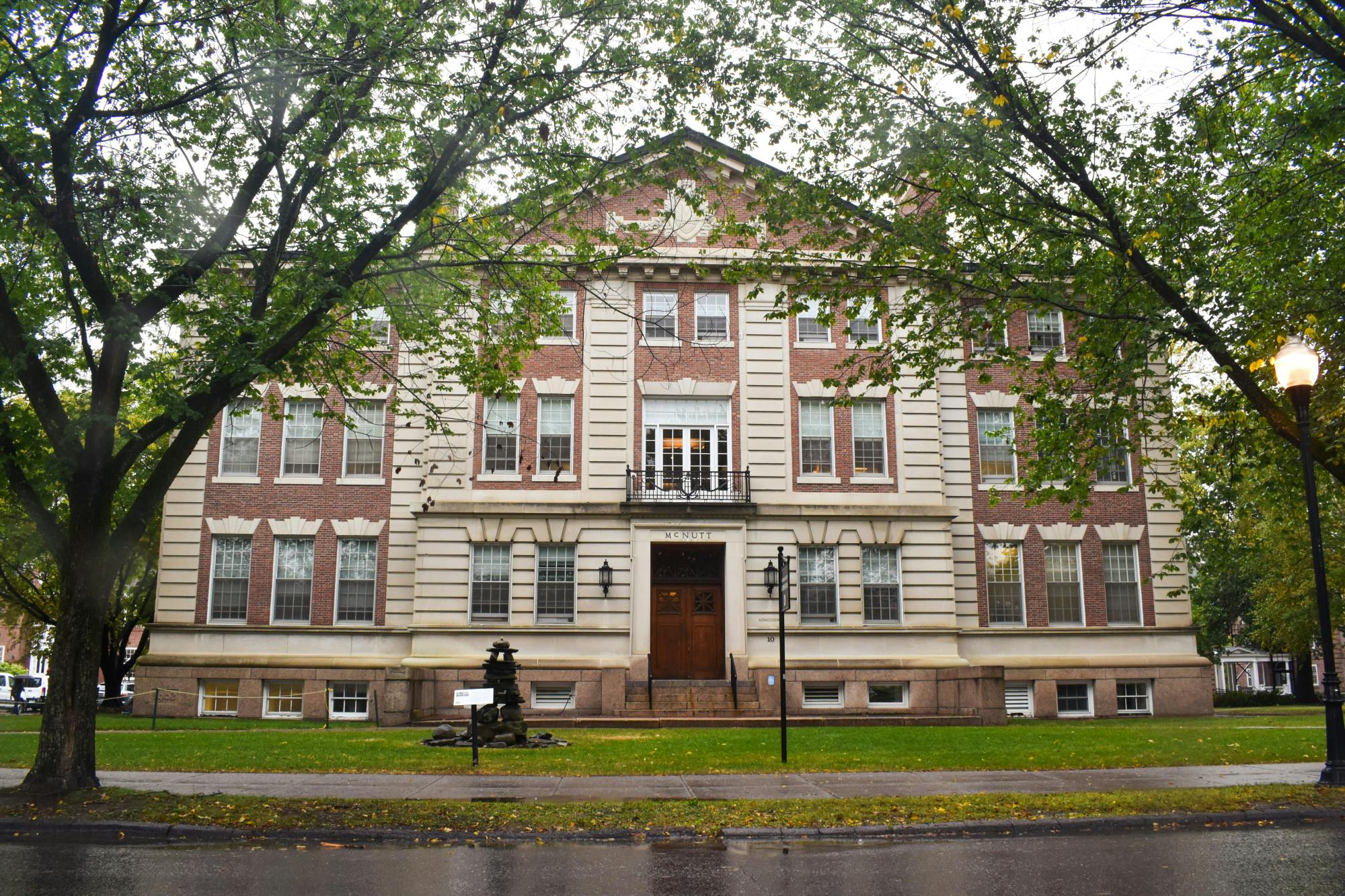
On July 20, 3,988 Dartmouth students and alumni began receiving settlement payments from the class action lawsuit Henry, et al. v. Brown University, et. al, in which the plaintiffs alleged that 17 universities, including Dartmouth, colluded to lower admitted students’ financial aid awards.
The 17 universities comprise the 568 Presidents Group, which claimed protection from antitrust laws under Section 568 of the Improving America’s Schools Act of 1994 by devising “a set of common standards” to determine students’ financial aid, described as the “consensus approach.” All 17 members were accused of having violated the 568 Exemption’s need-blind admissions requirement by considering applicants’ financial circumstances. The group disbanded in 2022; College spokesperson Jana Barnello declined to comment on why Dartmouth joined and left the 568 group.
According to the settlement’s website, the first rounds of payments — which average $2,000 per claimant — was sent electronically on July 20. Payments for claimants who requested a physical check were mailed on July 28.
On Feb. 25, 2024, Dartmouth agreed to a settlement payment of $33.75 million. Dartmouth’s settlement, along with settlement claims from nine other universities, contributed to the checks distributed to affected students this July.
Plaintiff attorney Eric Kramer said in a joint interview with co-counsel Ted Normand that a total of $8.6 million was distributed to Dartmouth students and alumni in the first round of payments.
The lawsuit, which was filed in the United States District Court for the Northern District of Illinois in 2022 by past financial aid recipients at Duke, Vanderbilt and Northwestern, accused the 568 Presidents Group of colluding to fix financial aid packages, which “artificially inflated the net price of attendance for students receiving financial aid.”
Kramer said claimants’ compensation was determined based on the number of terms students attended Dartmouth while the College was part of the 568 group, as well as the net price of attendance in comparison to other universities who were in the group.
Kramer also noted that this is the first of likely three rounds of payments claimants will receive: Claimants will soon receive a second round of payments from the settlement agreements with Johns Hopkins and California Institute of Technology, and a third round of payments may arise from the case’s upcoming class action trial in November with the five remaining universities that have not yet settled.
In an email statement to The Dartmouth, College spokesperson Jana Barnello wrote that Dartmouth, like the nine other universities who settled, “did not admit wrongdoing” and instead settled “to avoid the time, cost and distraction of continued litigation — resources better spent on our core mission.”
“We don’t agree with the characterization that Dartmouth's participation in the 568 Presidents Group systematically lowered financial aid,” she wrote. In a follow-up email, she added that data from the financial aid office “shows for a middle-class family, Dartmouth is actually less expensive today than it was a decade ago due to the amount of aid Dartmouth awards.”
The College has practiced need-blind admissions for U.S. applicants since the 1970s and expanded need-blind admissions to international applicants in 2022, she added.
Kramer and Normand said the plaintiffs used an economic regression model formulated by economist Hal Singer, managing director of economic consulting firm Econ One, to estimate the damages students allegedly incurred because of the 568 group’s policies.
“The schools collectively were able to charge $1,202 more per student per year while those schools were in the [568] group compared to when they were not in the group, controlling for all other factors that may have affected price,” Kramer said, summarizing their findings from Singer’s model.
Additionally, the plaintiffs used economist George Bulman’s analysis on the accused universities’ endowments to indicate that universities’ participation in the 568 group lowered their spending on financial aid.
Bulman “looked at the returns on the endowments in these schools and he found that the schools spent more on financial aid when they were not in the 568 group than when they were,” Kramer said.
Singer declined to comment. Bulman did not respond to a request for comment by time of publication.
Court dockets from the lawsuit indicate that the defendants’ lawyers submitted rebuttal and surrebuttal reports from economists Lauren Stiroh, Nicholas Hill, David Yermack and Bridget Terry Long that challenged Singer and Bulman’s economic models.
Stiroh, Hill and Yermack declined to comment. Long did not respond to a request for comment by time of publication.
Normand said documents and testimony from Harvard, Princeton and Stanford also indicate that some universities were afraid to enter the 568 group for fear that it would lower their financial aid packages, indicating that the universities who did join the 568 group understood that their participation in the organization systematically lowered the amount of financial aid they provided.
“Schools like Harvard, Princeton, Stanford — they never joined the 568 group, and we have documents and testimony from them in which they say, ‘The reason we didn’t join this group is we didn’t want to be constrained in how we were awarding financial aid,’” Normand said.
Although Dartmouth had joined the 568 group in 1998, in 2001 the College did not endorse the 568 group’s guiding principles on financial aid because it desired a “more enlightened, more generous and more flexible than … this group is working on,” according to a statement from the financial aid director at the time.
Senior vice president and general counsel Matthew Raymer ’03 and undergraduate admissions dean Kathryn Bezella did not respond to requests for comment. Defendant lawyer Jan Rybnicek did not respond to request for comment by the time of publication.


