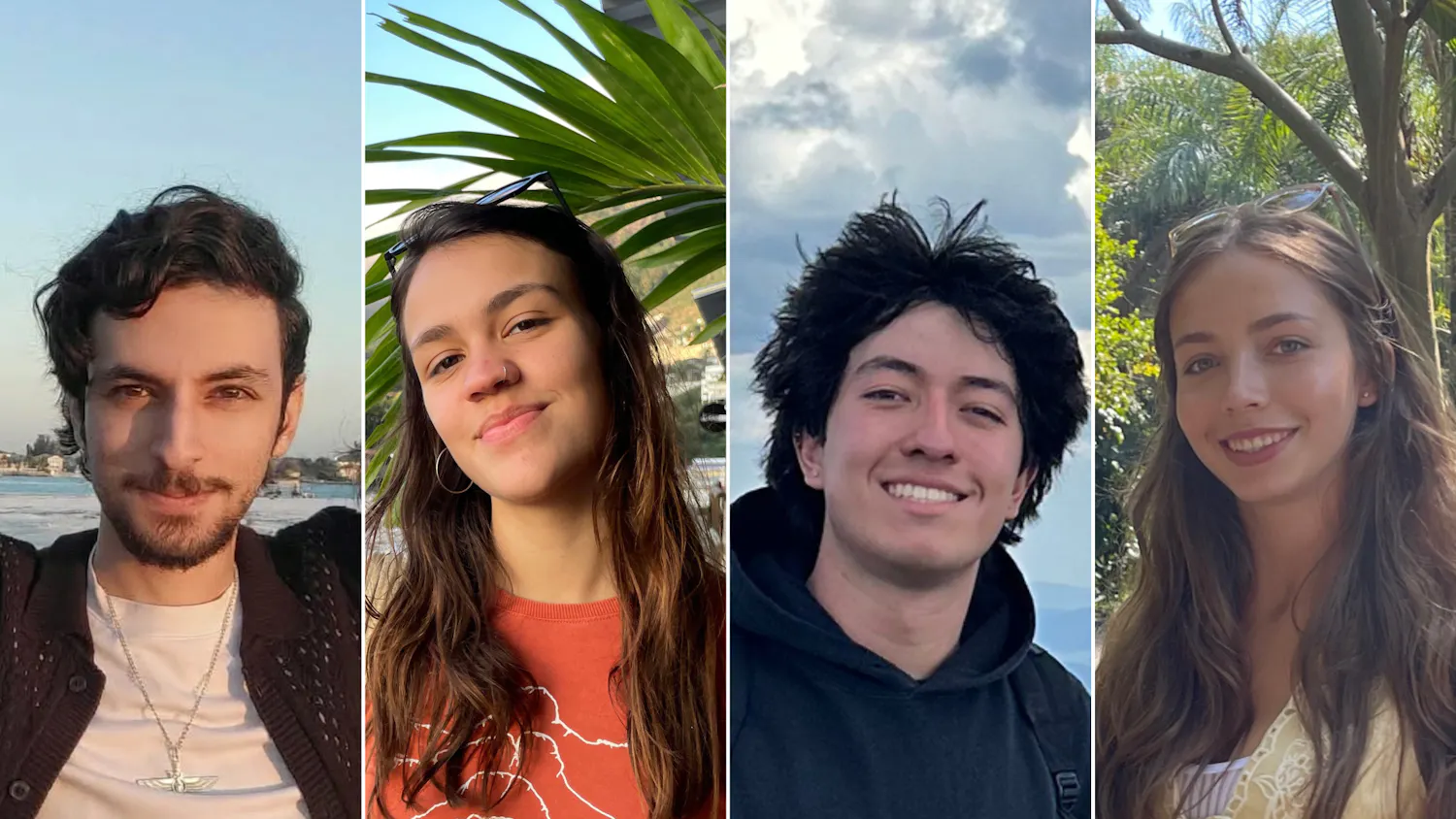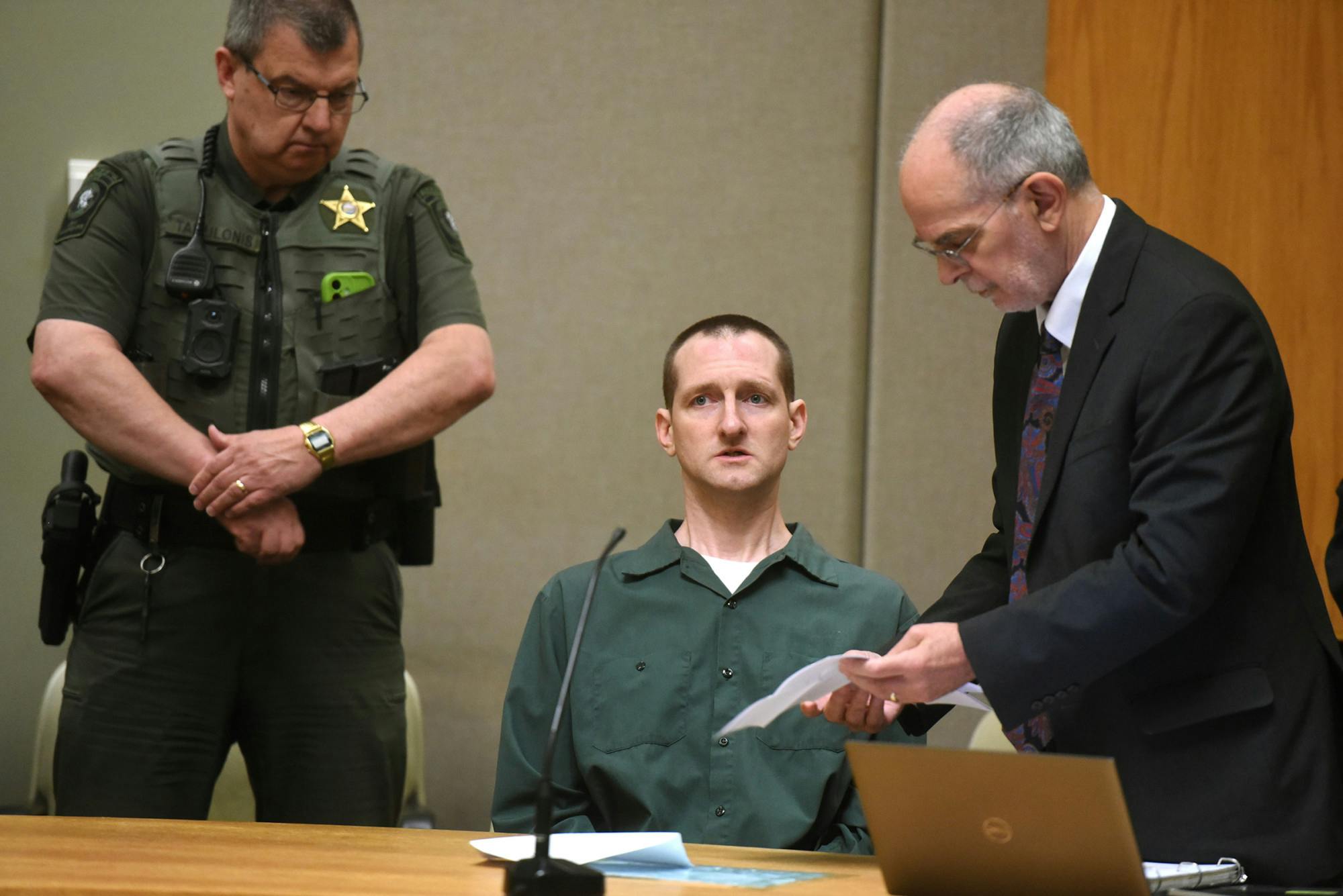
This morning, Robert Tulloch, who was convicted of killing Dartmouth professors Half and Susanne Zantop in 2001 and initially sentenced to life without the possibility of parole, was resentenced to two concurrent 45 years-to-life sentences, making him eligible for parole in 2046.
During the proceedings, Tulloch agreed to waive his statutory right to suspend his sentence granted by the U.S. Supreme Court’s 2012 decision in Miller v. Alabama, in which the Court ruled that mandatory life-without-parole sentences for crimes committed by a minor are unconstitutional. In October 2025, Grafton County superior court judge Lawrence Macleod ordered Tulloch be resentenced.
The State of New Hampshire and Tulloch, represented by Oliver Bloom and Richard Guerriero of Lothstein Guerriero, PLLC, agreed to reduce his two life-without-parole sentences to two 45-to-life sentences, served concurrently. As additional requirements of resentencing, Tulloch may have no contact with any members of the Zantop family, including Half and Susanne Zantop’s daughters Veronika and Mariana Zantop, and may not profit “in any way” from the murders “through the sale of his story or any other commercial exploitation.”
The resentencing hearing, originally scheduled to take place over three days from July 13 to 15, concluded in under an hour after Macleod, who also presided over the hearing, accepted the resentencing agreement.
Senior assistant attorney general Benjamin Agati began the hearing by reiterating the facts of the case to demonstrate “the horror of what the defendant did to extraordinary people,” although both Tulloch’s attorneys and the state “came to a consensus” about the new sentence given the Supreme Court’s decision.

Jennifer Hauck \ Valley News
At the time of their deaths, Half and Susanne Zantop were Dartmouth professors of Earth science and German, respectively. On January 27, 2001, Tulloch and James Parker — a classmate of Tulloch’s at Chelsea High School in Chelsea, Vt. — entered the Zantops’ home in Etna, N.H. under the guise of a school project. Tulloch — who did not know the professors — stabbed Half repeatedly. Parker and Tulloch then stabbed Susanne repeatedly and stole $340 from the Zantops’ home.
A friend came over for dinner that evening and found the Zantops’ bodies. Tulloch and Parker were arrested by the FBI in February of 2001 in Indiana. Parker, who Agati said cooperated with police during the investigation and was 16 at the time of the murders, was sentenced to 25 years-to-life. He was granted parole in April 2024 and released in June 2024.
Tulloch appeared to cry while Agati spoke, visibly wincing when Agati said Half Zantop had been happy to help with their fabricated school project.

Jennifer Hauck \ Valley News
Agati explained that the Zantops’ murder was Tulloch and Parker’s fifth attempt to break into a person’s home with knives with the intent of robbing and killing them. Their first attempt took place over six months earlier in July 2000. Their second, third and fourth attempts — all unsuccessful — were in January 2001.
Agati explained that there was no evidence that Tulloch had an “atypical home life,” and his letters to his girlfriend after the murders and coursework completed while in prison “showed” him to be “mature” and “self-reflective,” while “expressing no remorse.”
“Their [Half and Susanne Zantop’s] deaths were painful, terrifying, brutal, and they suffered before they died, and they watched each other die,” Agati said. “If the defendant waited just four months until his 18th birthday, there would be no issue or question in front of us.”
Under the new sentence, Tulloch will be eligible for parole at age 62 — the same age that Half Zantop was when he was murdered, Agati said. The state “feels that this sentence puts back on the defendant’s shoulders the ability to recall, to process and do the work that would have to be done — if it can be done — to be able to be released in society and have the same years of his own life that he took away from something else.”
Veronika Zantop said on WebEx, the court’s video broadcast system, that she “strongly” believes that Tulloch “needs to stay in prison for the longest possible sentence” for the “truly savage and completely unjustifiable” murder of her parents.
She said that as a psychologist with over 25 years of practicing experience and mother of two sons — one of whom she said is currently 17 — she has “thought a lot” about Tulloch’s “brain development” and understands that “executive functioning changes over time.” However, Tulloch “clearly had excellent executive functioning at the time of the crime,” she said. “... This was no crime of passion or retribution. He wasn’t using substances. He wasn’t psychotic. This was just sheer depravity.”
Tulloch’s actions, such as “visibly joking” during his first sentencing hearing in 2002, demonstrate his lack of remorse, Veronika added. She objected preemptively to him being released on parole.
“I don’t believe, for even a minute, that some magic rewiring of the brain has, or will ever happen to Robert Tulloch that would ever justify his release from prison,” she said. “I just want to reiterate this because this is something I would never say lightly. It is part of my professional ethos to have optimism and try to help people have better lives. However, I do not — based on his history and fundamental brain wiring — believe that he will ever, ever be safe to be discharged to society.”
Guerriero called the murders “horrific” but argued that “offenses committed by 17-year-olds are different” and thus necessitates Tulloch’s resentencing.
Guerriero said Tulloch committed disciplinary infractions in prison at the beginning of his sentence but has committed no “major” infractions in “over a decade” and no “minor” infractions since 2017. “Most significantly,” Tulloch “recognized” that his crimes were “unforgivable" and showed “guilt” in counseling sessions with legal health care providers in prison.
Guerriero, who represented Tulloch during his first sentencing hearing, said he was “very aware of how” Tulloch’s facial expressions during the 2002 hearing “appear[ed]” and said Guerriero “regret[s]” how they were “misperceived.”
Still, Tulloch chose to plead guilty after the murders because he “recognized the pain and trauma that he caused, and he didn’t want to cause any further pain,” even though he faced a “true life-without-parole sentence” and there was “no reason not to try to defend himself,” Guerriero said. He added this was also Tulloch’s reason for agreeing to the new sentence, rather than using the three scheduled days to advocate for a further reduction, a possibility which his attorneys “were prepared for,” Guerriero said.
“Does that [Tulloch’s initial guilty plea] forgive anything?” Guerriero said. “No, it doesn’t forgive anything. Does it mean that he should be released today or in 10 years? No, it doesn’t mean that. But it does show that there was a kernel of humanity there that could possibly develop into a person that would be worthy of not dying in prison.”
In a brief statement, Tulloch said he was “disgusted” with himself for thinking he “could say anything that would mean anything.”
“I’m sorry,” he said, addressing Veronika. “I can’t imagine after hearing that [her statement] that you would care.”
Macleod said the “legal landscape has changed” since Tulloch was originally sentenced and that he gave “weight to Veronika’s statement” when accepting the resentencing agreement.

Jennifer Hauck \ Valley News
In an interview after the hearing, Agati said the Zantop family was “at the center” of the resentencing decision.
“The state agreed to the [45-to-life] sentence because it keeps Robert Tulloch in prison for decades and includes important protections for the [Zantop] family,” he said.
Tulloch’s attorneys declined to comment.
Iris WeaverBell ’28 is a reporter and editor. She is from Portland, Ore., and is majoring in economics and minoring in public policy.