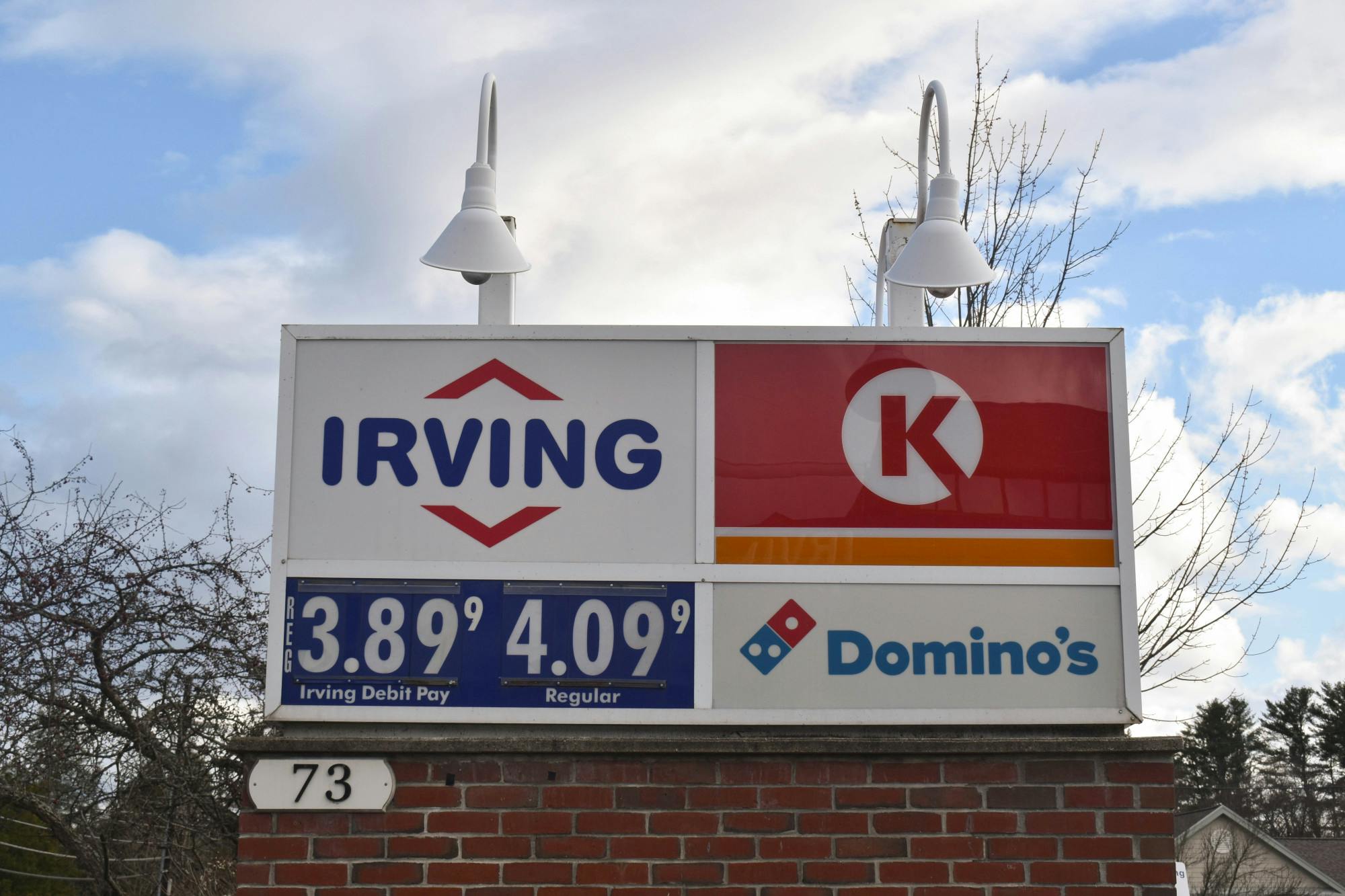
Fuel prices in New Hampshire are climbing as the Iran war continues to disrupt energy markets. The average price of a gallon of gasoline across New Hampshire was $3.92 on Monday, slightly below the national average of $4.11 — but both national and state prices are the highest they have been since August 2022.
Hanover public works director Peter Kulbacki said publicly-funded operations will be unaffected by rising costs until next year because the town enters “longer term pre-buy contracts” for the fuel that powers town vehicles and facilities.
However, if fuel prices remain high when a new fuel contract is negotiated — before the town meeting in May 2027 — the town could see a “big bump in our budget to cover these costs,” potentially causing increases in user fees for town services such as water and trash collection. Kulbacki said that no potential fee increases would take effect until fiscal year 2028, which begins on July 1, 2027.
School Administrative Unit 70, the school district serving Hanover and Norwich, also will not be affected by higher fuel costs until the next fiscal year. In an email statement to The Dartmouth, SAU 70 facilities director Anthony Daigle wrote that recent price increases “will affect our heating fuel contract for fiscal year 2027,” which begins on July 1, 2026. In addition, he wrote, “shipping costs to bring supplies in” are more uncertain than usual.
Other supplies — such as road salt and waste water treatment inputs — may see price increases that are difficult to predict, which may force the Department of Public Works to “move things around” in their budget this year. For instance, while the Department often stockpiles sand and gravel for road work, they “may hold off on purchasing it so we make sure we have enough funds to cover increases in other areas,” Kulbacki said.
Advance Transit — the nonprofit that runs a free bus service in the Upper Valley — will be able to weather the increase in fuel prices because fuel makes up only “about five percent of total expenses,” Advanced Transit treasurer Giorgios Katsaros said in an interview with The Dartmouth.
“It’s not something that is going to be outsized compared to [Advanced Transit’s] overall budget or overall operating expenses,” he said.
Katsaros pointed to Advance Transit’s experience with elevated fuel prices in 2022 and 2023, during the period of post-pandemic inflation. Advanced Transit does “not see any impact on the level of service that Advanced Transit is currently offering or is planning to offer,” he said.
Like the Department of Public Works, Advanced Transit has an annual fuel contract with a supplier, which insulates them from short-term fluctuations in energy prices. Katsaros wrote in a follow-up email statement to The Dartmouth that Advanced Transit’s budget may “be adversely impacted if such disruptions persist through the later part of the year, or beyond.”
Lena Sealey-Nicotra ’28 drives 25 minutes to her off-campus job and travels home to upstate New York a few times per term. She said that while the cost to fill up her tank has only increased by about $10 since last term, she still worries about higher gas prices.
“I’ve been avoiding it all week because it was cheaper last term, and I just got here,” she said. “So I’m waiting until [my tank] can go as low as possible.”
Crossroad Farms, which is located in Post Mills, Vt. and operates a seasonal farmstand in Norwich, similarly faces increasing fuel and transportation costs, owner and farm manager Phil Mason said. He anticipates raising prices this year, though only by a small amount.
“I can’t in good faith raise prices anything more than three to five percent in one season,” he said. “I just don’t think it’s fair to our customers.”
He added that the farm uses regenerative agricultural techniques such as cover cropping, composting and growing more than 100 different crops, all of which reduce reliance on external inputs and “diversify” the business. While diesel, fertilizer and propane — used to heat greenhouses — are significant costs, they are small compared to what a large industrial farm might face.
“[Agribusiness farms] are using so much synthetic fertilizer, so if the price of that goes up 20% that’s a really big deal for them,” Mason said. “But for us, our annual fertilizer bill is $4,000 … for that to go up 10 to 20% is not that big a deal.”
The Upper Valley is “one of the best places to farm in the country, if not the world,” Mason said. “Our consumer base is passionate about supporting farms and willing to pay a premium for a crop that they know is grown sustainably and at a family farm.”
Teo Steverlynck-Horne is a reporter from Maine studying economics and government.