It’s become clear over five seasons that the writers of “The Boys” are far better at setting up an interesting premise than actually delivering on one. While Season 4 was the least consistent of the bunch so far, it ended on a tantalizing cliffhanger that seemed to wash away the sins of a clunky buildup and weaker writing. Megalomaniacal superhuman antagonist Homelander (Antony Starr) and the superhero megacorp Vought had effectively seized control of the presidency, while most of The Boys — the show’s titular group of ragtag anti-superhero black ops — were captured and imprisoned. The stakes were set for an explosive, high-stakes finale.
And yet, within a couple episodes, Season 5 almost completely handwaves away this premise in favor of restoring the status quo. The Boys are back together, venturing off on new missions each episode to find a certain chemical or piece of intel to aid them in the fight against Homelander, encountering wacky side characters and spouting off dreadfully unfunny banter in the process. Despite starting with such an apocalyptic premise, “The Boys” seems content to lower the stakes and cycle through familiar beats. Right up until the rushed finale, the season feels less like a conclusion than a subpar middle entry.
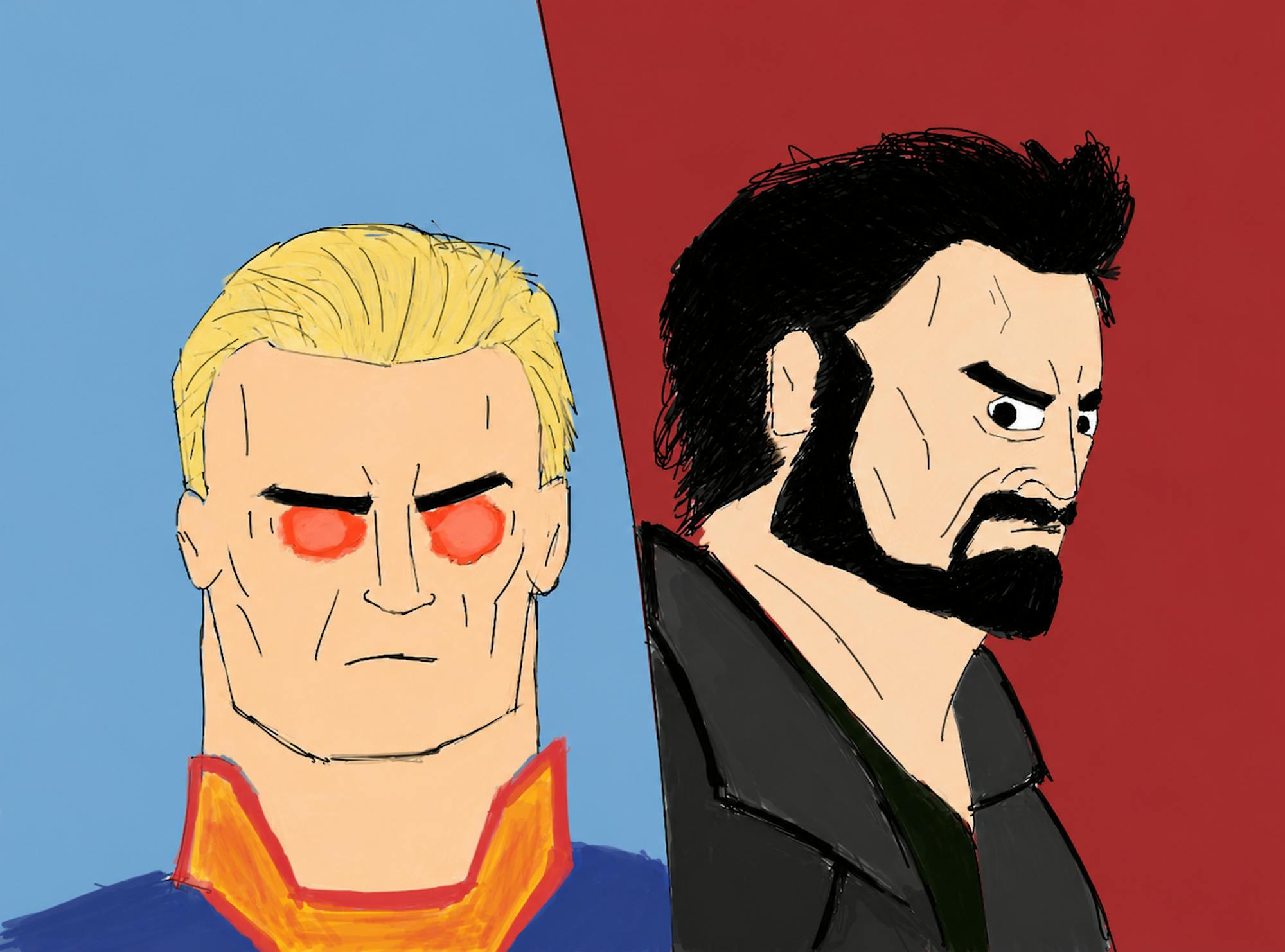
Still, despite not living up to the promise it showed in the first three seasons, “The Boys” has some key redeeming qualities that have endured. Starr is once again exceptional as Homelander, who appears more pathetic and in need of approval than ever, despite his newfound political power. Even as the character’s outright weirdness threatens to make him into a defanged self-parody — like a scene where he bathes in a tub of human breast milk — Starr keeps him just unpredictable enough to remain the highlight of every episode.
Karl Urban is likewise in solid form as Billy Butcher, the swaggering leader of The Boys who has made it his life’s mission to kill Homelander for raping his wife. Butcher’s crusade against the superhero industry has served as the primary and most compelling driving force of the show since its beginning, and the ultimate conclusion to that rivalry is admittedly cathartic. The journey to that climax, however, suffers from inconsistencies and wasted potential.
For one, Butcher seemed primed from last season’s finale to embark down a darker, more destructive path of vengeance without the humanizing influence of his team. This tension barely materializes, however, as he regroups with the others and returns to business as usual for most of the season.
Soldier Boy (Jensen Ackles) — a corrupt Captain America analogue and the first ever superhero — returns in a tentative alliance with Homelander. Though Ackles is effortlessly charming and was easily the highlight of the third season when he was introduced, the character’s handling here is baffling. He repeatedly shifts alliances until a last minute heel turn based on an absurd motivation, before being shelved without anything meaningful to do. His large but basically pointless role seems primarily intended to lay the groundwork for “Vought Rising,” a prequel spinoff series starring Ackles set decades before “The Boys.” Even if the prequel delivers, shoehorning its setup into a series finale feels like a betrayal of the story being told, prioritizing future content over present payoff.
This misuse of precious screentime persists throughout the season. Homelander has seized control of the United States and begun to imprison his political opponents in “Freedom Camps” across the country. After the first episode, however, the show barely seems interested in exploring the mechanics or ramifications of this takeover. There’s very little focus on how average people or the rest of the world have reacted to his despotism, making it feel hollow and far less consequential than it should. The show’s heroes feel like the only people able or even willing to fight back, while everyone else is content to slide into fascism.
This is perhaps a result of the Homelander-as-Trump satirical lens that the show has increasingly adopted. It’s hard to fault a lack of subtlety when reality seems eager to outpace parody. The show still lands the occasional sharp jab, like the finale’s brief Elon Musk-coded billionaire who turns up at the White House to pitch Homelander on using dissidents as “non-compensated employees” and bends his ear about “white fertility rates.”
Still, the satire is left wanting as Homelander resolves to establish the “Democratic Church of America” with himself as its god. His mission to convert the nation to his personal cult completely takes over what could have been a sharper exploration of how modern political power operates and why resistance fails. Instead, it mostly consists of Homelander ranting to the same two or three people who then go off-screen to carry-out his wishes. The idea tracks with Homelander’s insatiable longing to be loved, but it also keeps the show from exploring what an America under superhero dominion actually looks like.
In general, the season suffers from a strange lack of scale. There are few scenes in populated areas or interesting venues. Much of the action consists of main characters having rote conversations in familiar locales. As fugitives, The Boys spend much of their time in abandoned warehouses or other lifeless buildings. The final battle, while exciting and visually dynamic, leaves little more than a single room cluttered and singed.
This might not be an issue if the character writing were strong enough to carry dialogue scenes, but it rarely is. The once-endearing relationship between mild-mannered team member Hughie (Jack Quaid) and his former-superhero girlfriend Starlight (Erin Moriarty) is entirely uninteresting to watch, despite a half-handed attempt to manufacture tension between them. Kimiko (Karen Fukuhara) — a formerly-mute superpowered member of The Boys — is now able to speak, but her dialogue is composed almost entirely of unfunny, vulgar observations.
This issue extends to the rest of the characters as well. While “The Boys” has always reveled in gratuitous violence and foul language, it’s never been more annoying and less funny than it is here. Every single character speaks like an edgy 14-year-old’s idea of clever banter. The finale, for instance, opens with a funeral for a recently-killed main character. It quickly devolves into a prolonged series of anus jokes, undercutting any emotional weight that the scene might have carried.
Throughout the rest of the episode, three totally different characters treat us to such brilliantly funny lines as “I bet Homelander has a weird dick,” “He’ll rip my tits out through my vag” and “It tastes like dirty cock.” These are only the most egregious examples from a single episode, with countless examples throughout the season. One character speaking like this might be passable; nearly every character doing so is exhausting. There’s a fine line between pulpy, transgressive fun and writers visibly straining for shock value, and “The Boys” falls squarely on the wrong side.
Most of the season feels like treading water, until everything is suddenly crammed into a rushed finale. Perhaps the intent was to make the last episode feel especially epic and cinematic — it was, after all, given a limited theatrical run in 4DX — but the result is an unwieldy waste of potential. A show that once felt like the sharpest superhero satire on television deserved a better sendoff than seven episodes of wheel-spinning and one frantic rush to the finish. With “Vought Rising” and whatever else Amazon has planned, “The Boys” universe will continue — though after this finale, it’s harder to tell if that’s something worth looking forward to.