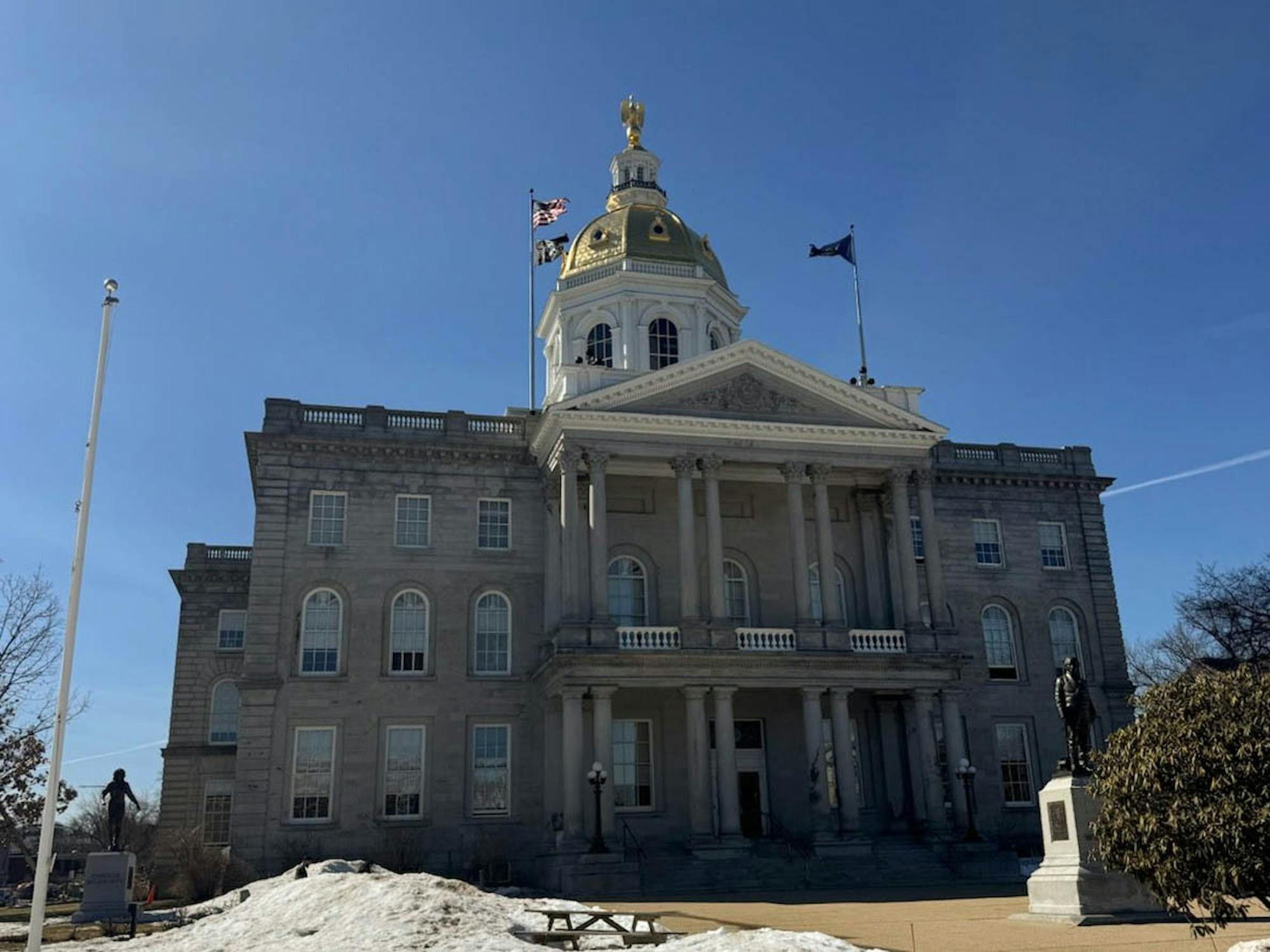
March 26 marked the New Hampshire state legislature’s Crossover Day — the deadline for the two legislative chambers to send their passed bills to one another. The day falls on the midway point of the legislative session, which began on Jan. 7 and adjourns on June 30.
Out of the 1,394 proposed bills this session, 19 have been signed into law by Gov. Kelly Ayotte. These include legislation involving healthcare transparency, gaming licenses and veteran-related support.
Two days ahead of the Crossover Day deadline, House representatives had 344 bills that had yet to go through this process. House Republicans decided to structure the voting calendar, prioritizing bills said likely to pass by individual committees, despite the House’s tradition of holding a public hearing for each bill before it is voted on.
Seventy-four bills went without vote or debate, effectively dying, after the deadline passed.
In an interview with The Dartmouth, state executive councilor Karen Liot Hill ’00 said the Republicans’ majority in the House allowed them to structure the calendar and let Republican-led committees push bills through first. Many of those bills were Democrat-led efforts to address issues such as education, housing and funding New Hampshire Public Radio.
State Sen. Timothy Lang, R-02 said this is “not the first time” that bills have died without debate. He added that Republicans offered a deadline extension, which Democrats rejected because of “party politics.”
Lang added that extensions are not uncommon in the House, with bills receiving extensions during all three of his terms in the House.
The Dartmouth examined several of the bills from this half of the legislative session.
H.B. 1792: CHARLIE Act
Named after right-wing media activist Charlie Kirk, the Countering Hate And Revolutionary Leftist Indoctrination in Education Act, H.B. 1792, prohibits “school districts and personnel from the instruction of critical race theory and LGBTQ+ ideologies.” The bill also enables individuals to sue school districts and personnel that violate the law, with possible outcomes for plaintiffs including compensation not exceeding $10,000 per violation.
H.B. 1792 is sponsored by five Republicans. The bill was passed by the House on Feb. 19 and is currently sitting with the Senate’s education committee.
State Rep. Timothy Horrigan, D-Strafford, said H.B. 1792 is a continuation of other “anti-diversity, equity and inclusion” bills that House Republicans have tried to push through.
The bill mentioned teaching practices “derived from Hegelian or Marxist dialectical analysis,” naming philosopher Paolo Freire and civil rights activist Kimberlé Crenshaw as writers that “promote purposeful division” through their work.
H.B. 705: Health Care Transparency
A bill carried over from the previous legislative session — which ran from Jan. 8 to June 30, 2025 — H.B. 705 requires health insurers to disclose specific pricing figures regarding what procedures are covered under a given plan. H.B. 705 was signed into law by Ayotte on March 16. Certain pricing information aspects of the law will go into effect six months after the finalization of federal guidance pursuant to Presidential Executive Order 14221, or “Make America Healthy Again,” which will make clear healthcare pricing more accessible. The bill was sponsored by three Republicans and one Democrat.
State Rep. Anita Burroughs, D-Carroll, the ranking Democrat on the Commerce Committee where H.B. 705 originated, was the sole Democrat who sponsored H.B. 705. Burroughs said that many bills in the Committee, including H.B. 705, have less “political divide,” making it easier to find common ground.
“What’s not to like about transparency and health care costs?” Burroughs said. “It’s not a political issue. It’s just common sense.”
H.B. 705 requires detailed reports on pricing for in-network services, maximums for out-of-network services, as well as historical pricing. All pricing information will be free and publicly available to view, according to Burroughs.
S.B. 103: Polling Stations
S.B. 103 requires towns in New Hampshire to have at least one polling place per 15,000 registered voters. The bill only applies to years with presidential elections. Ayotte signed the bill into law on March 20. The bill was sponsored by six Republicans.
Lang, a co-sponsor, said long lines and parking issues serve as a “disenfranchisement” to the voter.
Getting voters in and out of polling locations in “a reasonable amount of time was a consensus everybody agreed with,” he added.
S.B. 103’s requirements include towns and polling places addressing a range of issues that can cause voting delays. These addressed issues include police presence to direct traffic, same-day registration and the presence of electronic polling books.
H.B. 1793: “Campus Carry” Bill
H.B. 1793 prohibits schools that receive public funding from regulating possession of firearms and non-lethal weapons on their campus. Individuals who are prevented from carrying firearms or non-lethal weapons can sue the school for up to $10,000. H.B. 1792 was sponsored by 14 Republicans. The bill was passed in the House on Feb. 5 and is currently awaiting review by the Senate Judiciary Committee.
State Rep. Samuel Farrington, R-Strafford, said H.B. 1792 aimed to preserve “safety and liberty” on campuses. Farrington pointed to the Brown University shooting as an example of the importance of allowing campus carry.
Farrington said that, as a legislator, he “swore an oath to office to defend the Constitution,” which extends to the right of bearing arms under the Second Amendment. He added that current state law allows firearm carry on campuses that receive public funding, and that any firearms bans imposed by those schools are a violation of New Hampshire law.
Hill said the success of Republican-backed bills from this session thus far, demonstrates the issues with “one-party rule,” adding that House Republicans have been “running the table this entire legislative session.”
Hill said Republicans also “dominate” the state executive branch, adding that the quadfecta that Republicans have in New Hampshire’s government means that they do “not have to compromise or work with the minority party.”
“The November elections are the chance for New Hampshire voters to say, we’ve had enough,” she said.
Jared Gonzalez Arce '29 is a news reporter from California majoring in history. Out of The D, Jared is in surf club and loves music.