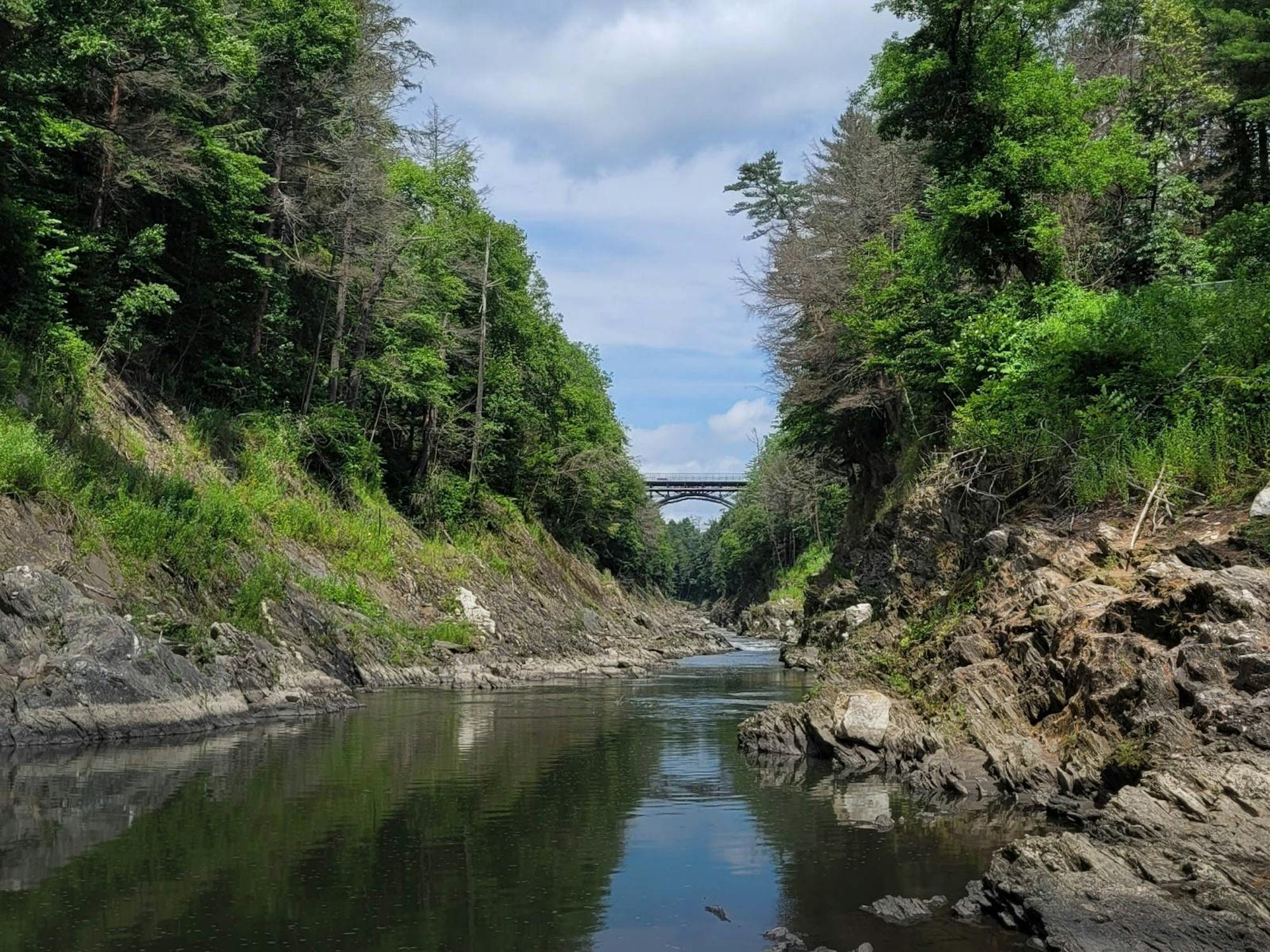
Several Grafton County towns — such as Enfield, Grafton, Lebanon and parts of Hanover — are experiencing severe drought, according to the U.S. Drought Monitor. Most of the rest of the county, including the remaining parts of Hanover, is still experiencing moderate drought, which began across wide swaths of New Hampshire in September.
Most of the state received only 50% to 75% of its normal monthly precipitation over the last six months, according to the Northeast Regional Climate Center. Hanover has accumulated between 70 and 80 inches of precipitation between October and March, yet the moderate to severe drought statuses across Grafton County persisted through the winter months.
In an interview with The Dartmouth, geography department postdoctoral researcher Alexander Gottlieb said the rain and snow this past winter were not enough to make up for the water shortage.
“We’re getting some amount of water reentering the system from what was stored in the snowpack, but it’s still not nearly enough to bail us out of the drought,” Gottlieb said. “The water deficit that we entered the winter with was somewhere on the order of a foot to a foot-and-a-half.”
The colder temperatures meant that frost “penetrated fairly deep” into the ground, so less rain “recharged the deeper layers of the soil,” Gottlieb added.
New Hampshire Department of Environmental Services water division assistant director Ted Diers added that the “majority” of snow this winter was “relatively low in water content.”
“Colder air holds less water,” Diers said. “A lot of the snow that we got actually just melted off and ran off into the rivers as opposed to sinking into the ground.”
Hanover’s public works director Peter Kulbacki said the drought has not impacted the town’s surface water supply, which comes from rain and natural waterways and is stored locally.
“We have three reservoirs, and they’re all full,” Kulbacki said. “In an extreme drought, we can go a full year and do 2.5 million gallons a day of water supply.”
He added that around 15% of Hanover residents live on private wells, which further reduces the burden on public water supply. Gottlieb said that most people who rely on private wells live “outside of town and village centers” and do not have access to municipal water systems like the town’s surface water reservoirs.
The drought conditions are expected to continue throughout the spring, Diers said.
“The long term prognosis, at least from the long-term forecast from the weather service, is that they expect us to be at drought at least through May, and maybe into June,” he explained.
In the future, New Hampshire and surrounding states will become “wetter as a whole” due to rainstorms caused by climate change, Gottlieb added. However, extreme precipitation events are “not particularly effective” at combating drought conditions.
“Soils just aren’t able to soak up that water as fast as it’s falling from the sky,” Gottlieb said. “[Rain] doesn’t have time to percolate down through the soil and recharge those deeper layers of the soil column and groundwater.”
Geography professor Jonathan Winter said that New England will likely see “an increase in heavy rainfall events and in overall precipitation” due to climate change.
“Over the past 30 years, we’ve had a 10% increase in total rainfall … whether it’s rain, ice or snow,” Winter said.
However, there is no “satisfying answer” to whether climate change will also increase New Hampshire’s drought frequency in the near future, Winter added.
“We have more rain coming in, which would reduce drought, but we have warmer temperatures that are basically evaporating more water out of the soil column,” he explained.
Kulbacki said that the Department of Public Works is focused on planning for more extreme climate conditions and creating more “resilient” infrastructure in Hanover by “doing preventative maintenance, cleaning out ditches and culverts [and] making sure there’s a place for water to go in heavy rainstorms.”
Sahil Gandhi ’29 is a reporter from Staten Island, N.Y., and is majoring in environmental studies and government modified with philosophy and economics. He loves word searches and falling down internet and Wikipedia rabbit holes.