
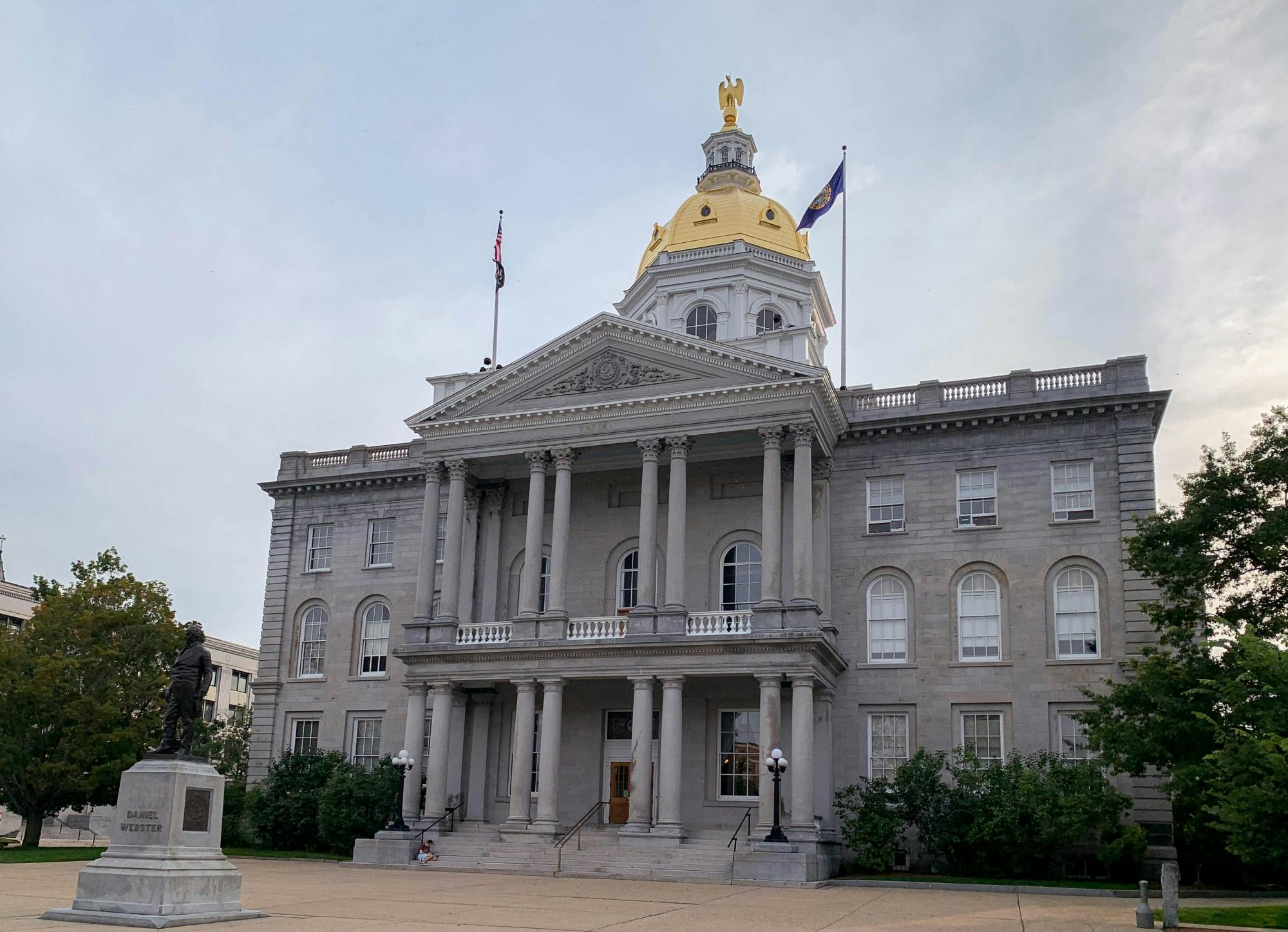
Last month, New Hampshire Gov. Kelly Ayotte announced in her annual “State of the State” address that she is directing the state’s department of energy to bring the state to the “forefront” of nuclear energy technology.
Currently, the Seabrook Station Nuclear Power Plant in Seabrook, N.H., which is the only nuclear power plant in the state, accounts for around 55% of the energy generation and about 30% of New Hampshire’s “carbon-free baseload,” according to an email statement to The Dartmouth by Arthur L. Irving Institute for Energy and Society faculty director Geoffrey Parker.
State Sen. David Watters ’72, D-Dover, said that while nuclear energy has “been around for a long time,” there is a “new interest” due to advancements in nuclear technology that have allowed for the development of smaller reactors.
“What’s driving this new interest are small modular reactors that are being developed and really being pushed hard by President [Donald] Trump,” Watters said.
Small modular reactors produce less megawatts of energy than conventional nuclear reactors, but they are cheaper and can be factory-built from standard parts, according to the Associated Press.
Watters added that he thinks tech firms are promoting small nuclear reactors as a potential “new energy source” for artificial intelligence and cryptocurrency mining.
“[Elon] Musk and other people in the AI space are politically pushing this,” Watters said. “Microsoft … [has] been big on it to run their data centers.”
So far, fewer data centers have been constructed in New Hampshire than in most other states due to high electricity and land prices, The Dartmouth previously reported.
Watters said the state “will try to welcome new industries that are in [its] interests.”
“I’m just not sure that the industry is going to be all that interested in us,” he said.
Dartmouth Energy Alliance co-president Jack Marino ’27 said that compared to wind and solar energy, nuclear energy “provides constant baseload power.”
“Solar and wind power are intermittent,” Marino said. “They’re either weather dependent — especially daylight-dependent for solar — and they are much more random. [Nuclear] is always going to be active.”
Fiona Hood ’26, who co-wrote a policy brief about nuclear electricity expansion in New Hampshire in 2024, said it is difficult to say whether nuclear energy alone would ensure New Hampshire energy security.
“[Nuclear] could be part of the future of New Hampshire’s energy security, but I don’t think it would be the sole solution,” Hood said. “There’s a lot of financial and regulatory issues, especially when we’re looking at new technology.”
Hood added that “very few” small modular reactors have “been successfully developed and commercially deployed.” Only two small modular reactor designs have been approved by the U.S. Nuclear Regulatory Committee, according to the Office of Nuclear Energy.
State Rep. Ross Berry, R-Hillsborough, said he supports nuclear energy development, noting that a “diversified delivery system” is necessary for national security.
“The more [sources of energy] you have out there, the more diversified they are, the harder it is to take them all out if we ever go into a full-blown war,” Berry said.
Marino said there was a “public information problem” regarding the safety risks of nuclear energy.
“Nuclear’s risk profile is really pretty much the same as solar or wind,” Marino said.
Berry added that he thought people had “irrational fears” about nuclear energy.
“When [people] hear nuclear, they think Chernobyl,” Berry said. “[But today] nuclear is very safe.”
Marino added that “the political process” is a major barrier to nuclear energy development.
“Whatever way the political winds are blowing, it’s going to decide whether your project is permanent or not,” Marino said.
Correction Appended (April 19, 2:55 p.m.): A previous version of this article incorrectly listed Rep. Ross Berry as a Democrat. The article has been corrected.
Sahil Gandhi ’29 is a reporter from Staten Island, N.Y., and is majoring in environmental studies and government modified with philosophy and economics. He loves word searches and falling down internet and Wikipedia rabbit holes.


