This article is featured in the 2026 Winter Carnival Issue.
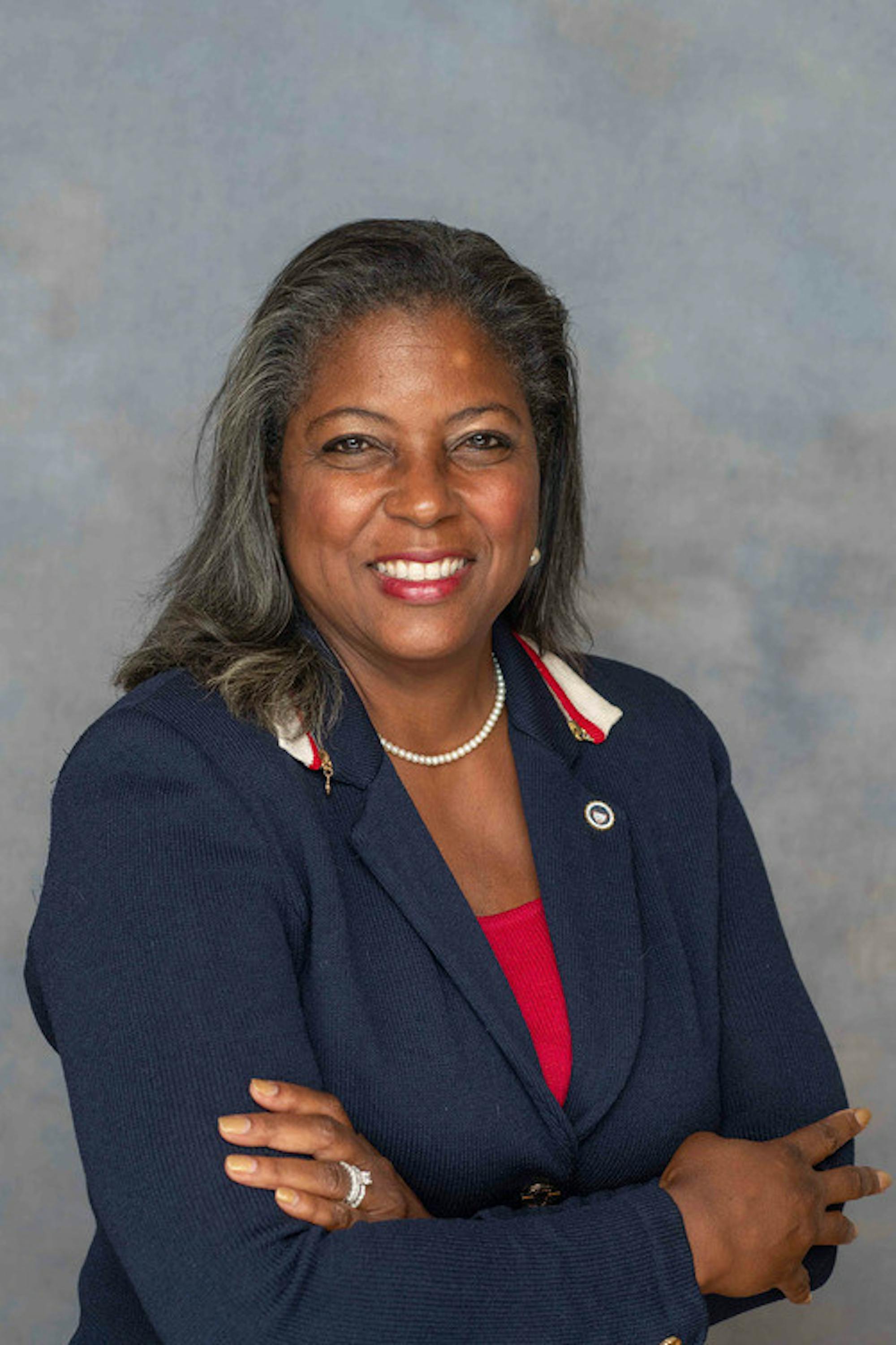
Andrea Hayes-Dixon ’87 Med ’91 is a nationally recognized pediatric surgeon whose career has combined clinical innovation, research and advocacy. In 2002, she became the first African American woman in the United States to be board-certified in pediatric surgery.
Hayes-Dixon was the first surgeon in the United States to successfully treat a child with heated chemotherapy, a high-risk treatment for rare abdominal sarcomas. Her work has expanded treatment options for patients once considered untreatable. She has also contributed to the basic science of pediatric cancer through innovative models that improve understanding of disease behavior.
Hayes-Dixon currently serves as chair of surgery at Howard University Hospital and is a newly elected member of the National Academy of Medicine, one of the highest honors in health and medical science.
In an interview with The Dartmouth, Hayes-Dixon reflected on her undergraduate years, Winter Carnival memories and the experiences that shaped her career.
You studied religion as an undergraduate at Dartmouth. What drew you to medicine?
AH: When I got to Dartmouth, the only thing I knew was that I wanted to be pre-med. Since pre-med wasn’t a major, I chose religion and absolutely loved it. The curriculum exposed me to every major religion, and it gave me the intellectual space to ask what I truly believed.
Undergraduate study was my last chance to explore something outside of science and medicine, and I’m so glad I did. After Dartmouth, it was science, science and science.
Are there memories from your time at Dartmouth that still stand out to you?
AH: I went to football games my entire freshman year. At halftime, freshmen formed our class year on the field — we were the Class of 1987 — and then ran to the top of the opposing stands to sing the alma mater. It was about bonding. Dartmouth does an excellent job of making each class feel closely connected. I also loved the bonfire tradition and, of course, Winter Carnival.
Do you have fond memories of Winter Carnival or winter life in Hanover?
AH: I’m from Los Angeles, so I had never lived anywhere with four seasons. I remember the first time it was 20 below and I walked out of Woodward Hall — my nose hairs froze. Winter Carnival was special. I was amazed by the snow sculptures and how joyful they made campus feel. Once I learned how to wear a scarf properly, I really embraced winter.
Was there a moment when pediatric surgery became a calling rather than just a career choice?
AH: Working in a leukemia lab at Geisel School of Medicine was my first exposure to bench research and solidified my interest in oncology. Then, during my fourth year of medical school, I went to Stanford on a sub-internship. I expected to work with adult surgical patients, but there was no space, so I reluctantly chose pediatric surgery. On the very first day, I fell in love with it. I said, “This is what I’m going to do with my life.” Those first and fourth years of medical school defined my entire career.

After medical school, you were rejected multiple times from pediatric surgery training programs. How did that experience shape you?
AH: I was denied admission three times. It was painful to learn that discrimination still existed. When my mentor was told, “We can’t take a chance on a Black woman,” it hurt. But it made me deeply sensitive to people who feel disenfranchised. Equity became central to everything I do.
You ultimately trained in Toronto. How did that experience prepare you for what came next?
AH: Training at the Hospital for Sick Children was extraordinary. I felt welcomed, and I learned within a health care system different from the United States. That experience still informs how I think about access and outcomes today.
In 2004, you became the first African American woman board-certified in pediatric surgery. What did that milestone mean to you?
AH: It felt like the beginning of a responsibility. I knew I couldn’t be the last. I wanted others to know they could reach out to me and see themselves in this field.
How do you think about risky and innovative treatments when the patient is a child?
AH: When a child is sick, it affects the entire family. When I performed a first-of-its-kind procedure in 2006, I spent hours making sure the family understood that it might not help their child — it might help the next one. The first patient later passed away, but her father told me he would make the same decision again. That trust is something I never take lightly.
How has your role evolved with national leadership and your election to the National Academy of Medicine?
AH: Surgeons are always advocates, but the Academy gives me a larger platform. I care deeply about prevention, disparities and closing gaps so that where you live doesn’t determine the care you receive.
What leadership values guide your work today?
AH: Equity, transparency and change management. Equity and transparency have always been core to who I am. Change management is what separates good leaders from great ones — leaving institutions stronger long after you’re gone.
What do you wish someone had told you when you were in college?
AH: I wish someone had told me that no matter who you are, everyone wants work they love and a way to contribute to society. That’s what connects us as human beings. Don’t let ethnicity, gender or background get in the way of relationships with other people.
Dartmouth and Geisel were critical parts of who I am. That time is precious. Enjoy every second. The opportunity to think, to ask questions and to learn is a privilege. I can usually tell a Dartmouth graduate — there’s something different about them. My blood is green because it was such a strong foundation.
This interview has been edited for clarity and length.
Isabel Menna ‘29 is a reporter from Leavenworth, Wash., is majoring in economics and is a member of the Dartmouth Ski Patrol.