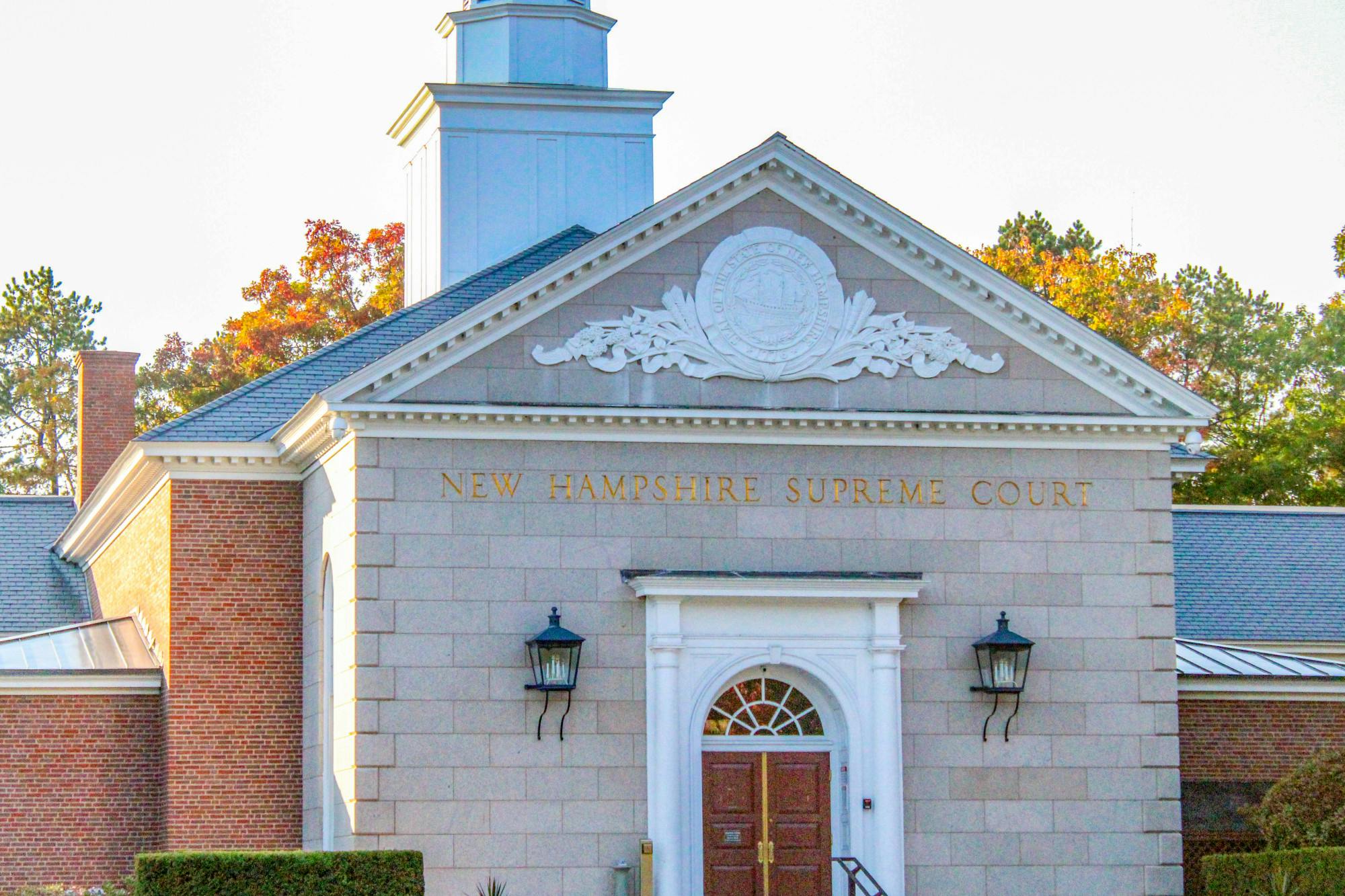
Robert Tulloch, 25 years into a life sentence without the possibility of parole for murdering two Dartmouth College professors in 2001, will be given a resentencing hearing on April 20.
Tulloch, who was 17 years old when he and another teenager, James Parker, murdered husband and wife Half and Susanne Zantop at their home, is eligible for a resentencing consideration following a 2012 Supreme Court case that ruled mandatory life sentences without parole for juveniles unconstitutional under the Eighth Amendment. Parker, who was granted the possibility of parole under a plea deal to testify against Tulloch, was released on parole in June 2024 for good behavior.
Under New Hampshire law at the time, Tulloch received two automatic life-without-parole sentences after pleading guilty to two counts of first-degree murder. Prior to the 2012 Supreme Court case, Miller v. Alabama, the United States was the only country in the world that allowed life-without-parole sentences for minors. Tulloch has been seeking a resentencing hearing since 2013, according to WMUR.
The Grafton County Superior Court previously held a non-evidentiary hearing to set parameters for Tulloch’s resentencing case on Sept. 25, 2024, and the presiding judge made no rulings on Tulloch’s sentence.
The upcoming April 20 hearing will determine what Tulloch’s sentence under the new constitutional ruling will be. The court is expected to consider factors that were not addressed at Tulloch’s original sentencing, including his underage status at the time of the offense. It will also weigh his rehabilitation and behavior during incarceration and whether he remains among the narrow category of juvenile offenders for whom life without parole may still be constitutionally permissible.
According to the State v. Tulloch case summary issued by the New Hampshire Superior Court, the state attorney general would require substantial resources and appropriate burden of proof to maintain Tulloch’s current sentence.
“The magnitude of the government’s interest is further diminished by the fact that cases involving [life-without-parole] for minors are few and far between, occurring only once every several years,” the case summary states.
According to the case summary, five New Hampshire defendants, including Tulloch, were serving mandatory life-without-parole sentences for crimes committed as minors at the time of the Miller decision. The other four individuals have been resentenced under the Miller ruling. Eduardo Lopez, who was one of the four, was resentenced to a minimum of 45 years in prison for a charge of murder in 2018, making him eligible for parole when he was 62, according to WMUR.
New Hampshire Association of Criminal Defense Lawyers president Jeffrey Odland — whose organization signed on to an amicus brief from the American Civil Liberties Union of New Hampshire in support of Tulloch — said the organization’s interest in the amicus brief is broader than the specifics of Tulloch’s case.
“It is really in the New Hampshire Supreme Court recognizing that there should be additional both procedural and substantive due process rights for individuals who are juveniles at the time that they’re charged and convicted of committing serious criminal offenses,” Odland said.
According to Odland, the Miller case recognized that individuals who commit crimes when underage are “uniquely situated to be reformed.”
“As a result, the use of life-without-parole sentences for youthful offenders in a just society should be exceedingly rare, and we hope that the New Hampshire Supreme Court will affirm that proposition when it considers this appeal,” Odland said.