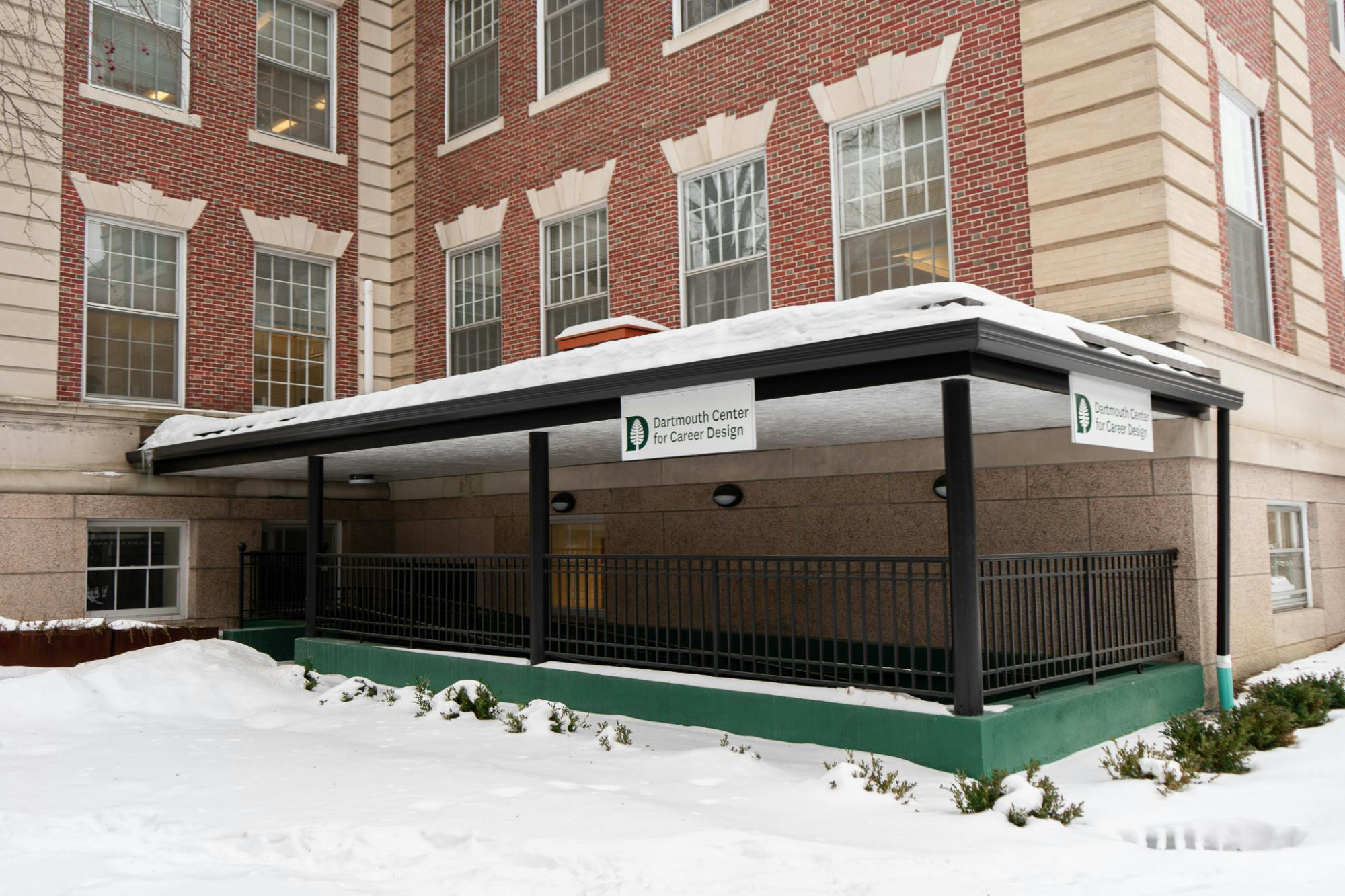
The vast majority of the Class of 2025 have gone on to full-time employment, part-time employment or an internship, according to Center for Career Design data shared with The Dartmouth. The percentage of students who have placed into some form of employment is up 14% from last year, according to the data.
The data show that 71.7% of the class has accepted a full-time job, 21.9% of the graduates are continuing education, 2.5% have accepted a fellowship, 2.5% have a part-time job or internship, 0.4% are doing military service and 1% are still looking. This “first destination” data documents the immediate employment of recent graduates, according to DCCD director Joe Catrino.
Catrino said the data — which accounts for 86% of the graduating class, up 10.9% from last year — tell “a significant amount of stories.”
“We can look at different industries. I can give you a breakdown of what grad schools our students went to,” Catrino said. “[And] are students getting the type of job that they want, or are they settling for just any job?”
Catrino said there was a “significant jump” in the amount of data collected this year. Last year, DCCD only obtained information for 75% of members of the Class of 2024. He attributed the increase in data collection to the DCCD being “proactive” in collecting data this year, including by reaching out to students still looking for jobs and by collecting data from students’ LinkedIn.
“We get information from students in different ways,” Catrino said. “They may have filled out the survey, but this other person may have just emailed us and said ‘Hey, I got the job,’… [and] we can [also] scrape LinkedIn.”
First job out of college not everything, professor says
Economics professor Patricia Anderson, who specializes in labor markets, pointed out that students’ first employment doesn’t dictate the rest of their career.
“There’s going to be people that end up getting MBAs that right now are working for a consulting firm or investment banking,” Anderson said. “There’s people [who] are going to end up going to graduate school … where, right now they’re working as a research assistant in economics.”
Anderson added that she thought the benefits from graduate school depend on both the field that the graduate student pursues and the type of school they attend.
“I think there’s been some concerns that [students at] low-ranked business schools are not getting the return that pays back the price of that low-ranked business school,” Anderson said. “If you come out of a top school, you’re probably still making a lot more than somebody that [who] didn’t.”
Careers for class of 2025 ‘more diverse’ than previous years
Catrino shared that the fields which students enter into after graduation are “more diverse” this year than in past years.
“You don’t just go to our office to get into consulting and finance,” Catrino said. “You can go and do all these other cool things.”
James Quirk ’25, who is working as an English teaching assistant in Switzerland through the Fulbright scholarship program, said that his friends in the Class of 2025 are “doing really cool things.”
“I think definitely we cross paths with a lot of interesting people who have different curiosities and experiences, and that leads us to do different things,” Quirk said.
Daniella Nichols ’26, who will be working for the nonprofit Teach for America next year, said there was “value” in finance and consulting but added that she thought more students should go into “social impact work.”
Social impact work “is really what’s driving important change,” Nichols said. “We’re all really smart and motivated individuals so that area of work could use some people like us.”
Eliza Dorton '29 is a reporter from Washington, D.C. and is studying English and public policy. Outside the classroom, she enjoys reading and going on walks.