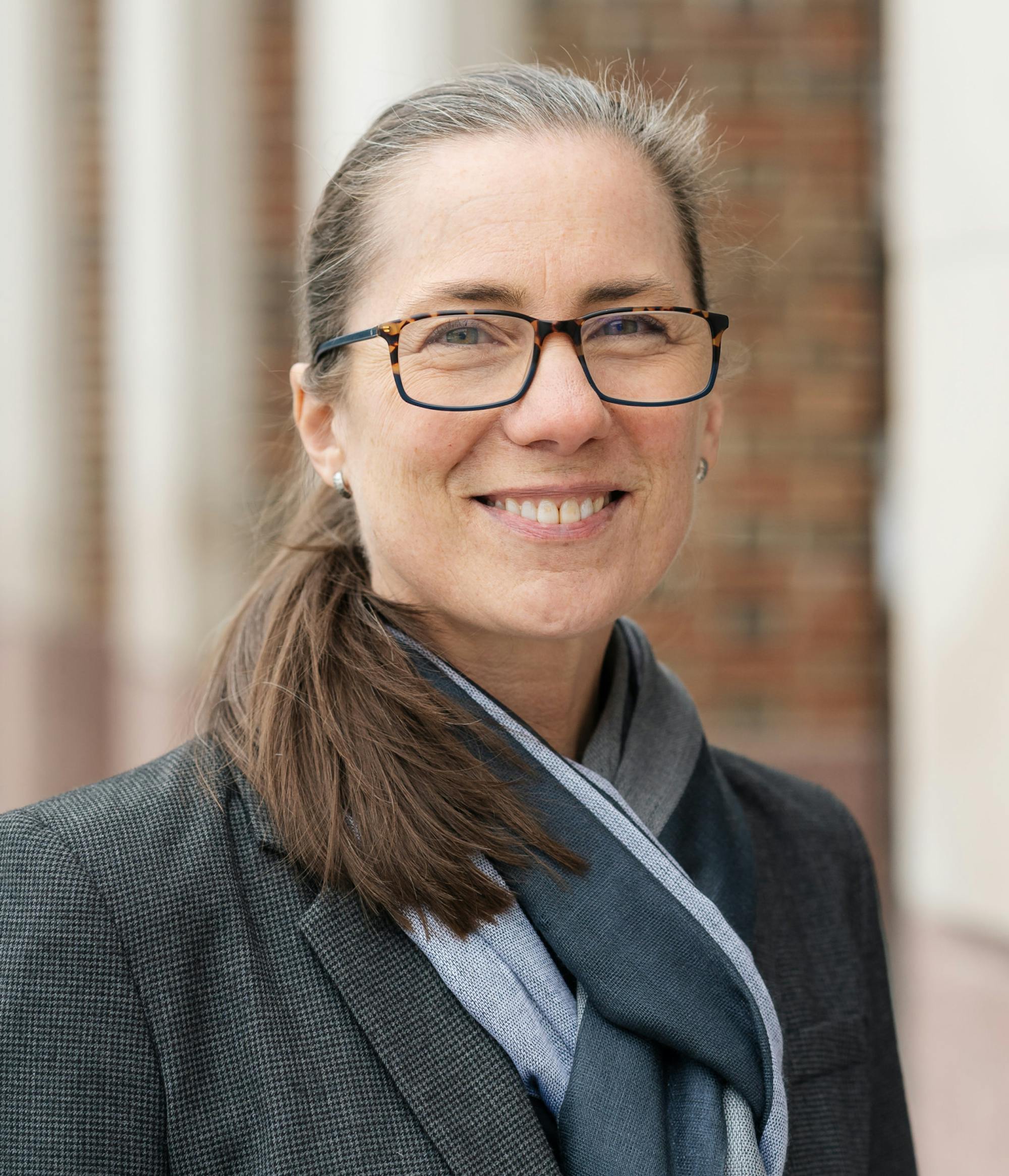
Institute for Arctic Studies director Melody Brown Burkins will represent the United States at the “Science 7,” which is a global coalition of science academies that contributes expertise to G7 summits. The group is drafting a statement on Arctic policy issues in preparation for the G7 conference in June. The G7 is an intergovernmental organization comprising seven of the world’s largest industrialized countries.
The Dartmouth sat down with Burkins to discuss her career path, her appointment to the Science 7 and her perspective on Arctic issues.
How do you see your role in the Science 7?
MB: I’m really excited about connecting science to governance so directly via the G7, bringing knowledge, science and diplomacy into a space that may not think about the Arctic in this way. We’re going to be talking about the global Arctic — our values, scientific integrity and cooperation with both Arctic nations and Indigenous people — and move that to the G7. It’s not only an opportunity to bring science into these discussions, but also to bring the idea that science is better when we work with place-based, generationally-understood Indigenous knowledge from the communities and the peoples who live there.
What sparked your interest in Arctic Studies as a discipline?
MB: I was born and raised in Fairbanks, Alaska. When I came to Dartmouth for my master’s and my Ph.D., I actually worked in Antarctica. When I was doing research there in 1994, the U.S. Senate sent a delegation from the appropriations committee, including Senator Ted Stevens of Alaska. The questions that Stevens asked me were not about science, but about economic development and security issues in Antarctica. My Dartmouth experience in Antarctica, being from Alaska and studying the Arctic all came together to get me thinking about a career outside traditional academia.
What does it mean to be a “science diplomat?” How do you view the relationship between diplomacy and climate change science?
MB: To me, what it means to be a science diplomat is to live between spaces. It could be either scientists who work with diplomacy or someone in governance and diplomacy who wants to understand how scientific information enters into decision-making.
Climate change is a perfect example. Scientific knowledge goes through peer review and finds different things going on, then the diplomacy space tries to set political or economic rules about climate mitigation and how they’re going to fund it. The Arctic is at the front lines of climate change. Climate change is a threat multiplier, and it makes all the other challenges of the Arctic rapidly more unsustainable. I hope that some of the knowledge we’re gathering while working with the peoples of the Arctic to address climate change will actually help inform more ethical, equitable knowledge and diplomacy throughout the world.
What’s one piece of advice you’d give to students who are interested in sustainability, equity and security in the Arctic?
MB: Many people have written about ethical Arctic engagement, and that’s something we try to think about. If we want to think about sustainability, you can’t just think about it in a lab or journal. You actually have to look for ways that you can do respectful engagement in research around sustainability and climate and partner with a community. It’s a little bit radical, because it’s not the way I was trained to do knowledge gathering, but it makes for better knowledge and buy-in from communities and peoples.
This interview has been edited for clarity and length.
Sahil Gandhi ’29 is a reporter from Staten Island, N.Y., and is majoring in environmental studies and government modified with philosophy and economics. He loves word searches and falling down internet and Wikipedia rabbit holes.