On Jan. 3, following months of the bombings of boats allegedly transporting drugs off the Venezuelan coast, United States special forces captured Venezuelan president Nicolás Maduro in an overnight raid on Caracas and brought him to trial in New York, N.Y. on narco-terrorism charges.
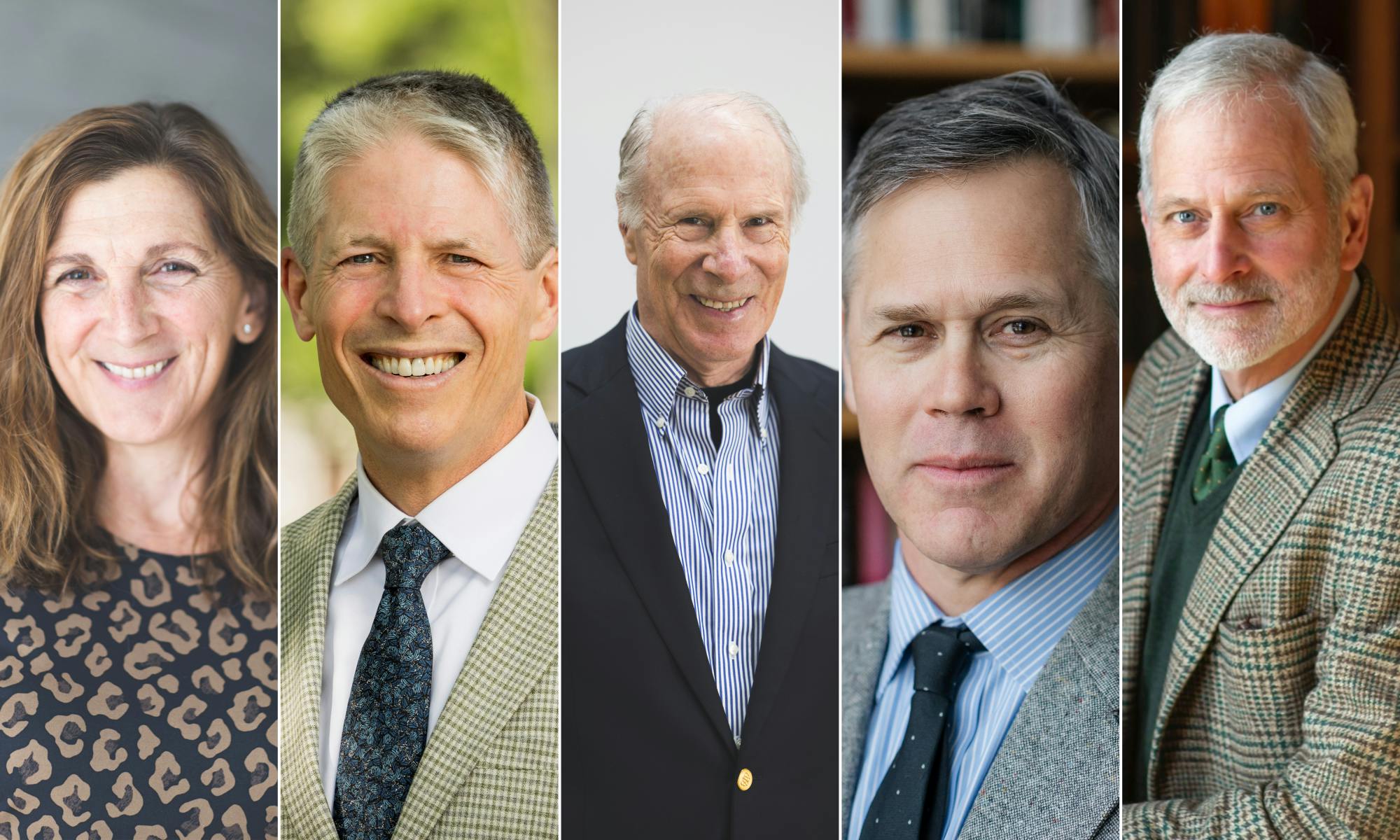
The Dartmouth sat down with five professors to learn more about the situation: government professor Lisa Baldez, who specializes in human rights and Latin American politics; government professor John Carey, who specializes in democracy and Latin American politics; former U.S. ambassador and visiting Latin American, Latino and Caribbean studies professor Peter DeShazo ’69; history and Latin American, Latino and Caribbean studies professor Matthew Garcia, who specializes in immigration and labor history; and government professor William Wohlforth, who specializes in U.S. grand strategy.
Despite running for office on an anti-interventionist platform, President Donald Trump has intervened militarily first in Iran, and now in Venezuela. What direction is American foreign policy heading in?
JC: Within Trump’s base, he’s getting a lot of positive feedback about this most recent intervention. My sense is that may feed his appetite for more.
WW: This administration seems to think they are capable of influencing the choices of these governments with lower cost, lower commitment uses of force than the forever wars it criticized when it was running for office.
Will Maduro’s arrest lead to meaningful regime change in Venezuela? What would the United States’ involvement in regime change look like?
LB: The Venezuelan people have suffered mightily under this current regime. A quarter of the population has left the country. The kinds of services and the security situation facing the people who live there is, by most accounts, terrible. The economy is very tenuous and weak. People would have thought that a long time ago this regime would have fallen due to those factors. This is an unusual strategy that the Trump administration is taking by basically decapitating the leader, but leaving the entire structure of government in place.
This kind of strategy has never been tried before. People are making a lot of analogies to Iraq. I don’t think this is analogous to Iraq.
WW: This is not, by all accounts, a regime change operation. The current theory of the case of this administration is that they can put enough pressure on the interim president and her administration to get Venezuela to comply with U.S. demands.
The U.S. has done this at least since the middle of the 19th century, like with the Platt Amendment regarding Cuba. It has used external coercive force, basically telling governments in the region, “we will punish you if you don’t do what we want, but we will not formally take over your country and run it.”
How will Maduro’s arrest affect regional stability in Latin America?
JC: There may be a deal about control over Venezuela’s oil production. There may be new leases and new deals for American oil companies, although, frankly, they don’t seem particularly gung ho about that. But the other thing that could happen is the cutting off the stream of subsidies from Venezuela to the Cuban government. That could potentially cause more profound political changes in Cuba than anything we’ve seen in Venezuela. The Cuban military, which had a formidable reputation throughout the Americas, partly because of its ability to keep Chavez, and then Maduro safe and secure, has taken a blow as well.
PD: The Trump administration has said that it was willing to take military action against drug traffickers in other countries in the region, specifically in Mexico and Colombia. Countries are going to have to deal with a U.S. policy that is much more forceful.
The Venezuela operation has impacted perceptions of the United States’ credibility, military capacity and legitimacy. How will the operation affect America’s reputation abroad?
LB: This action seems like an instantiation of the National Security Strategy that was published in November of last year. It’s new that it’s different from the liberal international order that has governed U.S. foreign policy since at least the founding of the United Nations. It is a reversion to the kind of foreign policy that was followed prior to the formation of the United Nations, when countries could go to war for whatever cause they deemed necessary and appropriate.
JC: The critical mass of public sentiment in Latin America is against U.S. military intervention. But Maduro was a dictator, and he was widely despised, not just in Venezuela, but throughout the region. He’s got some supporters, but the fact that the intervention was in and out — it’s not an occupation, at least not yet — and that Maduro is gone resonate more favorably than critics would anticipate.
MG: The United States trying to control another country in this way is really bad at a time when Russia is asserting its rights to conquest in Eastern Europe, and China is threatening its right to conquest over Taiwan. The United States’ loss of reputation as a kind of arbiter of justice and practitioner of respect for sovereignty has really opened the door to other dictators that want to do harm to their neighbors.
What impact will Maduro’s arrest have on drug trafficking in the region?
PD: Very little. Venezuela is responsible for maybe 10% of cocaine trafficking out of Colombia. Colombia is the largest producer, by far, of cocaine. Maybe 10% of Colombian cocaine transits through Venezuela, and only a part of that to the United States. Venezuela is also a transiting point to Europe. If there were substantial counter-drug activity on the part of the Venezuelan regime, it would cut down on the supply of cocaine, but the lion’s share would still be coming out of Colombia.
What role did oil or other market interests play in the Trump administration’s decision to intervene?
LB: The oil justification for this action seemed to me and others to come in late in the game, once the action had already taken place. It was not the justification that was used in the lead up to this action. Certainly in the months prior to the action, we had a very different set of justifications. I don’t think there’s any clear consensus on what the Trump administration’s actual substantive policy goals are in Venezuela, and that’s why I tend to think about it in terms of an instantiation of a demonstration of power in terms of the goals and principles articulated by November’s National Security Strategy.
MG: For Marco Rubio, it’s about ideology. It’s about Cuba. It’s about rolling back socialism or communism. For Stephen Miller, it’s about asserting power, the right to conquest. And so that’s why immediately he pivots and brandishes the short sword at Greenland. But if you’re asking about Trump, it’s about the business part of it. It’s about oil.
What domestic political opportunities does military engagement in Latin America create for the Trump administration?
WW: If you look at the history of this kind of operation, normally the costs accrue later. So there’s a dramatic military success, because the U.S. military is extremely competent at exactly this kind of thing. But the resistance, pushback and blowback accrue more slowly, so the ultimate effect on the U.S. public’s perception of this operation is more likely to turn out negative in the long run, if I had to guess. But in the immediate aftermath, it can be sold as a highly successful, low-cost operation.
Are there any things you would like to highlight about the Venezuela operation, or things that you see people frequently getting wrong?
LB: I would especially encourage students to gather information from as diverse an array of perspectives as they can, rather than to lead with kind of an ideological view or political view. I’ve seen polls that 40% of the population supports this action and 42% don't support it. There’s an opportunity to try to step back and explain what just happened.
PD: It’s clear from the Trump administration’s National Security Strategy that the focus of the United States is on the Western hemisphere. This is something that in other circumstances would be considered a positive step. The United States has rarely given this kind of attention to the Western Hemisphere, but the objective of the Trump administration appears to be that the United States is going to revert to an early 20th century model of shaping the behavior of the countries in the region in order to advance U.S. interests, especially U.S. business interests. The possibility of militarization of U.S. policy in the region is a matter of concern.
MG: I think what’s really harmful is our media in this country. National Public Radio starts with “this is about democracy” or “this is about drugs.” No, it’s not. This is about money, and this is about a kind of idée fixe on communism. That’s why I think Cuba is in great danger.
WW: I am extremely doubtful that this operation will have any material effect on the propensity of either China or Russia to execute similar sovereignty-defying actions in their own neighborhoods. Russia obviously needed no precedent from the United States in order to decide it wanted to dominate militarily, and far more violently, its neighbor Ukraine. This is a marginal decrease in U.S. respect for the norm of sovereignty, but it is very marginal, and it’s doubtful to have any effect on the strategic behavior of the other great powers.
This interview has been edited for clarity and length.
Jackson Hyde ’28 is a senior news reporter, who writes about artificial intelligence and technology at the College. He is from Los Angeles, Calif., and is majoring in Government modified with Philosophy.