Regional campaign manager for the ACLU of New Hampshire Taylor Maine covered “basic rights” in encounters with immigration officers in a “Know Your Rights” session at Filene Auditorium on Oct. 2. The session comes amid a “surge of immigration enforcement” by the Trump administration, including the deployment of federal agents into several cities.
International Student Experience Office director Seun Olamosu said in an interview with The Dartmouth the session shared “practical information” that “everyone should know.”
“We don’t want to be reactive,” Olamosu said. “There are ongoing immigration policies and federal regulations that Dartmouth is trying to be proactive about to support our students.”
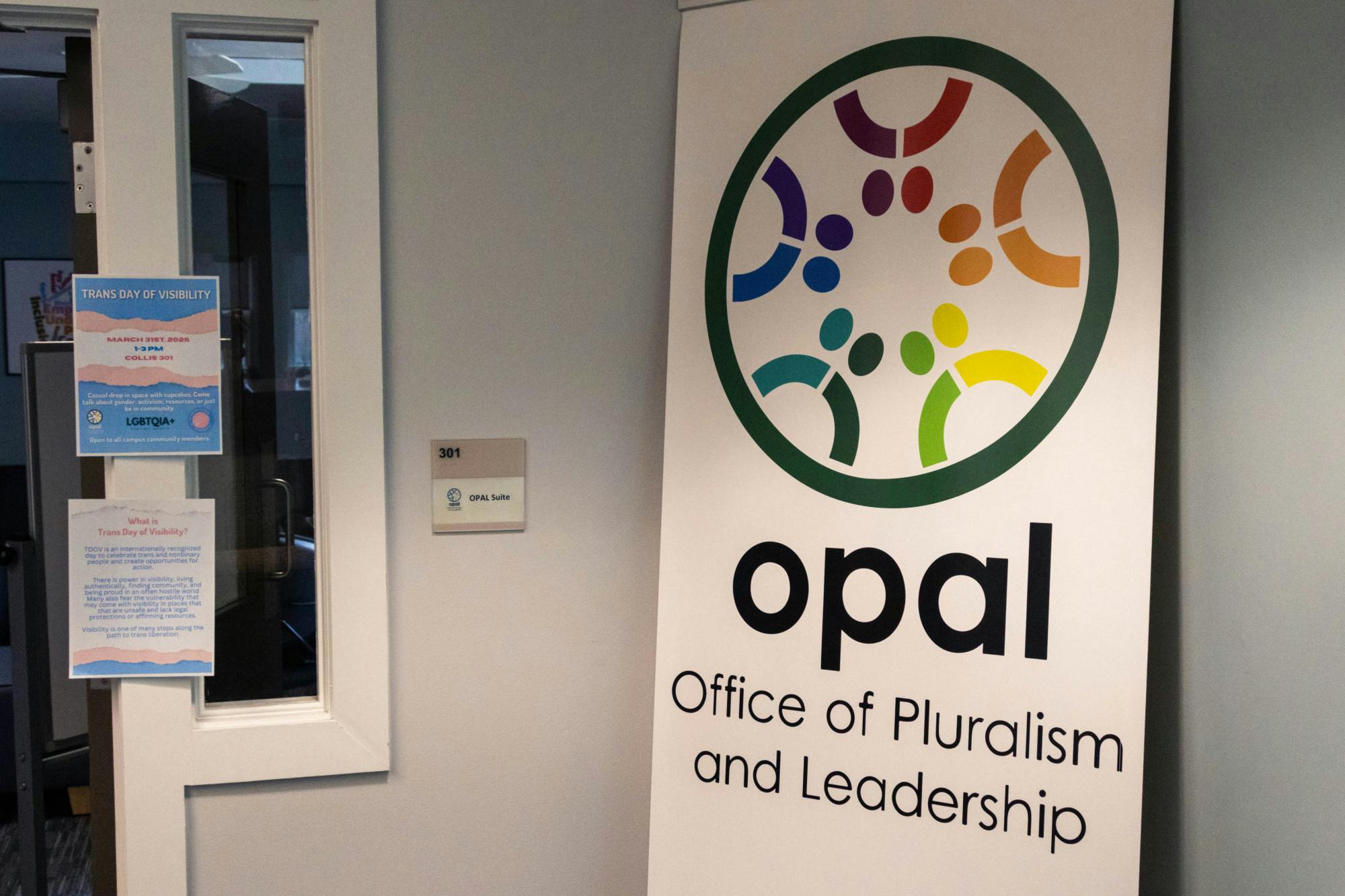
The event was co-hosted by the Office of Pluralism and Leadership, the Office of Visa and Immigration Services and the Office of Institutional Diversity and Equity. This was fewer than the session held last year, which drew more than 150 audience members, Olamosu said.
This is part of a series of similar workshops from the College to support international students. On April 16, OVIS held an info session after the Trump administration revoked more than 1,000student visas, cautioning students to carry proof of immigration status around campus.
Maine kicked off the event by explaining the differences between local police, Immigration and Customs Enforcement and Customs and Border Protection, noting that an individual’s rights “remain the same” in interactions with every agency.
“You have the right to not answer, and you cannot be arrested simply for exercising that right to remain silent,” Maine said. “You do not have less rights just because [the officer is] working with ICE.”
New Hampshire has no sanctuary cities — which do not cooperate with federal immigration officials — due to a ban on sanctuary cities signed by Republican Gov. Ayotte in May.
Maine said that if detained by law enforcement, you should “always” ask the officer if you’re free to go, which she said forces the officer to decide whether they have enough evidence to continue detaining you or to arrest you.
“If [Customs and Border Patrol] ask to search your person, if they ask to search your bag, you can say no, you can say that you’re not consenting to that search,” Maine said. “They may still go through with that, [and] if that happens, you should remain calm and not resist that because that can escalate the situation.”
Maine said that if ICE shows up at your home and if the officer does not show you a valid warrant, “you should not give them consent to do that search.”
“All of the details need to be perfectly in line for them to actually use that warrant and enter into your residence,” Maine said. “If you’re outside [the date range written on the warrant], that warrant is no longer viable, [and] if your name is spelled wrong in the warrant, they cannot use the warrant.”
Michelle Vasquez ’28 helped organize the event as part of the Latine and Caribbean Heritage celebration planning committee, which is a group under OPAL that organizes cultural events on campus.
“I appreciate all of the events like this and getting support from the OVIS office,” she said. “I do think this is information that every student should know.”
In the past, international students have expressed mixed feelings about support from the College amid visa revocations. While some international students said that emails from OVIS could be “anxiety-inducing,” others said they are “super grateful” to the office.
Safety and Security director Keiselim Montás spoke in a Q&A panel after the event, explaining that “private” spaces are protected from any law enforcement officers without warrants on campus.
On May 2, OVIS modified their protocol to include language requiring immigration enforcement officers to “have a judicial warrant or subpoena to access non-public areas” on campus.
“Here at Dartmouth, any place where you need an ID to get in is private,” Montás said. “Walking on the Green, our lobby areas, our public space, walking to Baker Library, is completely different.”
Regarding classrooms, Montás said that although you might not need an ID to get into a building where a class is taking place, he considers the classrooms private because you have to register for the class.
Montás said that in “any interaction” with law enforcement, students should first “direct” officers to the Safety and Security. Montas said Safety and Security would then confirm that officers and their warrants are “legitimate.”
“We will contact the [Dartmouth] office of the general counsel, specifically, if it is related to immigration,” Montás added.
Will Sánchez '29 is a reporter from Portland, Ore., studying government and psychology.