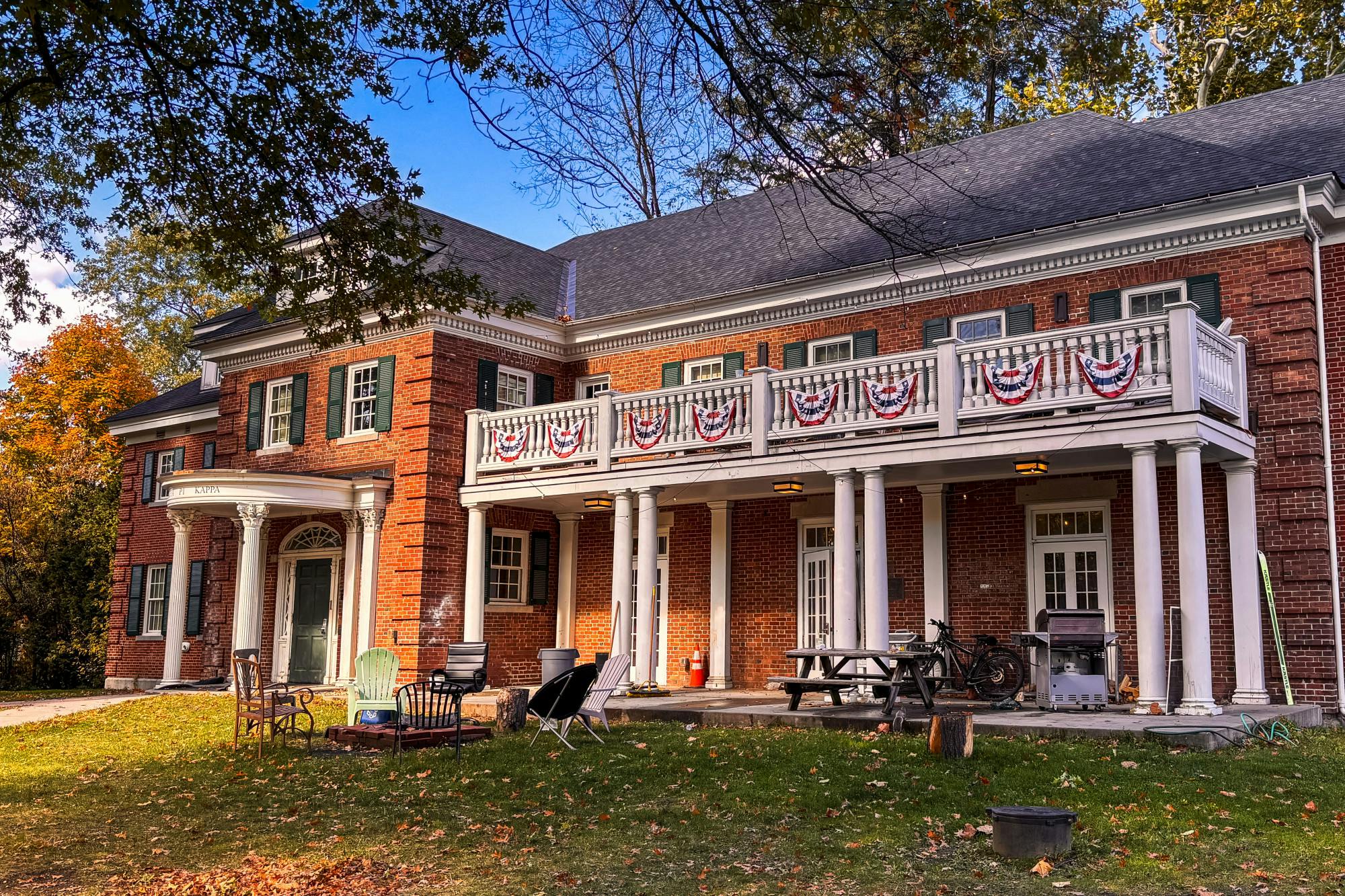
The fall 2025 Inter-Fraternity Council and Inter-Sorority Council recruitment cycles concluded on Oct. 3 and 4, respectively, with the two councils welcoming their new class of members. According to Greek life and student societies director Hunter Carlheim, the IFC extended bids to over 325 new members, a dip from the 343 bids given out last year. The ISC, however, saw its numbers increase, with over 290 bids being offered to new members — an increase from last year’s 273 bids.
Alpha Phi sorority and Beta Alpha Omega fraternity were not able to offer bids to a new class this term because both are still suspended after the death of Beta member Won Jang ’26. The suspension on Alpha Phi is expected to be lifted after this fall term, while Beta Alpha Omega is not expected to rush a new class until after the 2026 summer term.
According to Inter-Fraternity Council vice president Aren Carlson ’27, rush “continues” to be “very popular,” but space constraints in fraternity houses prevented some students from affiliating.
“Typically, fraternity classes range in size from 36 guys on the upper bound and anywhere in the mid-20s on the lower bound,” he said. “The biggest challenge, with the absence of Beta and no relative increase in terms of houses accepting members over the last two years, is that there is an entire class of students that will not end up affiliated somewhere just for the lack of space.”
Over 500 students expressed interest in joining a fraternity this fall, according to Carlheim. However, some were ineligible, chose to defer participation, or ultimately did not find the right fit, resulting in a 60% “interest-to-new-member rate.” In contrast, 97% of potential new members who completed the ISC recruitment process were offered a bid to join.
This year, IFC and ISC leadership focused on fostering transparency and accessibility during rush in an effort to address the emotional challenges associated with the process, according to Carlson and Carlheim.
Carlson said fraternity “rush chairs,” who are responsible for managing the recruitment process and meeting with potential new members, have a network of communication to help potential new members navigate the stressful conditions.
“If it’s not going to work out for one student in one house, rush chairs are in communication with each other and oftentimes we’ll give a really strong recommendation if they believe they fit elsewhere,” he said.
A Rho Gamma, a sorority member who advises a small group of female students through the rush process, said she similarly tried to support students.
“We’re there to help potential new members through the rushing process as they’re dealing with a lot of intense emotions,” she said.
While many of her potential new members “seemed very excited” about recruitment, several chose to withdraw from the rush process.
“I spoke to two potential new members who felt that the houses they had back just didn’t feel like the right fit — it didn’t seem like a place that they could fully be themselves or they would click with other girls, and they were not invested in being affiliated somewhere that didn’t feel right,” she said.
The recruitment process for the houses in the Gender-Inclusive Council is still ongoing, according to GIC president Sonia Meytin ’26.
“GIC houses run their recruitment asynchronously per house rather than as a council … as such, GIC houses do not have shakeout,” they said.
The GIC is composed of four gender-inclusive Greek houses and two undergraduate societies. For GIC houses that do participate in rush, the processes range from a more traditional pre-rush and rush-week requirements to a “continuous open” model, where “one can simply rush at any point in time.”
Both Carlson and the Rho Gamma also reflected on the broader social dynamics embedded within Dartmouth’s Greek system.
“One of the unfortunate, intrinsic qualities of the Greek life system is that exclusivity is sort of at the center of the rush process,” Carlson said.
Reflecting on her own experience in ISC recruitment, the Rho Gamma said the social pressure to participate is significant, even for those uncertain about joining.
“It is kind of the social norm,” she said. “It’s expected and in any community, it’s hard to deviate from that kind of expectation.”
As the recruitment cycle continues to evolve, the Greek community at Dartmouth is expanding in both size and scope. Carlheim highlighted the addition of two new multicultural organizations — Sigma Lambda Gamma National Sorority, Inc., and Sigma Lambda Beta International Fraternity, Inc., both of which mark the beginning of a Multicultural Greek Council on campus.
“As we look into the future, the Greek life and student societies office hopes to partner with councils to create more opportunities for interested students to learn more about Greek Life through informational sessions and events,” he said. “We want to support organizations on their intake and joining processes to ensure a safe and fun environment where students can find their home away from home.”
Haley S. Rodriguez ’29 is a reporter with roots in New York City. She is studying history and biology and enjoys long-distance running, reading and sailing.