
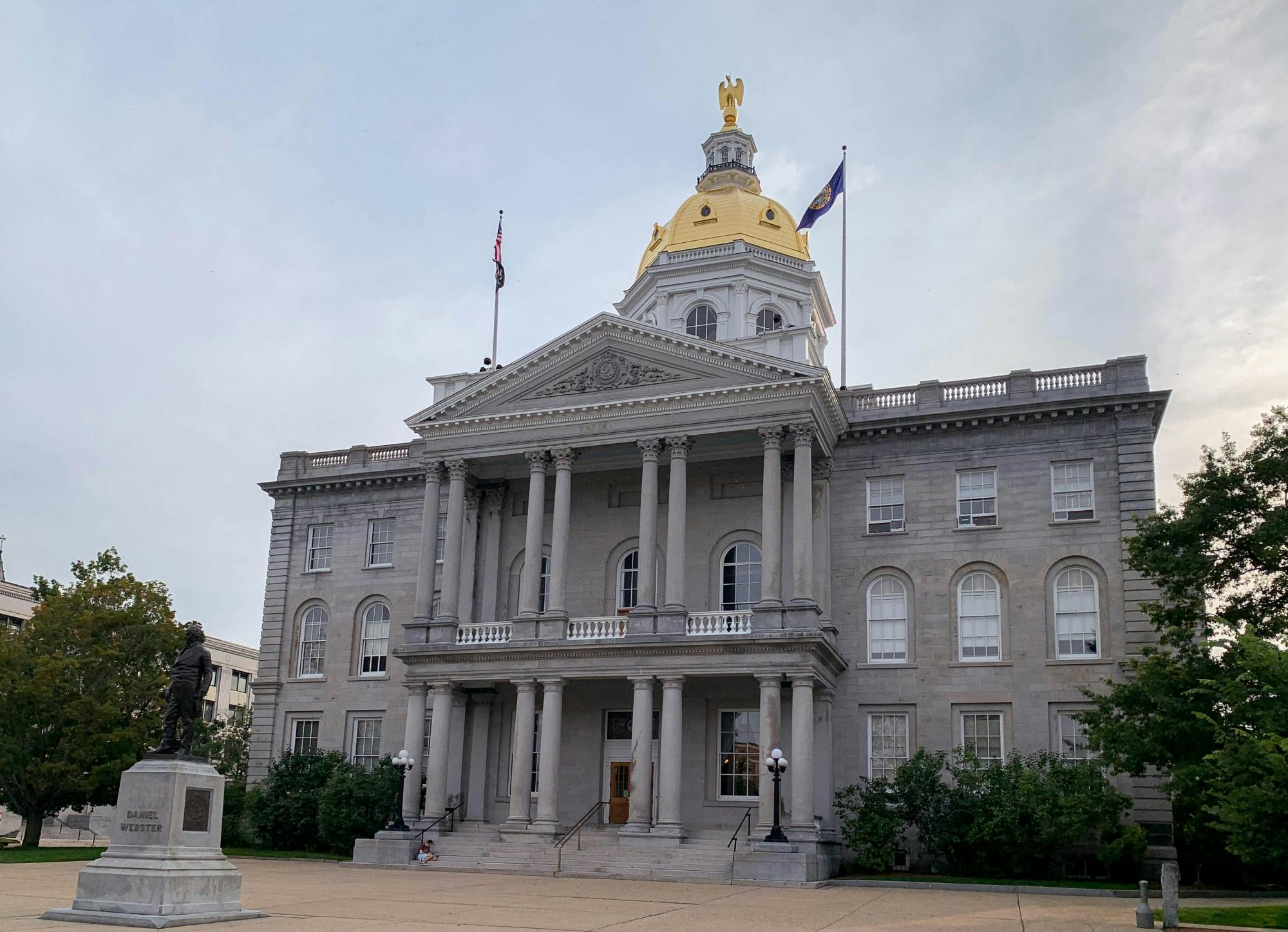
New Hampshire has abstained from a new public health collaborative, comprising nine northeastern states, that will disseminate guidelines separately from the federal Centers for Disease Control and Prevention.
The decision not to join the Northeast Public Health Collaborative comes amid controversial vaccine guidelines from the Trump administration’s CDC. The state’s decision drew broadly negative reactions from Dartmouth community members.
English professor and State Rep. Ellen Rockmore, D-Hanover, said she was “surprised” by New Hampshire’s lack of participation.
“Once New Hampshire gets a reputation for not playing well with others, [other states] just won’t ask us to participate,” Rockmore said.
New Hampshire’s choice to not participate may cause vaccine access to “become a problem,” according to Geisel School of Medicine professor Kendall Hoyt. For example, she suggested that CVS, a major vaccine provider, may allocate fewer vaccines to New Hampshire locations as a result of the state’s absence from the collaborative.
“If I was CVS and I just ordered a whole bunch of COVID vaccines for the New Hampshire population, I might redistribute everything that I bought to CVSs in other states,” Hoyt said.
New Hampshire has historically been “very sensible” regarding public health, Rockmore said, referencing former N.H. Gov. Chris Sununu’s response to the COVID-19 pandemic.
Sununu “clearly believed in masks, and believed in getting as many people vaccinated as possible,” Rockmore said. “I think it really saved New Hampshire from much worse devastation.”
Since then, New Hampshire House Republicans have become increasingly “Trumpist” and “much less practical,” Rockmore said. She noted that several anti-vaccine bills have passed in the State House.
“I have seen in the House, very recently, a big change in the attitude of the New Hampshire Republicans,” Rockmore said. “They’ve become much less middle-of-the-road.”
Two Dartmouth students — Vikram Chetnani ‘28 from Connecticut and Andrew Pham ‘27 from Missouri — questioned the state’s abstention.
Chetnani said New Hampshire’s absence from the collaborative was “a little surprising” and said he was curious to learn more about the state’s “rationale.”
“If the diseases are preventable by vaccine and we’re blocking that off as an option, then technically the state’s putting ourselves more at risk,” Chetnani said.
Rockmore said New Hampshire’s absence from the collective was “terrifying” because of vaccinations’ importance for “very vulnerable” populations including older people and infants.
“One of the most endangered populations when vaccine rates go down is babies under six months old,” Rockmore said. “Babies don’t get the protection of vaccinations, they get the protection of herd immunity.”
“Herd immunity” refers to the protection that arises when a majority of a population is vaccinated for a disease, making it difficult for that disease to spread even to unvaccinated individuals.
Rockmore said the New Hampshire Senate and Republican Gov. Kelly Ayotte are more “public health-oriented” than the New Hampshire House, and added that she has “a little bit of hope.”
“I am hopeful that this isn’t the final chapter in the story, [and] that maybe there will be some cooperation going forward,” Rockmore said.
Hoyt said that New Hampshire may join the collaborative in the future.
“I’d like to think that there’s always an opportunity to readjust state policies in alignment with what’s best for the public,” Hoyt said.


