This article is featured in the 2025 Freshman Special Issue.
With my sophomore fall fast approaching, I’ve been reflecting on my first year at Dartmouth. It is strange to think that at this time last year, I hadn’t met any of the friends I have now and had no idea what my life in college would look like. Now, Dartmouth is a place I call home.
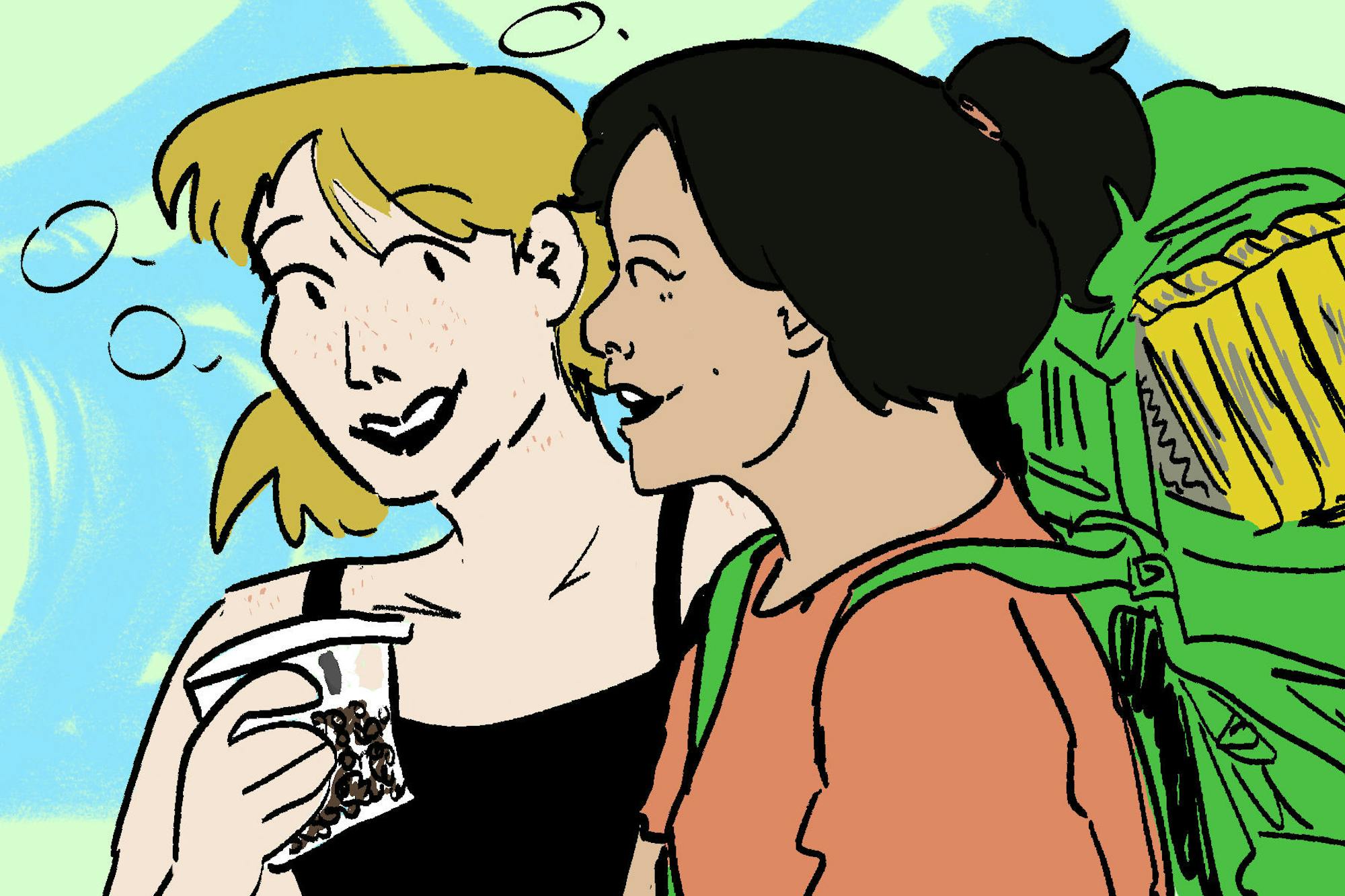
I vividly recall waking up before the sun the day after moving in. After hoisting on my 50 liter backpack and searching “Gold Coast lawn” on Apple Maps, I trekked across campus to meet my “trippees,” a randomly assigned group of other ’28s and two older trip leaders to spend the next four days with. I remember our awkward laughs as we watched H-Croo, a team of enthusiastic and dressed-up volunteers in Hanover, singing while decked out in flair before 8:00 a.m. and our late night chatter while curled up in sleeping bags under a blanket of stars. While feasting on Annie’s Mac and Cheese after a long day in the sun and playing round after round of Egyptian Rat Screw — an intense but exhilarating card game — Trips felt distinctly like summer camp.
Fortunately, my trip was indicative of how my next year at Dartmouth would feel. I now marvel at how lucky I am to go to school with peers who are more than willing to chuck snowballs at each other and who eagerly dress up in tutus and hotdog costume flair. In the short period between leaving for home and starting classes, Trips transition students into college and into Dartmouth’s distinct culture.
“It’s really scary coming to college and leaving your parents and moving into a new dorm,” H-Croo director Maisie Pike ’26 said. “That can be super daunting, but having people who express themselves in really weird and funky ways can make you feel like it’s okay to just be yourself.”
The first lesson Dartmouth teaches to wide-eyed freshmen is precisely that. We learn that at Dartmouth, it is normal to spend an hour learning a dance medley in the Sklodj foyer. In fact, it’s weirder to stand there and not dance. Rather than embracing our identities as newly independent adults, we spent our trip making witty nicknames for each other and showing off card tricks.
Trips director Lindsey Geer ’25 explained that Trips play a critical role in students’ transition to Dartmouth.
“One thing that’s really special about Trips and about the traditions is that they show incoming students right away that Dartmouth is a place where you don’t have to be afraid to be silly and take risks,” she said.
When our Trip leaders told our group it was tradition to have a talent show, we pooled our brain power to write a song and choreograph a dance to go along with it. Before even stepping foot into our first college classes or joining any extracurricular activities, our TLs taught us to step outside of our comfort zones, embrace Dartmouth tradition and to not let go of our child-like spirit just yet.
“You don’t need to act a certain way to fit in. I think that is the benefit of flair and the benefit of dancing and being silly,” Pike said.
One special part of Trips is the bond formed between a rather random group of people. Though trippees might not necessarily share similar interests, backgrounds or beliefs, they do share four days in close quarters with each other. After shuttling canoe trips from campus to the river as part of Grant Croo — a team volunteering at the Grant cabins — Geer reflected on how this shared experience encourages connection.
“The very first trip that I interacted with was a super quiet group,” she said. “It was cold and a little bit rainy, and they just seemed like they were a little nervous to be there and didn’t know each other yet. Then, we dropped them off and didn’t see them for three days. When we saw them again at the end of their trip, they could not stop talking and laughing and they had so many inside jokes and stories to tell us. It seems like they had formed such a special little community on their trip.”
Nestled in the mountains, Dartmouth makes campus a home to students through its unique traditions, passed down by generations of students. Dartmouth’s remote campus forces students to be present and engage with the community directly around them.
“Something that I really like about being so remote is that everybody who’s here is here because they really want to be here,” Geer said.
While preparing for trips, Geer and Pike were excited to introduce and begin passing on Dartmouth’s unique culture to the incoming ’29s. From the Homecoming bonfire to Green Key, the ’29s have a world of traditions awaiting them.
“Maybe it seems silly that we make a huge fire, but when everyone participates, it actually carries a lot of value. It’s the same thing with croolings dancing around and everything,” Pike reflects. “It actually carries a lot of weight to have these traditions be so meaningful.”