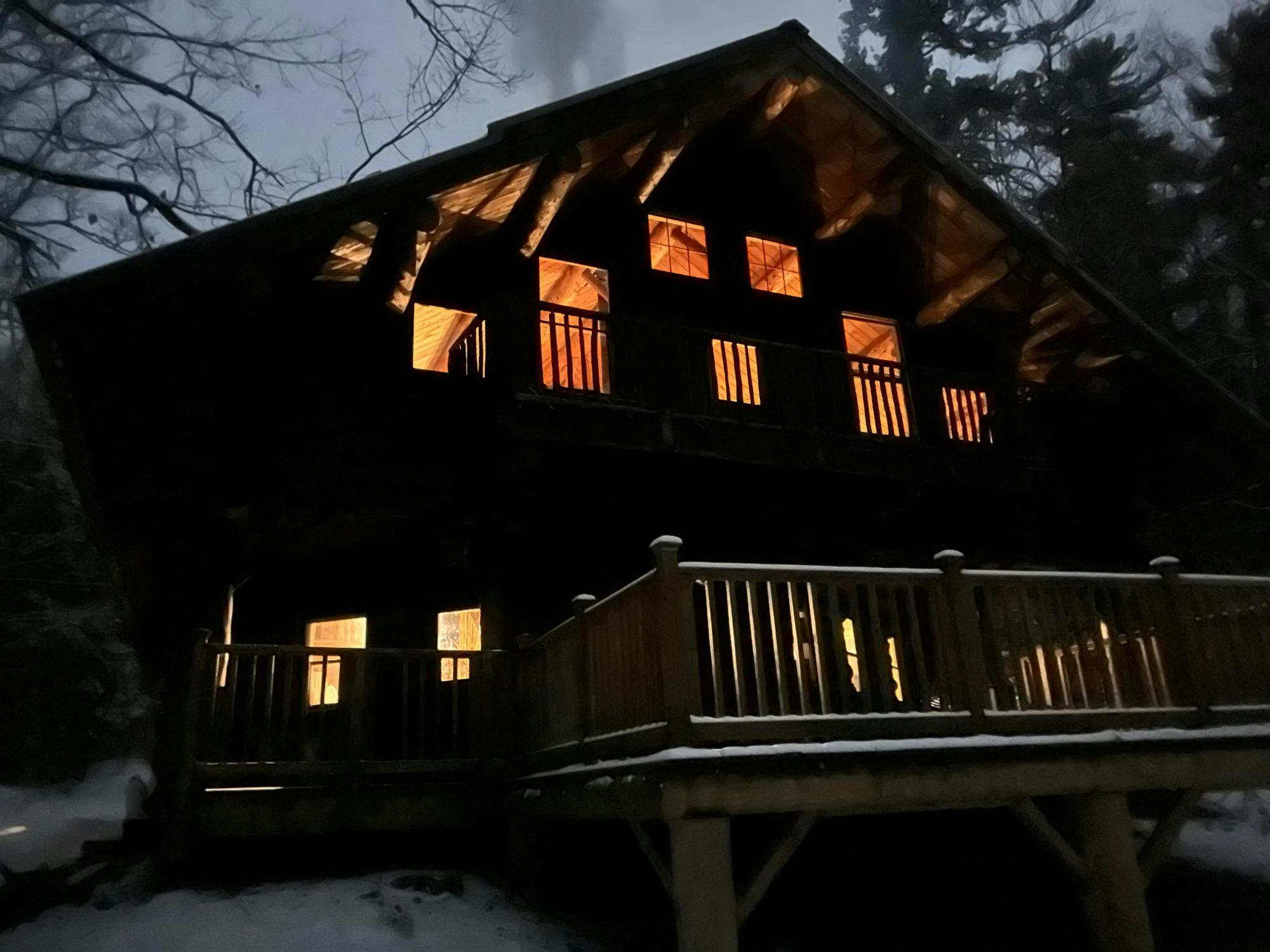
Dartmouth student groups reserving the Class of 1966 Lodge — a large Dartmouth Outing Club cabin located approximately 10 minutes away from campus on Moose Mountain — will no longer be able to reserve it for free. The new policy, which took effect on Sept. 17, requires that undergraduates pay a flat rate of $250 per night.
Dartmouth students, community members and members of the public alike are able to reserve the cabin, which has a maximum occupancy of 49 people.
Outdoor Operations manager Andrew Deaett wrote in an email statement to The Dartmouth that the lodge was singled out among other DOC cabins because of its comparatively large occupancy. Compared to other DOC cabins, the lodge also generates the highest number of complaints about cleanliness, he wrote.
“Furniture disappears, unwanted furniture is left at the cabin, the floors are often covered in beer, fires are left burning in the outdoor fire pit, light fixtures are broken, smoke and carbon monoxide detectors are ripped off the walls and more,” Deaett explained.
According to the Dartmouth Outdoors website, groups “comprised entirely” of DOC life members are still able to reserve the lodge for free. Lifetime memberships cost between $350 and $750, depending on the member’s relationship with the College. The lodge also is suitable for “classroom type settings,” according to the website. “Educational” groups are eligible to receive a discounted rate of $75 per night.
Deaett said the $250 per night rate was chosen based on the DOC rental rates for members of the public, which range from $175 to $450 depending on group size.
“At an estimated group size of 20 people, the per person cost is $12.50,” Deaett wrote, noting that “most” groups using the cabin consist of over 20 people.
According to Deaett, DOC cabins became free for Dartmouth undergraduates during the pandemic, when the College used temporary funding to offset maintenance costs. However, the cost of “sustaining free cabin use” for undergraduates has resulted in a “significant financial burden” for the Outdoor Programs Office, he wrote.
“We are currently in the process of right-sizing our budget and are looking for opportunities to increase revenue,” Deaett explained.
Avery Stern ’27, who attended Class of 1966 cabin nights with both the sophomore summer dance group Splenda and her sorority, expressed concern that the new cost could exclude smaller clubs or financially constrained groups.
“When you put a price on [reserving the cabin], it creates a disparity in who’s able to access the cabin,” Stern said. “I just don’t see my sorority, or smaller clubs like WebDCR, spending that much money.”
She added that while WebDCR has hosted smaller overnights at other cabins that will remain free, the lodge’s larger capacity was key to hosting events that drew in non-directorate members.
“The nice thing about Class of 1966 was that you could have a lot of people there,” Stern said. “It let us host bigger events that included more than just leadership — now that’s off the table.”
Chi Delta sorority summer president Julia Banuelos ’27 said that the cost will “likely hinder” the sorority’s ability to host future cabin nights.
The group’s cabin night this summer “was a really memorable experience for us … and it wouldn’t have been possible without it being free for undergrad students,” Banuelos explained.
According to Deaett, the College will monitor whether similar issues of damage or misuse arise at the smaller cabins that remain free, whose occupancy limits range from six to 20 people. He added that while there are no current plans to change pricing again, the OPO recognizes the potential financial barriers and will continue to accept payments made using College chart strings, allowing organizations with student activity funding to cover the fee.
“The DOC cabins have a long and storied history … and there is a lot of enthusiasm and support for these projects,” Deaett wrote. “We are balancing this with a strong desire to retain as much access to the outdoors as we can and understand that monetary costs for undergraduates can be a significant barrier to access.”
Iris WeaverBell ’28 is a reporter and editor. She is from Portland, Ore., and is majoring in economics and minoring in public policy.