
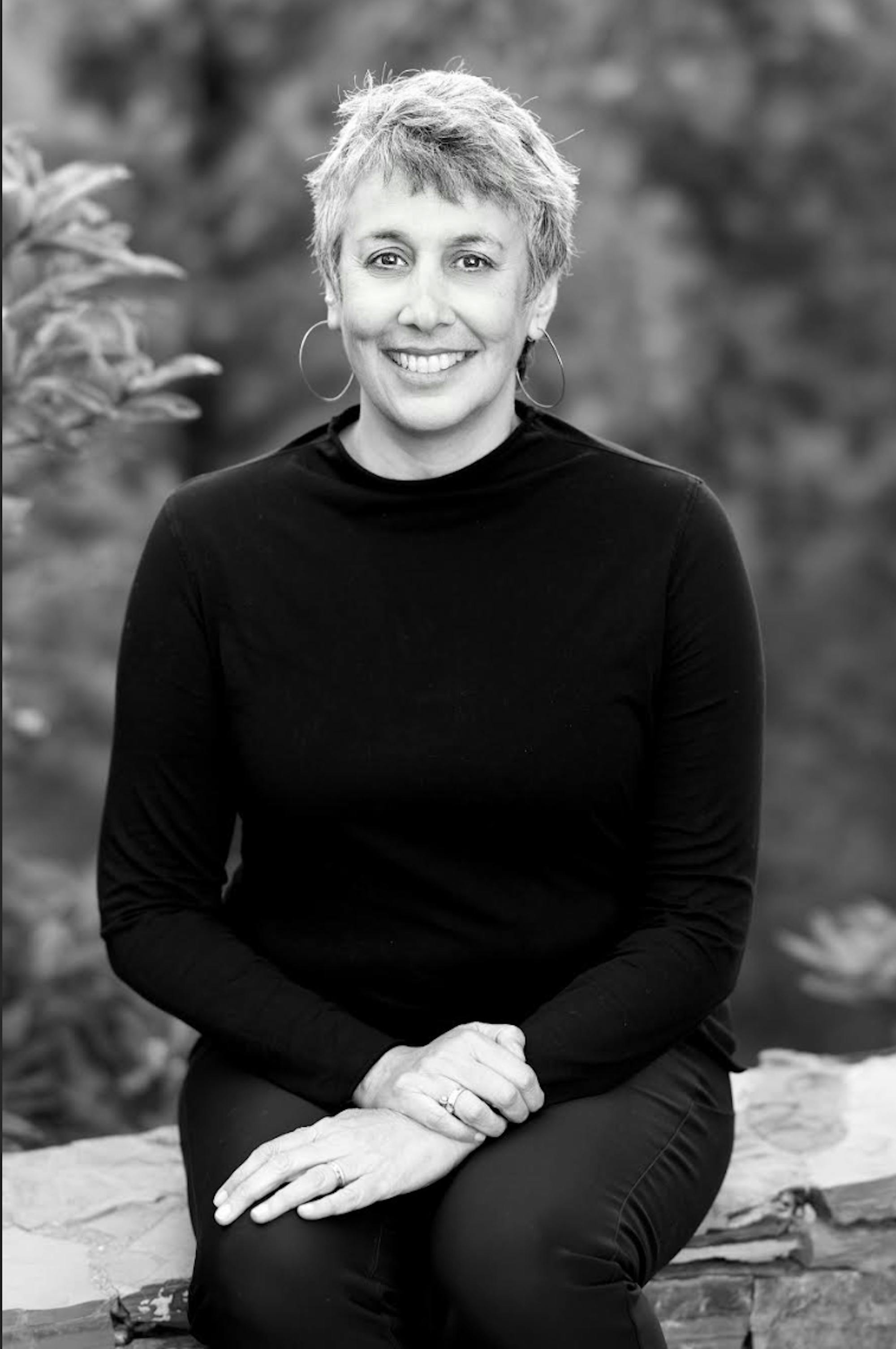
On July 1, Geeta Anand ’89 became the editor-in-chief of VTDigger, a nonprofit newspaper that reports on the state of Vermont. Previously, Anand reported for the New York Times, the Wall Street Journal and The Boston Globe. In 2003, she won a Pulitzer Prize for Explanatory Reporting for her articles on corporate corruption. She also served as the dean of the University of California, Berkeley Graduate School of Journalism from 2020 to 2024. Anand authored The Cure in 2006, which was adapted into the 2010 movie Extraordinary Measures starring Harrison Ford.
What attracted you to the position of editor-in-chief of VTDigger? What drove you to transition from working in academia to returning to work for a newspaper?
GA: I began my career in Vermont at the Rutland Herald. As I was leaving that job, I thought about how I wished I could stay in Vermont.
When I got the call about being editor-in-chief of VTDigger, I was on leave after serving as the dean of the UC Berkeley Graduate School of Journalism. I was supposed to go back there to teach — I had a full, tenured faculty professor position.
My husband’s and my intent had always been to come back to this part of the world at some point in time. We both went to Dartmouth, we love Dartmouth and my husband is from Vermont. When I began my career at the Rutland Herald, I grew to love Vermont. So, when I got the call, even though it was totally out of the blue, it seemed like a really interesting idea.
Finally, I am passionate about local news. I did the most important body of work of my career at the Rutland Herald, where I wrote a story that changed a law in Congress. At Berkeley, I reinvigorated our introductory reporting classes and I returned their focus to covering local news. I also helped create a $25 million news reporting program where we would send our graduates out to cover local news in California for two years.
What did you learn about local news while working at the Rutland Herald?
GA: I learned the power and impact of local news at the Rutland Herald and as a writer for The Dartmouth as well! If you write a story, people will respond to it. They hold a hearing, they start an investigation, or they tell you that you’re full of shit, and that your story is wrong. Sometimes they’re right. Sometimes they’re not. But that dialogue is so empowering and is so important for a community. The Rutland Herald showed me just how impactful it is to be a journalist in a community that is responsive.
Vermont is a very small, rural and historically politically-active state. Given these characteristics, what is it like being a journalist in Vermont?
GA: Vermont is a great place to be a journalist. It is particularly great because democracy is so vibrant and strong at the local level. People care what’s happening in the state, and they show up. They have protests and they raise their voices. It continues to be such a vibrant state, in spite of all of the challenges in our democracy and with local media today.
You’ve previously reported on foreign affairs for the New York Times and the Wall Street Journal. At a time when there is so much happening at the national and international levels, why are you interested in leading a state-based newspaper?
GA: I feel like it can be really depressing to obsess about what’s happening at the national and international levels right now. It can be disempowering and distracting to do that because there is very little that people can do to impact what’s happening at those levels. I feel like a much more productive way to have an impact at this moment in time, and perhaps always, is by focusing more locally.
One of the big problems with national media is how bipartisan it is. That is not the case with local news. Local news is a great place to overcome the polarization of the media and the distrust in the media. Having people with a lot of experience in journalism focus their attention on local news is actually a way of strengthening democracy and also of overcoming the partisan divide.
If we focus locally in our work and in our journalism, we can actually make a difference. If you want to feel powerful and optimistic, focus on local journalism. Focus your work locally, where you can see a result.
After working at these large newspapers, what do you see as the differences between working for a nonprofit newspaper versus at larger, privately-owned newspapers?
GA: Nonprofit newspapers have to be much more engaged with their audiences and much more engaged with their funders. They have to maintain their independence, but they have to be creating a support network of people who are their donors, but also their audience. It’s a combination of being an information source but also a movement.
Compared to newspapers that are corporately-owned or privately-owned, there is more independence because you’re not owned by any individual or any corporation. In our case, we have a board that views us as a public trust and is committed to helping us raise money and keeping us independent. Some private owners of news publications have supported that idea, but it’s been their choice to support ... or to compromise that idea. Essentially, those newspapers are businesses. There’s a difference with nonprofit newspapers — the basis of nonprofit news is not to make money, and the foundation is to try and serve the larger public interest.
What are your main goals at VTDigger?
GA: I am so impressed with the reporting and the passion, ambition and knowledge of the reporters and editors. I am excited that VTDigger has, at its heart, a focus on investigative reporting and also on explaining complex issues to the public. I love investigative reporting, and have focused on it for my whole career, but I have always believed that the best stories come out of a beat — out of knowing a community really well. So, I want to help the reporters and editors here continue to be more ambitious about our investigative reporting while also continuing to do the most important breaking news stories. It’s a challenging balance. I want to help us continue to be more ambitious and to tell stories that move people, that make them think about something in a different way. That’s where I think I can add the most value.
What inspired you to pursue a career in journalism?
GA: I decided to work in journalism because I wanted to have a voice and have an impact. There are definitely other ways of having an impact, and I thought about those. I thought about becoming a doctor. But I didn’t enjoy my organic chemistry class as much as I enjoyed my history class and as much as I enjoyed writing. I wrote some stories for The D, but I was also a campus protester. My freshman fall, I joined a group of students who took over the president’s office to protest the College’s investments in South African Apartheid.
I had a desire to make things better, and I tried out journalism when I graduated and began working at smaller papers. I found that it is so interesting to talk to people about what’s happening, whether that’s at a zoning board or a school committee hearing or a court case. I learned so much, and I was never bored.
This interview was edited for clarity and length.
Vidushi Sharma ’27 is an executive editor and senior news reporter. She is majoring in Government and minoring in International Studies and Sociology.


