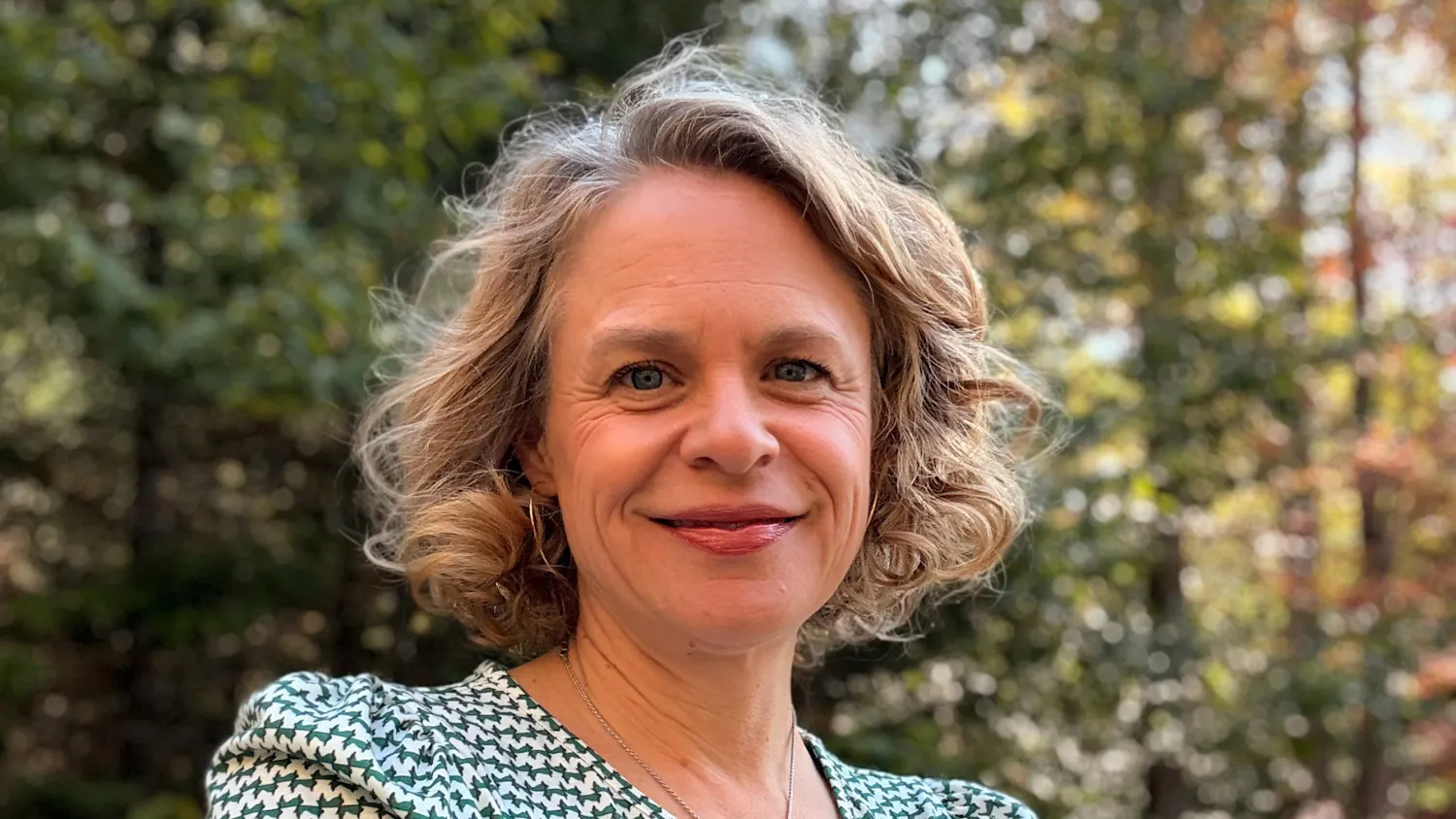
A small group of students enjoyed the hospitality of Susan Wright as they gathered around plates of cookies, cups of hot tea and a roaring fire at the President's House to chat with Dorothy Wallace, a Dartmouth math professor and the New Hampshire Professor of the Year.
When asked about her fame Wallace said that it was "unnerving to have [her] picture all over campus," but added that planned to enjoy her "fifteen minutes."
Those minutes turned into hours as those in attendance asked her questions about her past, how she became interested in math and her experience with setting up interdisciplinary math courses.
Wallace grew up in San Mateo, Calif. and planned to go to enter the University of California system until an old Yale alumnus convinced her to apply there. She did and four years later left New Haven with a degree in Mathematics. She was planning on teaching high school until, as she says jokingly, "I realized I could make the same money as a graduate student."
She then returned to California where she "went to graduate school on faith," that it would be a possible career. Her choice of advisor led her to specialize in Number theory, although, as a math professor, she teaches all kinds of courses. After getting her doctorate, Wallace came to Dartmouth where she has been ever since.
One of her major impacts on the College has been the introduction of interdisciplinary courses to the math department. The inspiration for the new program came when she wanted to teach a course with a textile artist, an artform that often uses repeated patterns. She also developed a course on the applications of calculus to medicine and biology.
Wallace also spoke about her experiences as a professional mathematician and the many things that she learned at conferences.
When asked about the differences between science and the humanities she said "Inspiration is inspiration, no matter where it comes from."
She then talked about the beauty of a well-formed mathematical proof and how it can be as elegant as any other piece of art. "Most of the difference is in the way something is judged after it is done."
The chat concluded with Wallace stressing the importance of undergraduate research as she said it develops a student's ownership of the learning process.
Members of the audience then talked briefly about their own experiences at Dartmouth and with how they became interested in their majors.
The award, which Chair and Professor of the French and Italian Department, John Rassias won last year, is presented by the Carnegie Foundation for the Advancement of Teaching.
Professors are nominated by the College but have to submit a short statement and provide some students to be interviewed for recommendations.