
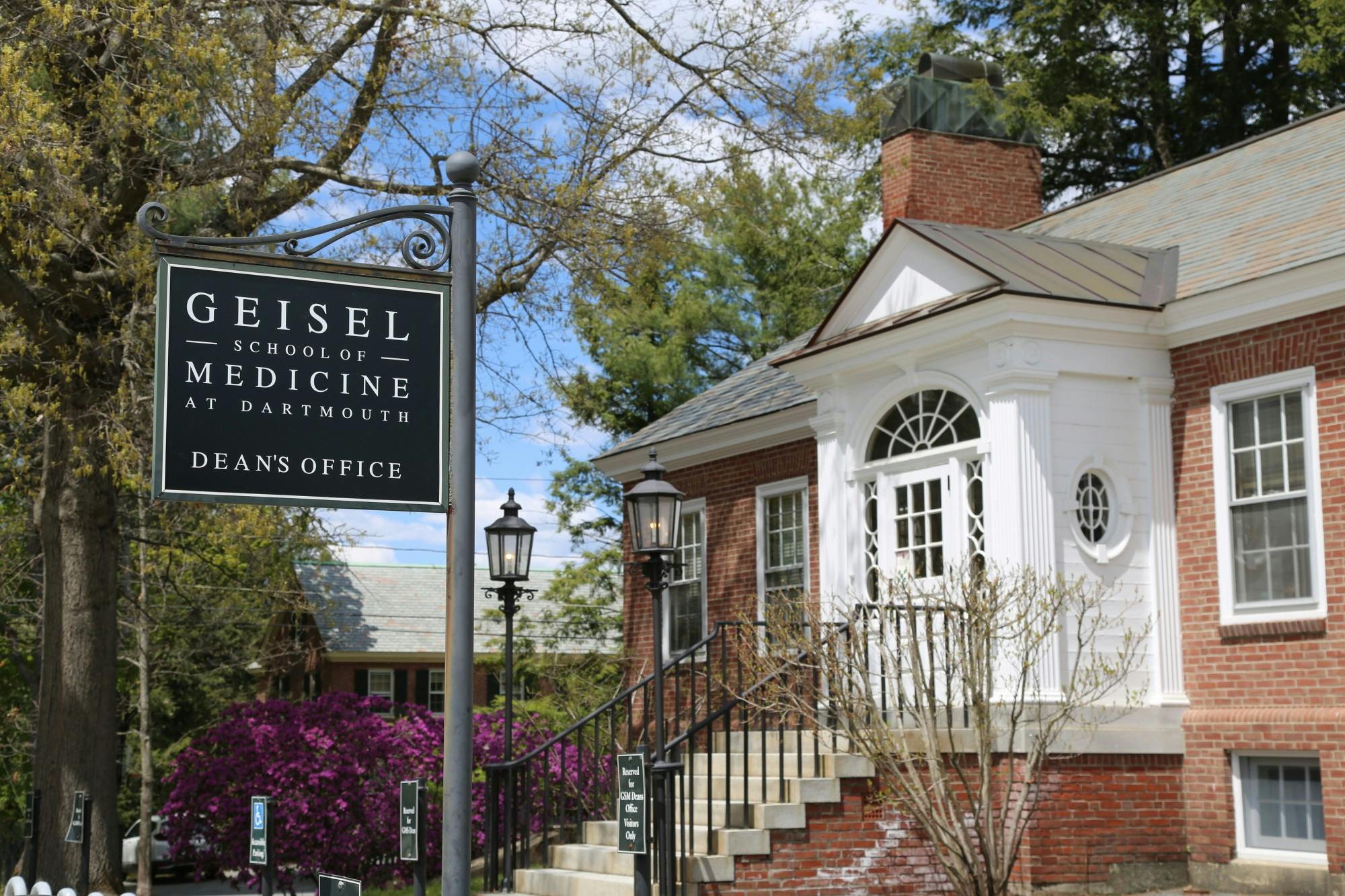
On April 3, College President Sian Leah Beilock and Provost Santiago Schnell announced that University of Florida College of Medicine interim dean Jennifer Hunt will serve as the next dean of the Geisel School of Medicine. She will make history as the first female dean in Geisel’s history when she assumes her role in August. The Dartmouth interviewed Hunt about her mission at Geisel and the future of the medical field.
How do you feel about being the first female dean in Geisel’s 229-year history?
JH: It’s tremendously exciting to be the dean of Geisel. It’s a phenomenal place with an incredible history of excellence in medicine and in liberal arts. Being the first female dean is really special for me because I’ve been surrounded by women in leadership and academics since I was an undergraduate student at a women’s college. To bring that full circle by being the first woman dean is truly a huge honor.
What is it like to be a woman in medicine today?
JH: The field of medicine has changed a lot over the last 20 to 25 years. It’s now almost universally true that there are equal or even more women training in medicine than men. The field itself has changed dramatically and the gender distribution’s pretty equal now, both in medicine and the various ranks of academic medicine. There’s no time in history where there have been more women in leadership positions, such as chairs and deans, across the country.
What unique experience and knowledge are you bringing to the role?
JH: I’ve had experiences in all the different mission areas of a medical school. Research, service, administration, clinical practice and teaching have all been part of my career at various times. One of the things that I can bring to the leadership role as the dean of Geisel is that broad experience leading and working in all of our mission areas.
Schnell cited your commitment to “mentoring the next generation of medical professionals” in a Geisel School of Medicine press release. What are some of the lessons you would like to pass on to Dartmouth students?
JH: The dean’s mentoring role starts at the undergraduate level with pre-med advising, making sure that we’re giving our students the right advice and experiences to be successful. One thing I always teach students is that the world is a rapidly evolving place and your ability to be adaptable, nimble and flexible is one of your greatest skills. The Geisel program is really well suited to that. The fact that Geisel students get to train in multiple different places is really great for them because their lives are going to be like that. They’re going from one hospital to another. The nature of the way that we train them prepares them to have this adaptability in a rapidly changing world.
How will artificial intelligence play a role at Geisel? Do you think there’s a limit to where AI can be used in medicine?
JH: The polarizing part of AI is whether it will replace doctors, which is highly unlikely. I think AI will be one of many tools at our disposal. We’ll put it in our toolbox and it’ll become part of our everyday practice and language. It’s probably not going to replace what we do, but rather augment and supplement what we do. I think the limits haven’t been defined yet, and there’ll be a lot of discussion between experts, ethicists and legal teams that will have to come together to define the limits of where AI should and shouldn’t be used. The same is true in education.
In the 2026 medical residency match system, only 38,000 of the 53,000 medical school graduates who applied matched to residencies. The Association of American Medical Colleges predicted that there will be a shortage of tens of thousands of doctors by 2036. What do you think is the cause of the lack of spots in medical residencies?
JH: The real problem in the funnel of medical school training is that we don’t have enough residency spots to populate the United States with the number of doctors we need. And that’s really driven by finances — it’s about the payments for residency spots. We could increase medical school class sizes across the United States, but then there wouldn’t be residency spots for them to go train in. The challenge is getting enough residency spots for our students, though Dartmouth is never going to have a problem with this because the students come out really competitive, so they’re probably going to all their top choices.
Geisel ranks among the top 10% of all US medical schools in the number of graduates who set up their first practice in underserved areas. What about Geisel do you think sets up students for practicing in underserved areas?
JH: One of Geisel’s special attributes is the emphasis on rural health and underserved communities, serving both the state and the nation in developing models of care. The students train in rural health settings, where they get to take care of patients and see what it’s really like. Continuing to emphasize those training programs will be really important.
There’s a balance tier there too because we also train students that go on to become famous scientists and who are going into subspecialty care that transforms clinical fields. We want people going into rural healthcare, and we also want people going into labs where they’re going to make discoveries that make them Nobel laureates someday. We want it all, and we want to foster all of that growth in our medical students.
This interview has been edited for clarity and length.
Kay Alvito ’29 is a news reporter from Rio de Janeiro, Brazil studying comparative literature and creative writing. On campus, she is very involved with the arts as a member of the Rude Mechanicals classical theatre company and the dance group Street Soul.


